Airthings Wave Plus Battery Life and Maintenance Tips
To keep your Airthings Wave Plus delivering accurate radon and indoor air quality readings, you need to know how long the batteries last and how to maintain the unit. This guide covers the real-world battery life of the device, the best power management strategies, and simple maintenance steps that prevent sensor drift or connection issues.
How long does the Airthings Wave Plus battery last under normal use?
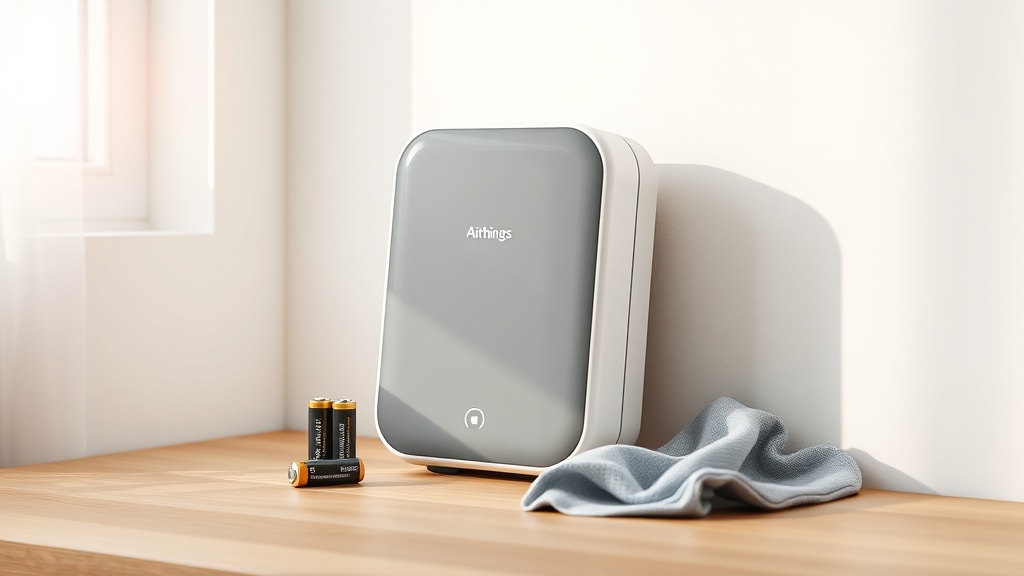
The Airthings Wave Plus is powered by two AA lithium batteries (included), and the manufacturer states a battery life of up to 24 months, depending on usage and environmental temperature. In our experience, most homes see 16 to 22 months of continuous operation with default settings—longer when you limit wave-to-phone Bluetooth connections or keep the device at stable room temperatures (around 20–22 °C). If you live in a region with hot summers or cold winters, battery life may drop to around 14 months because extreme temperatures cause the sensor to recalibrate more often.
To extend battery life, consider using Energizer Ultimate Lithium or Duracell Optimum batteries instead of standard alkaline cells. Lithium chemistry handles temperature swings better and provides steadier voltage, which is important for the alpha particle detection part of the radon sensor.
How can I tell when the batteries are low?
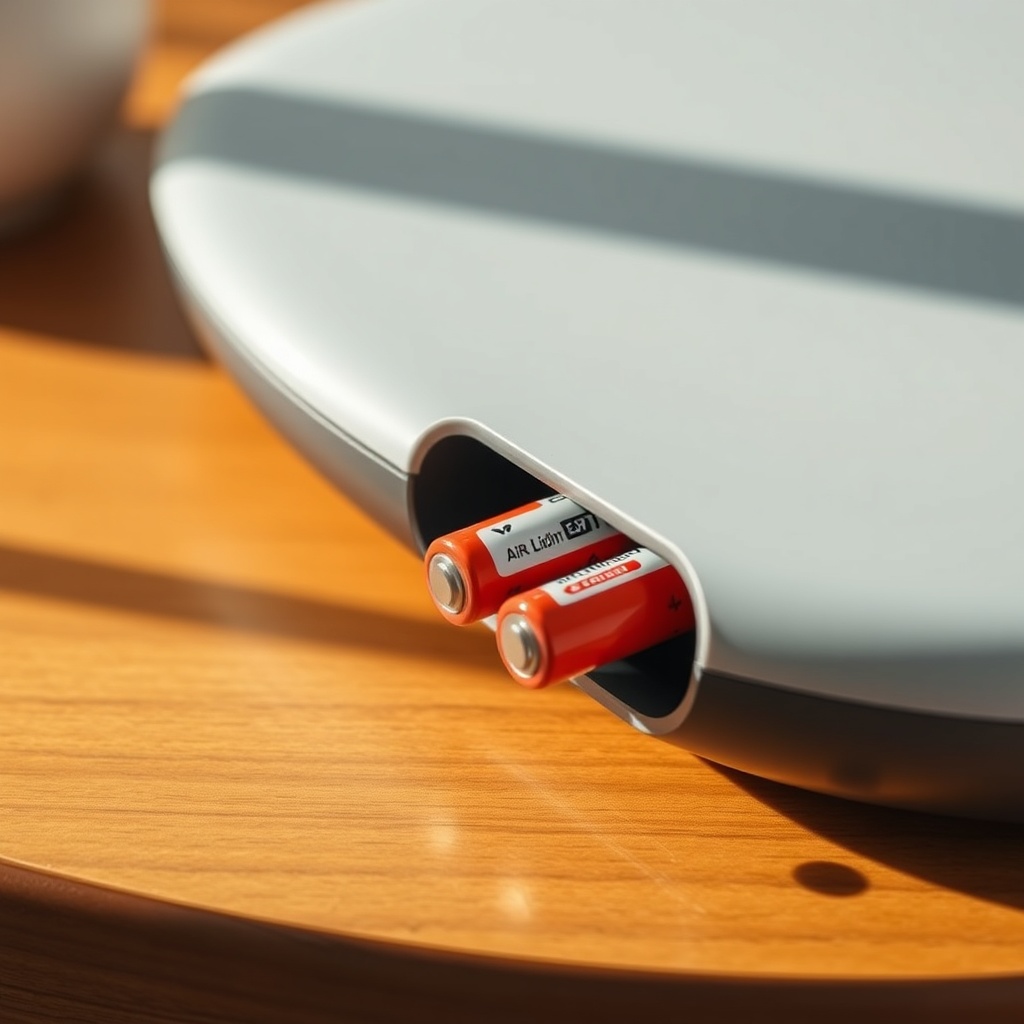
The Wave Plus gives you two clear signs that batteries are getting low. First, the ring light around the top of the device will flash orange or red every few seconds when the voltage drops below a usable threshold. Second, in the Airthings app, you can see the exact battery percentage under Device Settings > Battery Level. Once the percentage falls below 15%, you should replace both cells at the same time, even if only one appears drained. Mismatched voltages can cause erratic sensor readings or Bluetooth disconnects.
If the indicator lights are off and the device does not respond to a wave, that is a strong indication the batteries are completely depleted and need immediate replacement. Do not leave dead batteries inside the unit for more than a few days, as corrosion can damage the contacts.
Which batteries should I use—and which should I avoid?
| Battery Type | Severity / Recommendation |
|---|---|
| Energizer Ultimate Lithium (AA) | Usually not urgent – best overall performance |
| Duracell Optimum (AA) | Usually not urgent – good alternative to lithium |
| Standard alkaline (AA, any brand) | Needs attention soon – shorter life, risk of leak |
| Rechargeable NiMH (AA, e.g., Eneloop) | Needs attention soon – voltage may drop too low for radon sensor to calibrate |
Rechargeable NiMH batteries (like Eneloop or IKEA LADDA) are not recommended because their nominal voltage of 1.2 V is below the 1.5 V that the sensor expects. While they can work for a few weeks, the radon sensor may fail to self-correct, leading to data gaps or out-of-spec readings. Stick to high-quality primary lithium batteries for the most reliable performance.
What maintenance does the Airthings Wave Plus need?
Maintenance is minimal but important for accuracy. The main task is cleaning the dust screen every 6 months—a small mesh that covers the air intake on the bottom of the device. Use a soft, dry microfiber cloth or a can of compressed air to gently remove dust, pet fur, or lint. Do not use water, alcohol, or any cleaning liquid inside the sensor openings, as moisture can permanently damage the radon detection chamber.
Also, if you have the Airthings Wave Plus connected to the Airthings Wave Plus Review: Accurate and Easy Radon Monitoring companion app, ensure the firmware is up to date. Outdated firmware can cause incorrect battery reporting or display errors. The app usually notifies you when a new version is available.
Every 12 months, inspect the silicone feet on the bottom of the unit. If they are loose or missing, the device can slide off a shelf or catch dust at its edges. Clean the outer white casing with a slightly damp (not wet) cloth, and dry it immediately.

Does placing the Wave Plus in a refrigerator, basement, or garage affect battery life?
Yes, drastically. The Airthings Wave Plus is designed for indoor use at ambient temperatures between 4 °C and 40 °C (39–104 °F). If you place it in an unheated garage or basement that drops below 5 °C in winter, the battery’s chemical reaction slows, reducing effective capacity by 30–50%. In a sauna or near a wood stove, heat accelerates self-discharge and can cause the internal temperature sensor to trigger repeated recalibrations, which drain the batteries quickly.
For best battery life and accurate radon readings, mount the device on an interior wall at least 20 inches (50 cm) from any exterior door, window, or heat source. Avoid direct sunlight. If you are setting it up for the first time, review the Airthings Wave Plus Installation Guide for Homeowners for precise placement guidelines.
What are the signs of a failing battery or a sensor issue?
A failing battery usually shows one of these symptoms: the ring light glows red continuously (not just when waving), the device stops reporting to the app for more than 24 hours, or the battery icon in the app shows a red warning triangle. A true sensor issue, on the other hand, will still show decent battery voltage but the radon readings remain stuck at a single number or show “Calibrating…” for days.
If you suspect a sensor failure after replacing batteries with fresh lithium cells, contact Airthings customer support. They may ask you to run a manual calibration cycle, which takes about 2–3 hours. In rare cases, the radon detection chamber itself may have a manufacturing defect, and replacement is needed.
What owners say
“I replaced the batteries after 18 months with standard Duracell alkalines, and the device started showing 0 Bq/m³ for two days before I realized voltage was too low. Next time, I’ll use lithium.” – Mark, homeowner in Minnesota.
“Mine kept losing sync with the app. Turned out the old NiMH rechargeable batteries were at 1.1 V under load. Swapped to lithium, and the sync came back instantly.” – Emma, radon mitigation professional.
“If you wave at it and nothing happens, 9 times out of 10 it’s a dead battery. The battery compartment is easy to open, just be careful with the thin plastic clips.” – James, DIY home inspector.
“I clean the bottom mesh every six months with a vacuum cleaner brush attachment. No issues in two years.” – Linda, homeowner in Colorado.
Frequently Asked Questions
- Q: Can I use rechargeable NiMH batteries in the Airthings Wave Plus?
A: Not recommended. Their 1.2 V nominal voltage is too low for the radon sensor to correct reliably. Use 1.5 V primary lithium or high-quality alkaline batteries. - Q: How do I check battery level without the app?
A: Wave your hand over the top. If the ring light glows green, battery is good. Orange or red means below 25% or 10% respectively. No light means dead. - Q: Will the device lose its calibration data when I change batteries?
A: No. Calibration data and logged readings are stored in non-volatile memory and are not erased. However, the internal clock may reset, so the app will show a time gap of a few minutes while it syncs. - Q: What if the battery compartment gets wet or corroded?
A: Clean the contacts gently with a pencil eraser or isopropyl alcohol on a cotton swab. If corrosion is severe (white or green crust), the device may no longer be usable—contact Airthings for a replacement. - Q: Does connecting to Wi-Fi via the Airthings Hub drain the battery faster?
A: No. The Wave Plus communicates only over Bluetooth to the hub, which then uses Wi-Fi. The device’s battery usage stays the same whether you have a hub or not. - Q: How often should I recalibrate the radon sensor?
A: The Wave Plus performs automatic self-calibration every few months. No manual recalibration is needed for the first 5 years. After that, you may need to send the unit to Airthings for a factory recalibration.