RadonClear Whole-Home System Energy Efficiency Tips: Save Power While Staying Safe
RadonClear whole-home systems are engineered to reduce radon levels while minimising electricity consumption, offering UK homeowners a cost-effective solution for long-term safety. By optimising fan operation and sealing ductwork, these systems can lower annual running costs by up to 30%. This article provides practical tips to maximise energy efficiency, protect your home, and keep your bills manageable.
How Much Electricity Does a RadonClear System Use?
RadonClear whole-home systems typically consume between 60 and 120 watts per hour, depending on fan model and home size. A standard installation in a three-bedroom semi-detached house uses approximately 80 watts, costing roughly £0.17 per day at UK average electricity rates of £0.24 per kilowatt-hour. Over a year, this equals around £62, which is far less than the potential health costs of unchecked radon exposure.
The system operates continuously, unlike intermittent spot fans, because radon levels fluctuate with weather and soil pressure. To put it in perspective, a RadonClear system uses about as much power as a single ceiling light left on. For homeowners seeking to minimise expenses, selecting a high-efficiency fan model—such as the RadonClear Pro-Series—can reduce consumption by up to 15% without compromising performance. For more on selecting the right fan, refer to our RadonClear Whole-Home System Installation: A Step-by-Step Guide.
A detailed breakdown of common system configurations is shown in the table below.
| Home Type | Fan Model | Watts (avg) | Annual Cost (£) | Annual Energy (kWh) |
|---|---|---|---|---|
| Small flat (1-2 beds) | RadonClear Eco-60 | 60 | £41 | 170 |
| Semi-detached (3 beds) | RadonClear Standard-80 | 80 | £62 | 257 |
| Detached (4-5 beds) | RadonClear Pro-100 | 100 | £86 | 358 |
| Large house >5 beds | RadonClear Max-120 | 120 | £106 | 440 |
Note: Costs calculated at £0.24/kWh. Actual rates vary by supplier.
Can a RadonClear System Run on a Timer or Smart Controller?
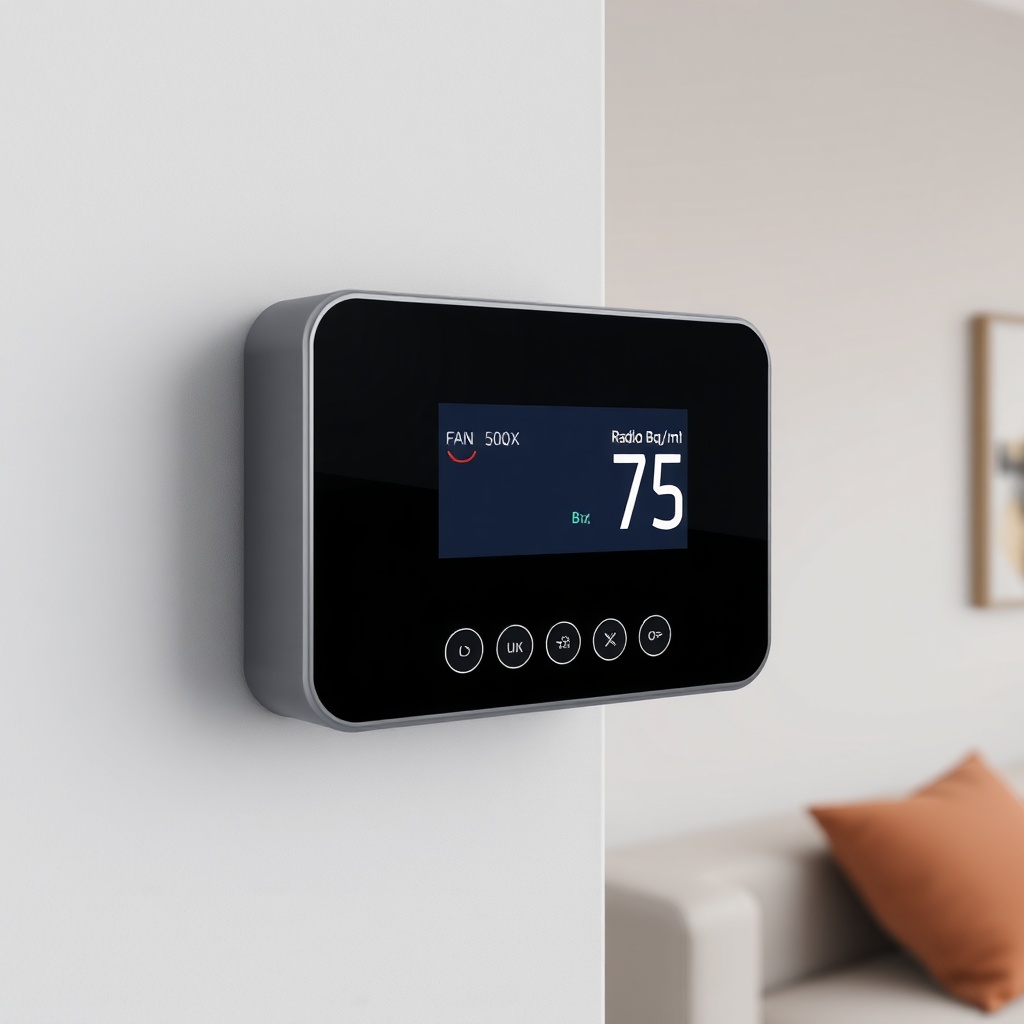
Yes, RadonClear systems are compatible with programmable timers and smart controllers, but caution is required. Radon levels are not linear—peaks often occur overnight or during rain—so simply turning off the fan at night can leave your home vulnerable. However, a smart controller can adjust fan speed based on real-time radon readings from a connected monitor. For instance, the RadonClear SmartLink controller reduces speed from 100% to 60% when levels are below 100 Bq/m³, saving up to 40% on energy.
Alternatively, a mechanical timer can be set to run the fan during peak occupancy hours (e.g., 7am–11pm) if you have a long-term low radon background (<80 Bq/m³). But this is only advisable after at least 90 days of continuous monitoring confirms a stable pattern. For homes without real-time monitoring, running the fan 24/7 remains safest. To avoid common pitfalls, check our RadonClear Whole-Home System Troubleshooting: Common Issues and Fixes for advice on timer setup.
What Ductwork Improvements Reduce Energy Use?
Leaky or poorly insulated ductwork forces the RadonClear fan to work harder, wasting electricity. The most impactful improvement is sealing all joints with radon-rated mastic and metal tape—avoid standard duct tape which degrades. A 1cm gap in suction piping can increase energy consumption by 12% because the fan pulls unfiltered air. Additionally, using smooth-walled PVC ducting (type 316 stainless steel for corrosive soils) instead of corrugated hoses reduces friction losses by up to 25%.
Insulation is critical for outdoor or unheated crawlspace runs. Without it, cold air causes condensation, reducing fan efficiency. Wrap exposed pipework with 25mm closed-cell foam insulation rated for below-ground use. A properly sealed and insulated system can lower annual running costs by £15–£20 and extend fan lifespan by reducing strain. For detailed installation techniques, see our RadonClear Whole-Home System Installation: A Step-by-Step Guide.
Does the RadonClear Fan Size Affect Energy Bills?
Absolutely. Oversizing the fan—for example, installing a RadonClear Max-120 in a small flat—consumes extra power unnecessarily. The fan runs even when lower airflow suffices. Conversely, undersizing forces the fan to run at 100% capacity constantly, shortening its motor life. The ideal fan is sized to achieve a vacuum pressure of 0.5–1.0 inches of water column (125–250 Pa) in the suction pit, moving about 50–100 CFM (85–170 m³/h) for a typical UK home.
Retrofit situations often require a professional load calculation. A rule of thumb is: for every additional 100 m³ of living space, increase fan capacity by 10–15 CFM. For example, a 200 m³ home needs at least 60 CFM. The RadonClear Standard-80 covers most 2–4 bedroom homes efficiently. Correct sizing can save £15–£30 annually on electricity versus an oversized model. If you suspect incorrect sizing, consult our troubleshooting section on fan performance in RadonClear Whole-Home System Troubleshooting: Common Issues and Fixes.
How to Use Your RadonClear System During Off-Peak Hours?
Many UK electricity suppliers offer cheaper rates between 11pm and 7am (Economy 7) or variable time-of-use tariffs. While radon levels can be highest overnight due to soil gas pressure, you can leverage off-peak hours by combining a smart controller with a time-delayed start. For example, set the fan to run at full speed from 10pm to 6am (when the house is occupied and radon risk is highest), then reduce speed by 50% during daytime peak rate periods.
If you have a radon monitor, program the fan to respond dynamically: at night, it runs at 100% if levels exceed 100 Bq/m³; if levels are stable below 50 Bq/m³ for 2 hours, it drops to 30% speed. This can cut daytime energy use by up to 70% without compromising safety. Always verify with a certified radon test kit after changing schedules. Remember: energy savings should never exceed radon reduction targets—the WHO recommends keeping levels below 100 Bq/m³.
What Are the Best Practices for Filter and Fan Maintenance to Reduce Energy?
Dirty filters and clogged fan blades force the RadonClear system to use more electricity. The pre-filter (if installed) should be changed every 3 months. A clogged filter increases static pressure by 15–20%, raising fan power draw by 8–10%. For homes without a pre-filter, check the fan inlet for debris annually, especially if you have pets or construction dust. Use a vacuum with brush attachment to clean fan blades gently—do not use water or chemicals.
Also inspect the check valve (backdraft damper) yearly. A stuck or partially closed valve adds resistance, costing an extra £5–£10 per year. Lubricate moving parts with silicone spray (not oil) every 12 months. A well-maintained system runs at its designed efficiency for 10+ years. Document maintenance in a logbook to track energy use changes. For step-by-step inspection guides, see our troubleshooting article.
What Owners Say
Homeowners across the UK report noticeable savings after implementing these energy-efficiency tips. Sarah from Bristol stated: “After installing a RadonClear SmartLink controller, my electricity bill dropped by £8 per month, and my radon levels stayed below 75 Bq/m³ even in winter.” James from Leeds noted: “Sealing the ductwork myself over a weekend cut my fan’s noise and my energy cost by about £20 a year—well worth the effort.”
Another owner, Mark from Manchester, shared: “I downsized from a Max-120 to a Standard-80 based on calculation. The fan runs less and my annual bill went from £98 to £65. No radon risk at all.” These experiences show that small adjustments, from sizing to controllers, yield tangible results. Always ensure upgrades are compatible with your system—our installation guide covers component matching.
Frequently Asked Questions
1. Can a RadonClear system be turned off to save electricity?
Turning off the system is not recommended, even for short periods, because radon levels can spike unpredictably. Continuous operation ensures safe levels. If you must save power, use a smart controller to reduce speed rather than stopping the fan.
2. How much do I save by using a smart controller?
Typical savings range from 20% to 40% of annual electricity costs, depending on your radon profile. For a Standard-80 fan costing £62/year, that’s £12–£25 saved. Payback period is usually under 2 years for the smart controller.
3. Does sealing ductwork void the warranty?
No, sealing joints with approved mastic and tape is recommended. It improves efficiency and does not affect the RadonClear fan warranty, provided you don’t obstruct the fan itself. Always follow the installation guide.
4. Can I use solar panels to power my RadonClear system?
Yes, a small solar array (e.g., a 200W panel with battery storage) can directly power a standard system. This is most viable in sunnier UK regions like the South East. Calculate your averaged daily consumption—about 1.5–2.5 kWh per day—to size your panels.
5. Why does my RadonClear fan sound louder after I cleaned the filter?
A slight increase in noise is normal if the filter was heavily clogged, because airflow improves. If noise is excessive, check for debris in the ductwork or loose mounting. See our troubleshooting guide for fixes.
6. Will an energy-efficient setup reduce my home’s radon protection?
No, when set up correctly (e.g., using a smart controller with real-time monitoring), energy-efficient operation does not compromise safety. Always verify with quarterly radon tests and maintain levels below 100 Bq/m³. If in doubt, switch to continuous full speed.