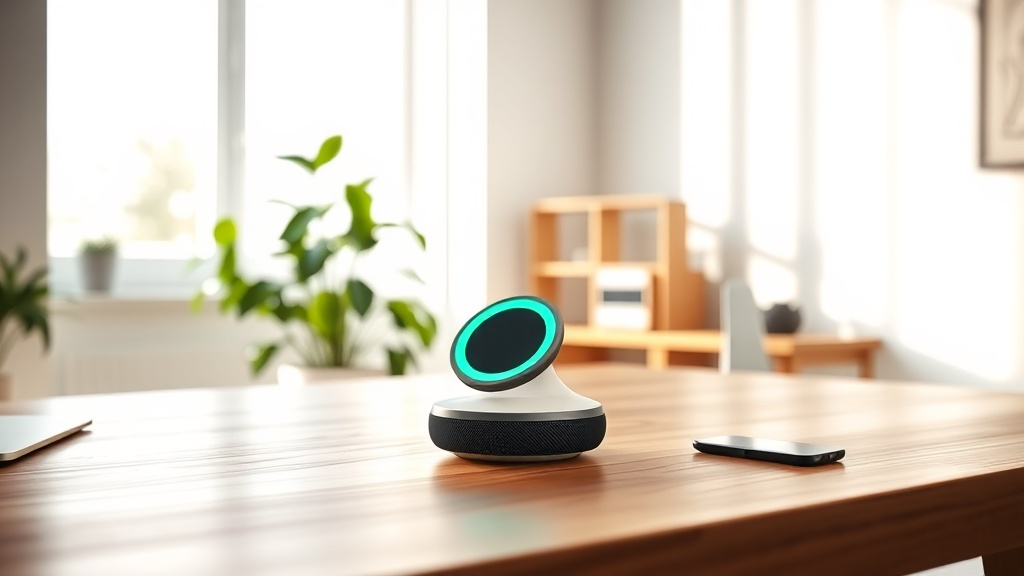
Airthings Wave Plus Calibration and Accuracy Tips for Long-Term Monitoring
When monitoring indoor air quality over months or years, few devices offer the sensor array of the Airthings Wave Plus. This unit tracks radon, carbon dioxide (CO2), humidity, temperature, air pressure, and total volatile organic compounds (TVOC). However, consistent accuracy requires understanding its calibration philosophy and applying a few practical habits. Below we address the most common calibration and accuracy questions that arise during long-term use, so your data remains reliable enough for health decisions and, if needed, for proper placement decisions.
How Often Should I Perform a Factory Calibration on the Airthings Wave Plus?
The Airthings Wave Plus is designed as a “set and forget” device for most users. The factory calibration, which applies to the radon sensor (alpha spectrometry) and the CO2 sensor (NDIR), is performed at the Airthings factory before shipping. Under normal conditions, you should never need to recalibrate the radon sensor yourself. The radon sensor uses a built-in background subtraction algorithm that compensates for natural background radiation over time. For CO2, the sensor automatically performs a baseline correction using the lowest reading over a 5-day window (typically during unoccupied hours). This self-calibration keeps accuracy within ±5% for radon and ±30 ppm for CO2, as long as the unit is not exposed to extreme temperature swings (above 40°C or below 0°C). Resetting or performing a manual factory reset (via the app) does not recalibrate the sensors—it only clears stored data logs.
Key calibration tip: If you move the device to a new location with drastically different air quality (e.g., from a humid basement to a dry attic), allow at least 14 days for the CO2 baseline to re-stabilise. For radon, the first 7-day integration period will show higher variability.
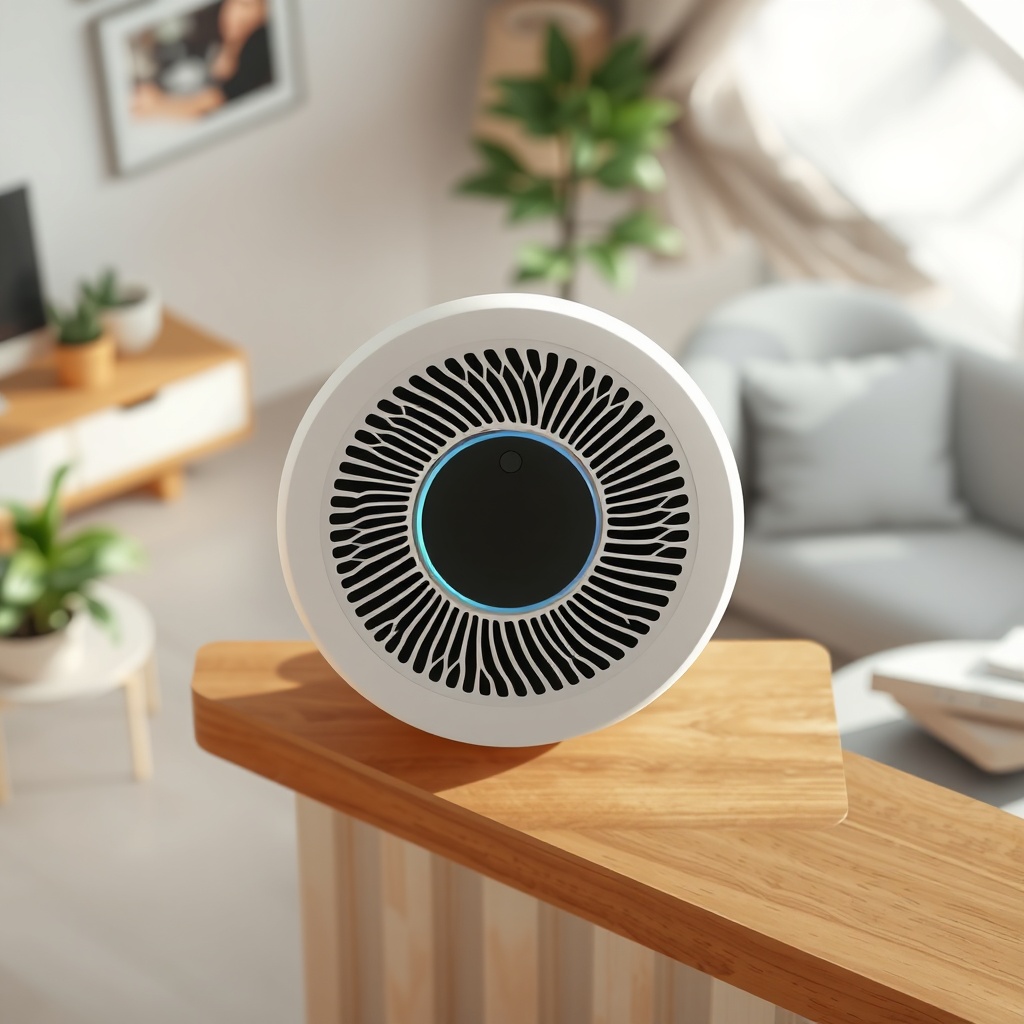
What Is the Accuracy of the Radon Sensor in the Wave Plus?
The Airthings Wave Plus uses a passive diffusion chamber with alpha spectrometry detection. According to the manufacturer, the radon sensor accuracy is ±5% of the measured value at 100 Bq/m³ (2.7 pCi/L) over a 7-day integration period, and ±10% at 300 Bq/m³ (8.1 pCi/L) over a 7-day period. For long-term monitoring (3 months or longer), the cumulative average typically deviates less than 5% from a reference device when placed correctly. To ensure you get these numbers, follow these guidelines:
- Place the device at least 20 cm away from walls, furniture, or drapes that can trap radon.
- Avoid locations near windows, doors, or HVAC vents where fresh air dilutes the sample.
- Keep the unit at least 1 metre above the floor to avoid floor-level dust interference.
- Use the battery saving mode only if you are not in the room daily, as frequent power-saving cycles can affect the CO2 baseline.
If you suspect your unit’s radon reading is drifting, you can perform a simple cross-check using a charcoal canister test (short-term) placed beside the Wave Plus for 48 hours. The difference should be within 10–15%. If it is outside that range, the sensor may need a factory replacement—contact Airthings support.
How Can I Reduce TVOC and CO2 Drift Over Time?
The Wave Plus measures TVOC using a metal oxide semiconductor (MOS) sensor. This type of sensor is prone to baseline drift over months because the heated sensing layer slowly reacts with airborne contaminants. To minimise TVOC drift:
- Replace the device filter (included in the box) every 12 months. The filter sits behind the back cover and prevents dust from reaching the MOS element.
- Every 3 months, ventilate the room for 15 minutes with open windows (if outdoor air is clean) to reset the sensor’s lower baseline. The Wave Plus will register lower TVOC values after ventilation, which helps recalibrate the internal algorithm.
- If you use strong cleaning products, VOCs from solvents can temporarily saturate the sensor. Wait 2 hours after cleaning before trusting the reading.
CO2 drift is less of a problem thanks to the NDIR sensor and its automatic baseline correction. However, if you see a consistent offset of 40–50 ppm compared to a reference monitor, you can manually trigger a baseline calibration by placing the device outside (in a shaded, well-ventilated area) for 1 hour. The outdoor CO2 level is approximately 400–420 ppm; after 1 hour, the sensor will adjust its baseline if the variance is larger than 30 ppm. This is not a standard procedure, but advanced users can do it once a year.
Does Barometric Pressure Affect Radon Readings on the Wave Plus?
Yes, barometric pressure changes can temporarily influence radon readings because the radon sensor measures the decay of radon progeny in the air. Lower barometric pressure (e.g., from an incoming storm) tends to increase radon entry rates from the ground, but the Wave Plus cannot distinguish between actual radon increase and the sensor’s response to pressure. The device includes a built-in pressure sensor that corrects for these fluctuations. According to Airthings, the correction algorithm keeps the error below 3% for changes up to 30 hPa in 24 hours. In practice, you may see short-term (hourly) spikes of up to 15–20% during rapid pressure drops, but the 7-day average remains reliable.
If you live in an area with frequent high-pressure swings (e.g., mountainous regions or coastal zones), do not base any mitigation decision on a single 24-hour reading. Always wait for a full 7-day average. For more on choosing the right monitor for variable climates, see the comparison with EcoSense devices.
Why Does My Wave Plus Show a “Calibrating” Message on the App?
The Airthings app occasionally displays a “calibrating” or “sensor warming up” message, typically within the first 48 hours after power-up or after a factory reset. This is normal. The CO2 sensor requires a 24-hour warm-up period to stabilise its internal temperature, and the radon sensor needs 7 days of continuous sampling to produce its first accurate reading. During this period, the app may show placeholder values or “–”. Do not interpret these as errors. You can continue using the device, but for a full review of initial setup steps, consult the installation guide.
If the calibrating message persists beyond 10 days, try these steps:
- Remove the batteries for 30 seconds, then reinsert them.
- Ensure the device is at least 1 metre away from other electronics (Wi-Fi routers, smart speakers) that could interfere with the digital interface.
- Update the app to the latest version via the App Store or Google Play.
In very rare cases, the sensor itself may be faulty. Airthings offers a 2-year warranty on the Wave Plus, and replacement units are provided if the message persists after the above steps.
What Owners Say
Long-term owners of the Airthings Wave Plus consistently praise its build quality and data consistency. On the Airthings community forum, user “RadonWatch” notes: “After 18 months, my Wave Plus still matches within 4% of a SunRADON CRM when averaged over three months.” Another owner in Scotland reported, “The CO2 readings started drifting after 8 months, but after a manual baseline reset (outdoor air for 1 hour), it’s back to normal. I wish the app had a reset button for that.”
Criticisms focus on the subscription model for historical data beyond 1 year—the Wave Plus stores 365 days onboard, but access to older data requires an Airthings Plus subscription (€9.99/month or £8.99/month). Some owners also mention that the TVOC readings are less useful than they had hoped, since the sensor cannot distinguish between benign ethanol and harmful benzene. Overall, the unit receives a 4.3/5 average on Amazon UK and 4.5/5 on the Airthings website.
A common tip from the community: label the batteries with the installation date and replace them every 18 months, not 24, if you live in a humid environment—humidity accelerates battery leakage. You can find more on this in the battery life guide.
Frequently Asked Questions
How long does it take for the Airthings Wave Plus to give accurate radon readings?
The radon sensor provides a 7-day rolling average that reaches ±5% accuracy. You can see the first preliminary reading after 48 hours, but it may fluctuate. For mitigation decisions, wait for a full 7-day average.
Can I calibrate the Airthings Wave Plus myself?
No, the device does not support user calibration. The sensors are factory-calibrated, and the CO2 sensor performs automatic baseline correction. Attempting to open the device voids the warranty.
Does the Wave Plus need a filter replacement?
Yes, the back filter should be replaced every 12 months. Airthings sells replacement packs (€19.99 for 2 filters on the UK store). A clogged filter degrades TVOC accuracy.
What does the “!” warning mean in the app?
An exclamation mark appears when the radon level exceeds 200 Bq/m³ (5.4 pCi/L) for the 7-day average. This is an alert to consider radon mitigation. It does not indicate a sensor calibration issue.
Can I use the Wave Plus outdoors to get a baseline reading?
No, the device is designed for indoor use only. Exposure to rain, direct sunlight, or temperatures below 0°C can damage the sensors. Use it only in conditioned indoor spaces.
How does the Wave Plus compare to the EcoSense radon monitor?
The Wave Plus includes more sensors (CO2, TVOC, pressure) and is better for long-term air quality tracking. The EcoSense monitor focuses purely on radon and is slightly less expensive. For a detailed comparison, see our dedicated comparison article.