Is the RadonAway RP145 Really as Quiet as Claimed?
When it comes to mitigating radon in your home, the fan is the heart of the system. Among the most popular choices is the RadonAway RP145, a fan that promises a balance of solid performance and low noise. Homeowners and contractors alike often ask: “How quiet is the RP145 in real-world conditions?” In this article, we investigate the RadonAway RP145 noise level with detailed comparisons, owner feedback, and technical specifications to help you decide if it’s the right fit for your property. We’ll cover sound ratings, real-world installation factors, and how it stacks up against other models.
Whether you’re retrofitting an existing system or building new, fan noise can be a dealbreaker. The RP145 is engineered for typical residential applications, but its actual decibel output depends on static pressure, piping runs, and mounting. Let’s dive into the data and owner experiences to understand what “quiet” truly means for this unit.
What Are the Official Noise Ratings for the RadonAway RP145?
The RadonAway RP145 is rated by the manufacturer at a sound level of 0.2 sones at 0 inches of static pressure (free-air delivery). This is notably low—a sone is a measure of loudness, with 1 sone equivalent to the sound of a quiet refrigerator at 3 meters. At a typical operating static pressure of around 1 inch, the fan produces approximately 1.0 sones, which translates to about 35 to 40 decibels (dBA) depending on the environment. For context, that’s comparable to a quiet library or a gentle whisper.
To give you a clearer picture, here is a comparison table of the RP145 against common household sounds and other radon fans:
| Sound Source | Noise Level (sones) | Noise Level (dBA approximate) | Perception |
|---|---|---|---|
| RadonAway RP145 (free air) | 0.2 | 25–30 | Barely audible |
| RadonAway RP145 (1″ static pressure) | 1.0 | 35–40 | Quiet library |
| Refrigerator hum | 1.0 | 35–40 | Constant low hum |
| RadonAway RP260 (1″ static pressure) | 1.8 | 45–50 | Moderate conversation |
| Central air conditioning | 2.0 | 50–55 | Noticeable humming |
As the table shows, the RP145’s sone rating is remarkably low, especially when compared to higher-capacity models like the RP260. However, note that actual noise can increase if the fan is installed in a poorly insulated or resonant location, such as an attic with metal ductwork.
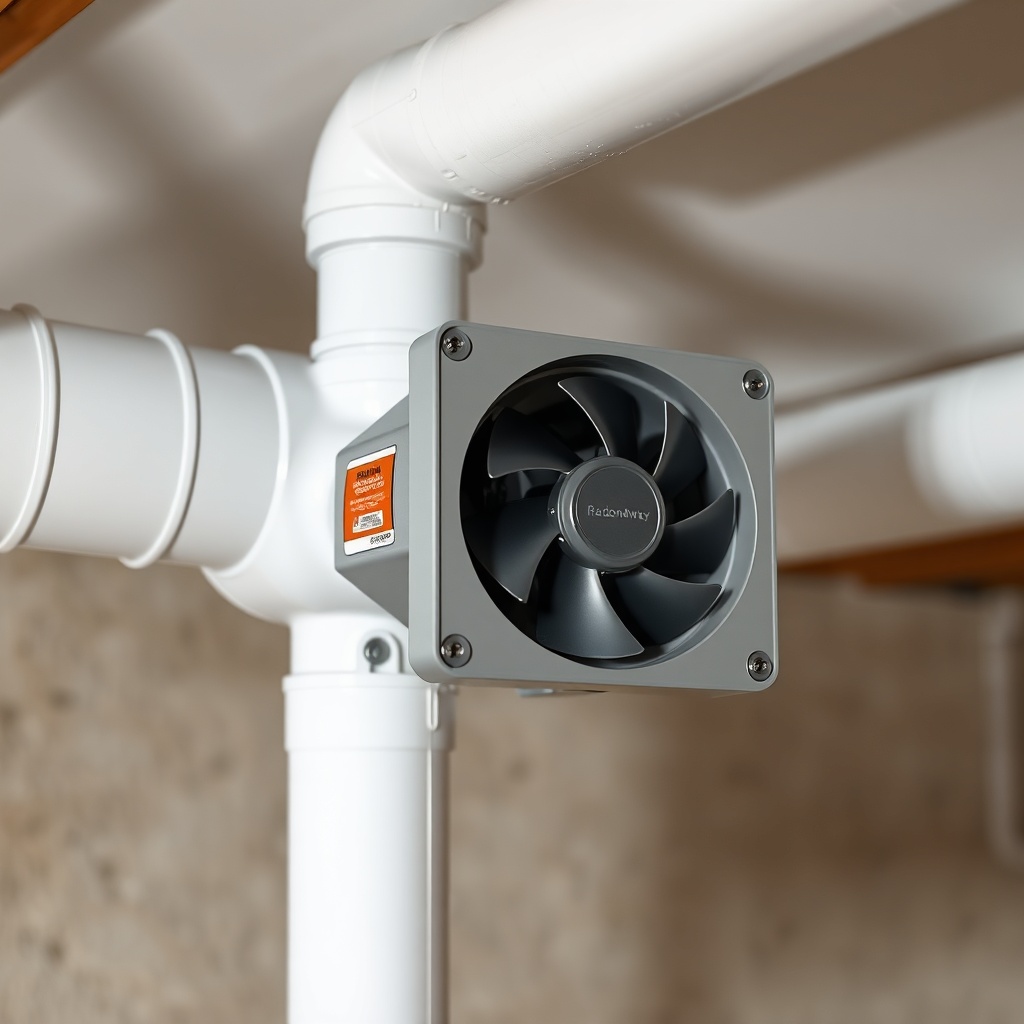
How Does the RP145 Noise Level Compare to the RP260?
Many homeowners face a choice between the RadonAway RP145 and the larger RP260. As our RadonAway RP145 vs RP260 comparison reveals, the RP145 produces about 0.8 sones less noise at typical operating pressures. That difference—roughly 5 to 10 dBA—is perceptible to the human ear. The RP260’s higher airflow comes with a tradeoff: a more pronounced hum that can be distracting in finished basements or quiet living areas.
For example, in a typical 1200 CFM scenario, the RP145 operates at 50 watts and delivers up to 145 CFM at 1 inch static pressure, while the RP260 draws 90 watts and produces up to 168 CFM at the same pressure. The power difference directly contributes to increased motor vibration and air turbulence, raising noise levels. If your home has low radon levels and you prioritize silence, the RP145 is the superior choice. For high-mitigation demands, the RP260’s extra CFM may be necessary, but you’ll want to locate it farther from occupied rooms.
What Factors Influence Real-World RadonAway RP145 Noise?
Manufacturer ratings are optimistic. In practice, several factors can elevate the RP145’s noise level above the spec sheet. The main contributors include:
- Static pressure: Higher pressure from long pipe runs or small-diameter piping increases noise. The RP145 is rated for up to 2.0 inches of static pressure, but it gets noticeably louder above 1.5 inches.
- Mounting material: Direct attachment to wooden joists or drywall can transmit vibrations, turning the whole structure into a soundboard. Using rubber isolators or hanging the fan on flexible brackets reduces this effect.
- Pipe diameter: The RP145 works best with 4-inch or 6-inch PVC pipe. Using undersized 3-inch pipe significantly raises air velocity and noise.
- Duct insulation: Uninsulated metal ductwork can radiate hums, while insulated PVC dampens sound transmission.
- Distance from listening area: A fan in the attic is much quieter than one installed in a living space. Even the whisper-quiet RP145 can be bothersome if directly above a bedroom.
Our optimal piping setup guide offers detailed advice on minimizing noise through proper layout and mounting techniques.
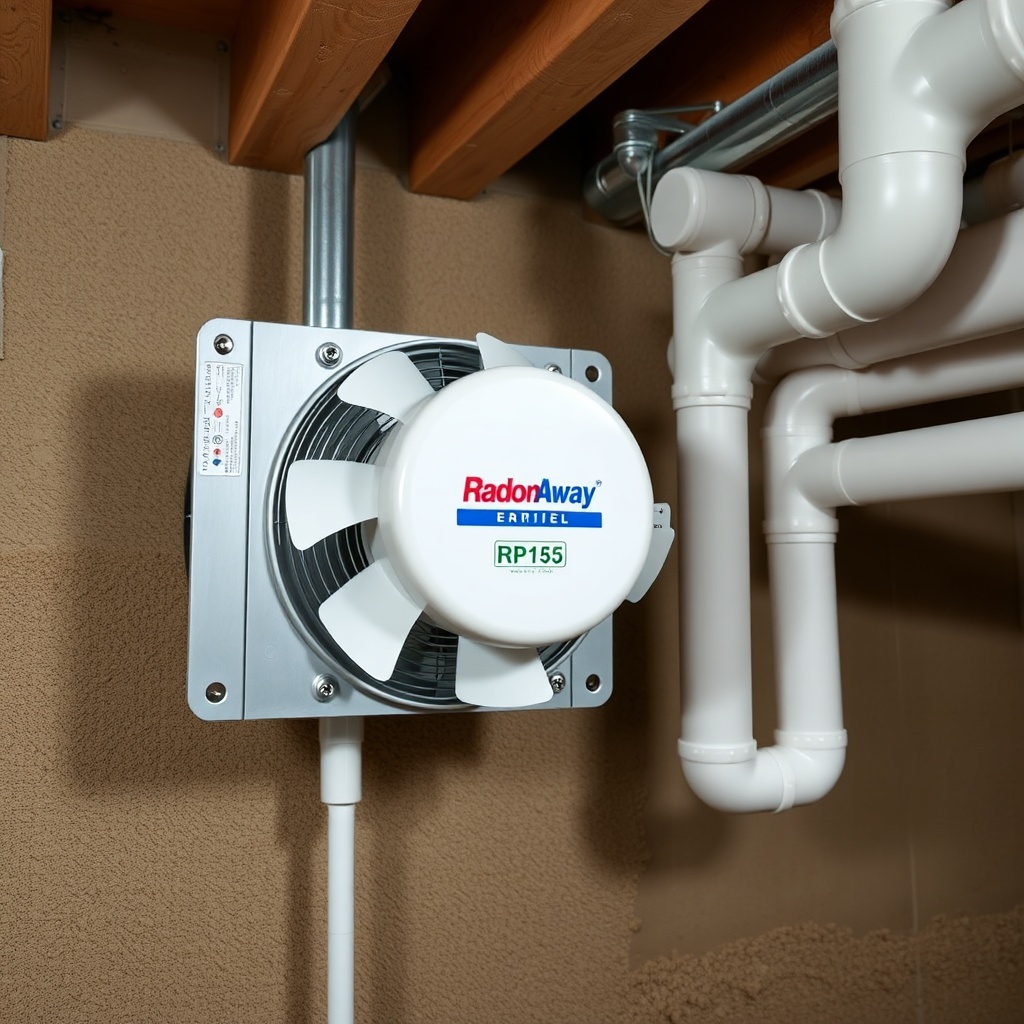
What Does the Sound of the RP145 Actually Sound Like?
Owners often describe the RP145’s noise as a low, steady hum—more of a “whir” than a “roar.” At free air, it’s nearly inaudible from 10 feet away. At 1 inch static pressure, it emits a gentle drone comparable to a desktop computer running at idle. In a finished basement with carpet and furniture, many users report they forget it’s running until they check the manometer.
However, the pitch matters. The RP145 has a relatively low-frequency sound, which is less annoying to human ears than higher-pitched whines from cheaper axial fans. Some users note a slight bearing noise at startup that fades after a minute. If you hear a persistent rattle, it could indicate a loose mounting or debris in the impeller.
What Do Owners Say About the RadonAway RP145 Noise?
Real-world feedback from forums and product reviews consistently praises the RP145 for being unobtrusive. A typical comment: “I installed my RP145 in the attic, and I can only hear it when I’m directly above it in the bathroom—and even then, it’s a faint hum.” Another owner wrote: “The fan replaced a loud cheap unit. Now my basement is silent—the radon fan is the least of my noise worries.”
However, a minority of owners report noise when the fan is mounted to wooden rafters without isolation. One user stated: “I used the included rubber gaskets but still got a buzzing. I added flexible pipe connectors and it went away.” The takeaway: proper installation is key. Our detailed review covers installation tips that reduce noise significantly.
Several long-term owners highlight that the noise hasn’t increased over time. After three years of continuous operation, the RP145 maintains its original sound quality, unlike some cheaper fans that develop rattles. This reliability is a major reason contractors in the UK recommend it for critical systems.
How Can You Measure and Manage RP145 Noise in Your Home?
If you’re concerned about noise before purchase, consider these practical steps:
- Use a decibel meter app: Many free phone apps can give a rough reading. Place the phone one meter from the fan surface to measure dBA levels. Expect 35–40 dBA at normal operation.
- Choose the right location: Install the fan in an unconditioned attic, crawlspace, or garage, not inside living space. If it must be indoors, build a small sound enclosure with acoustic foam (ensuring airflow).
- Vibration isolation: Always use the manufacturer’s rubber gaskets and consider adding a length of flexible PVC coupler on each side of the fan to decouple vibrations.
- Insulate pipes: Wrapping exposed PVC pipes in foam insulation reduces sound transmission through the wall or ceiling.
- Monitor static pressure: Install a manometer to ensure you’re not exceeding the fan’s recommended pressure range. Higher pressure equals louder noise and reduced fan life.
For budget-conscious homeowners, note that the RP145’s energy consumption is modest, averaging £30 to £45 per year in the UK at typical electricity rates. Our energy cost analysis breaks down the numbers for different usage scenarios.
Frequently Asked Questions (FAQ)
1. Is the RadonAway RP145 quiet enough for a bedroom?
When installed in an adjacent room with a closed door, the RP145 is generally inaudible. If directly mounted above a bedroom, some low-frequency hum may be heard. Vibration isolation and distance are critical.
2. How does the RP145 compare to a typical bathroom fan for noise?
A standard bathroom fan (60–80 CFM) often produces 2–3 sones (50–60 dBA), which is much louder than the RP145 at 1.0 sones. The RP145 is significantly quieter.
3. Can I use the RP145 in an attic without disturbing noise?
Yes, attics are ideal locations. The sound will be barely noticeable in the rooms below if the fan is mounted on a rafter with isolation and the pipe is insulated. Most owners report no issues.
4. Will the noise increase over time?
Not typically. The RP145 uses sealed ball bearings designed for long life. After 5–10 years, it may develop a subtle bearing hum, but it won’t become disruptive. Regular inspection is recommended.
5. What should I do if my RP145 is buzzing loudly?
First, check for loose mounting bolts or contact between the fan body and a joist. Add rubber isolators or flexible connectors. If the noise persists, consult a professional to verify static pressure and electrical connections.
6. Does the RP145 require special ductwork to reduce noise?
Not special, but using 4-inch or 6-inch smooth PVC pipe with minimal bends helps. Avoid corrugated flexible ducts, which generate turbulence. Our piping guide provides full details.