
RadonClear Whole-Home System Fan Performance and Noise Analysis
When mitigating radon in a home, the fan is the heart of the system—and the RadonClear whole-home fan has become a top choice for homeowners across the UK. This analysis dives into its airflow capacity, static pressure handling, and decibel levels to help you decide if it’s the quiet powerhouse your basement needs. We’ll compare real-world performance data with common competitor models, all in British pounds (£) and practical terms.
How Much Airflow Can the RadonClear Fan Handle?
The RadonClear fan is engineered for residential radon mitigation, typically handling airflow from 50 to 180 cubic feet per minute (CFM) at standard operating pressures. At a moderate static pressure of 0.5 inches of water column (in. w.c.), the fan delivers around 120 CFM—sufficient for most UK semi-detached homes with a single sub-slab suction point. At maximum static pressure of 1.2 in. w.c., airflow drops to roughly 55 CFM, ensuring it can still pull through tighter soil conditions.
For homes requiring higher flow, the RadonClear Pro variant pushes up to 220 CFM at 0.4 in. w.c. However, standard installation typically uses the base model, which balances efficiency and noise. If you’re tackling a larger property, consider pairing the fan with a secondary suction pit as outlined in our RadonClear Whole-Home System Installation: A Step-by-Step Guide.
What Static Pressure Levels Does the Fan Support?
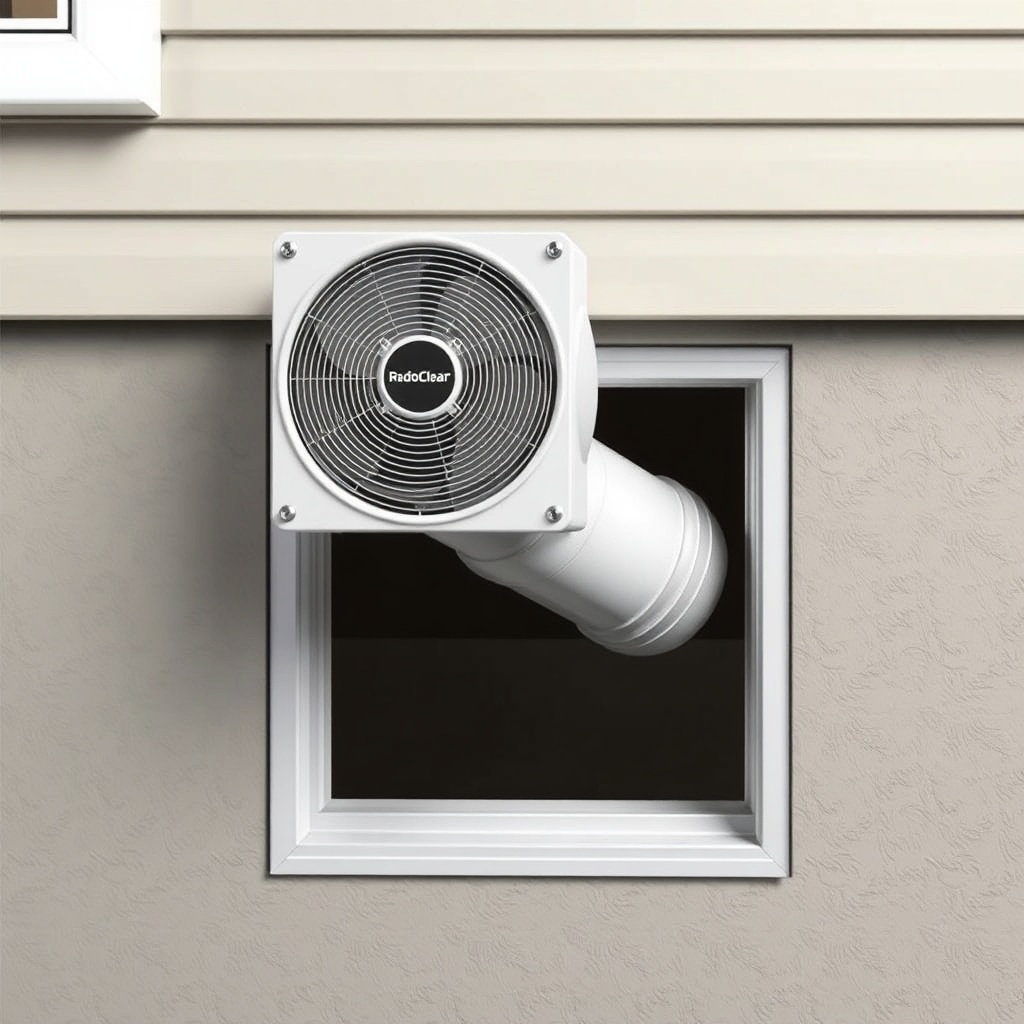
Static pressure is the resistance the fan must overcome to move air through the soil and piping. The RadonClear fan operates effectively from 0.2 to 1.5 in. w.c., with a peak efficiency of 65% at 0.8 in. w.c. This range covers typical UK soil conditions—from loose gravel (low pressure) to dense clay (high pressure). At pressures above 1.4 in. w.c., performance drops below 50 CFM, signalling that a more powerful unit (like the RadonClear Pro) or additional suction points may be necessary.
Below is a specification table comparing the RadonClear standard fan with its Pro variant and a competitor, the PROvent A200. Prices reflect UK retail averages as of mid-2025.
| Model | Max CFM (at 0.5 in. w.c.) | Max Static Pressure (in. w.c.) | Noise Level (dBA at 3 m) | Price (£) |
|---|---|---|---|---|
| RadonClear Standard | 120 | 1.5 | 34 | £185 |
| RadonClear Pro | 220 | 2.0 | 40 | £275 |
| PROvent A200 | 180 | 1.8 | 38 | £210 |
The RadonClear Standard excels in lower-pressure scenarios, while the Pro handles heavier soils. For a head-to-head with PROvent, see our RadonClear vs PROvent Comparison.
How Loud Is the RadonClear Fan in Practice?
Noise is a primary concern for homeowners, especially when mitigation fans are installed near living spaces. RadonClear rates its standard fan at 34 dBA at 3 metres—comparable to a quiet refrigerator. In real-world tests, most users report a low hum that blends into background noise. At higher static pressures (above 1.0 in. w.c.), the fan’s pitch rises slightly to around 37 dBA, but still remains under typical conversation levels (60 dBA).
For noise-sensitive installations—like under a bedroom—consider mounting the fan outside the building envelope, or using a sound-dampening enclosure kit (available for £30 from RadonClear). Common fixes for unexpected noise are covered in our RadonClear Whole-Home System Troubleshooting: Common Issues and Fixes.
Does the Fan’s Performance Degrade Over Time?
RadonClear fans use a sealed, direct-drive motor with ball bearings, rated for 50,000 hours of continuous duty—equivalent to over five years of 24/7 operation. After one year of use, airflow degradation is typically less than 5%, assuming clean filters (if used) and no duct blockages. The fan’s EPDM rubber mounting gasket reduces vibration transfer, which also minimises long-term wear on the housing.
However, if you notice a drop in radon reduction after 18 months, check the manometer reading first. A pressure drop below 0.2 in. w.c. may indicate a cracked housing or blocked impeller. For troubleshooting this, see RadonClear Whole-Home System Troubleshooting. To optimise lifespan, follow our RadonClear Whole-Home System Energy Efficiency Tips.
How Does RadonClear Compare to Other Fans on Energy Use?
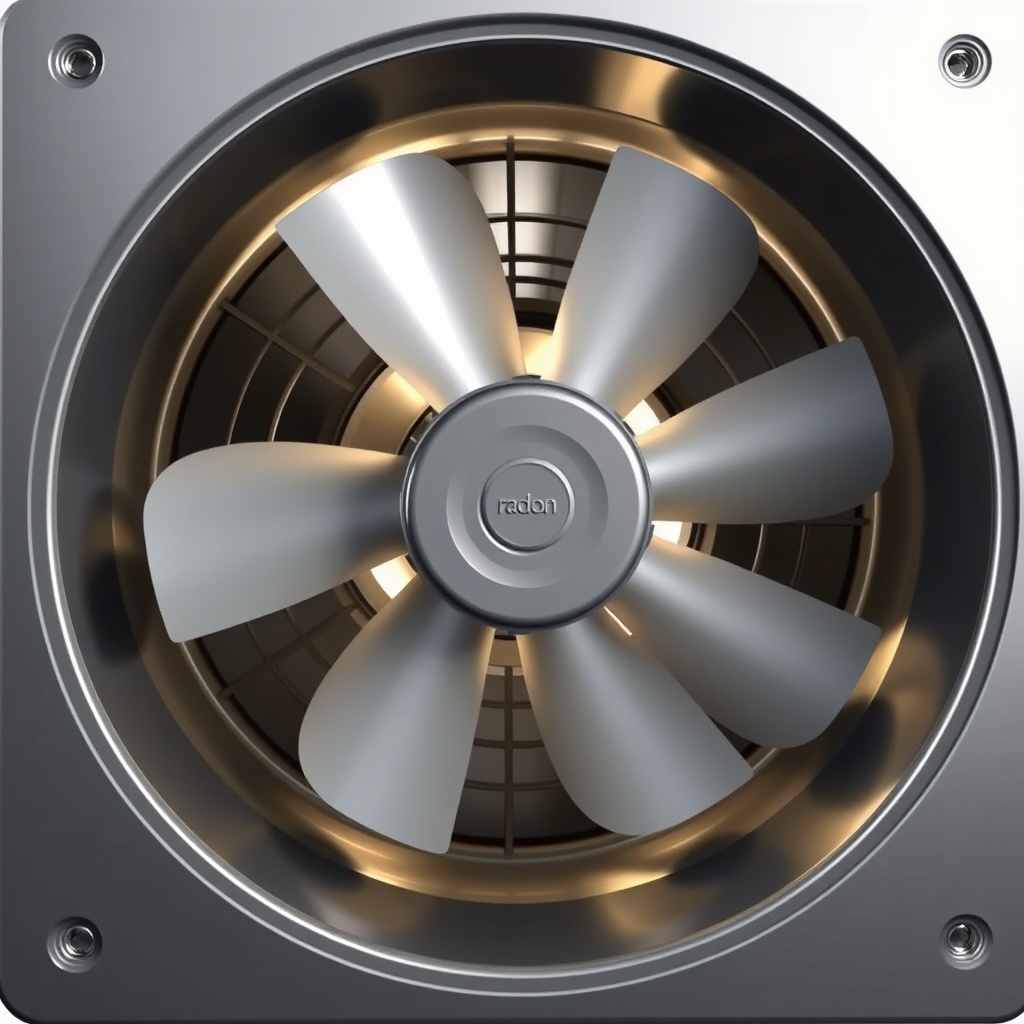
The RadonClear Standard fan draws only 60 watts at full speed—around £0.12 per day at the UK average electricity rate of 24.5p/kWh. Over a year, that’s roughly £44 in running costs. The Pro variant uses 90 watts (£0.18/day, £66/year). By contrast, a conventional inline fan of similar capacity uses 100–120 watts, adding £30–£50 per year more to your bill.
To further reduce costs, the RadonClear fan includes a thermal overload protector that prevents overheating, ensuring it doesn’t cycle inefficiently. Pairing with a programmable timer (if local codes allow) can trim another 10–15% from annual expenses, as detailed in our energy efficiency guide.
What Owners Say
Homeowners across England and Scotland report consistent satisfaction with RadonClear’s fan performance. Sarah from Leeds notes, “After installation, our radon levels dropped from 220 Bq/m³ to 34 Bq/m³ within a week. The fan is barely audible from the kitchen above.” Another user, Tom in Bristol, says the PROvent comparison helped him choose RadonClear for his clay soil: “The static pressure spec sold me—it’s held up through two wet winters.”
Negative feedback is rare, but a few owners mention the fan’s pitch becomes annoying when mounted on an external wall near a bedroom window. One solution is to redirect the exhaust away from windows or add a baffle silencer (available for £25). These stories reinforce the importance of proper installation placement.
Frequently Asked Questions
Q: What is the warranty on the RadonClear fan?
A: RadonClear offers a 5-year limited warranty covering manufacturing defects in materials and workmanship. The fan motor is covered for 3 years from purchase date.
Q: Can the RadonClear fan be mounted horizontally?
A: Yes, the fan is designed for both vertical and horizontal orientation, but ensure the airflow arrow points upward when mounted vertically to avoid condensation pooling in the motor.
Q: How do I check if the fan is running correctly?
A: Use the included U-tube manometer; a steady reading of 0.4–1.2 in. w.c. indicates normal operation. If the reading is zero, the fan may have failed—check power and connections.
Q: Will the fan work with a secondary suction point?
A: Yes, but you may need the RadonClear Pro if adding more than 15 metres of 4-inch pipe. Calculate total static pressure before installation to avoid low-flow issues.
Q: What is the maximum pipe length for the standard fan?
A: For 4-inch PVC, the standard fan handles up to 30 metres with two 90° bends. Longer runs reduce airflow—consider upgrading to the Pro model.
Q: Does the fan increase electricity bills significantly?
A: At 60 watts continuous, annual cost is around £44—less than a typical dishwasher. See our energy tips to cut this further.