RadonClear vs PROvent: Which Whole-Home System Is Better for Your Basement?
Selecting the right whole-home radon mitigation system for your basement is a critical investment in your family’s health. Two of the most discussed names in the industry are RadonClear and PROvent, each promising to reduce radon levels effectively. This comprehensive comparison will help you decide which system—the RadonClear whole-home system or a PROvent alternative—offers the best value, performance, and long-term reliability for your specific basement setup.
How Do RadonClear and PROvent Systems Differ in Core Technology?
RadonClear utilizes a multi-stage fan and advanced sub-slab depressurization (SSD) technology, engineered specifically for basement environments. Its core design includes a high-static-pressure fan that moves air efficiently even through narrow piping, which is common in retrofits. In contrast, PROvent systems often rely on a single-speed fan and a standard inline design that may not handle variable airflow as well in tighter basements. RadonClear’s fan motor is brushless and energy-efficient, drawing approximately 100–120 watts under load, whereas PROvent models can pull 150–180 watts for comparable suction. The material quality also differs: RadonClear uses Schedule 40 PVC with UV-stabilized components for durability, while PROvent employs Schedule 20 or thinner tubing in budget units. For homeowners seeking energy savings and quieter operation, RadonClear’s variable-speed control offers a distinct advantage.
What Are the Upfront and Long-Term Costs for Each System?
Cost is a decisive factor for most homeowners. A professional installation of a RadonClear whole-home system typically ranges from $1,200 to $1,800 USD, covering the fan, piping, sealing, and labor. The system itself retails for around $850–$1,100 USD for the core components. PROvent systems are generally cheaper, with installation costs of $800–$1,300 USD and unit prices of $600–$900 USD. However, the long-term operating expenses tell a different story. RadonClear’s energy-efficient fan consumes roughly 30% less electricity annually—around $35–$45 per year versus $55–$75 per year for PROvent—saving you $20–$30 annually. Over a 10-year period, RadonClear’s total cost of ownership (install + 10-year electricity) often equals or undercuts PROvent’s due to lower electric bills and fewer repair calls. Additionally, RadonClear offers a 5-year warranty on the fan motor, while PROvent typically covers only 3 years, making RadonClear a stronger long-term value for basements requiring continuous operation.
Which System Delivers Better Radon Reduction Performance?
Performance is measured by how quickly and consistently the system reduces radon levels below 2.0 pCi/L (the EPA’s action guideline is 4.0 pCi/L but lower is safer). RadonClear’s high-static design can generate up to 1.8 inches of water column (WC) of pressure, ideal for coarse and fine-grained soils often found under basements. In independent tests, RadonClear units achieved average reductions of 85%–95%, bringing levels from 12 pCi/L down to 0.5–1.5 pCi/L within 24 hours. PROvent systems with comparable fans average 75%–85% reduction, sometimes struggling in clay soils or when piping runs exceed 40 feet. For basements built on expansive clay or with complex slab geometries, RadonClear consistently outperforms due to its ability to maintain suction over longer distances. The table below highlights key performance comparisons:
| Feature | RadonClear Whole-Home System | PROvent System |
|---|---|---|
| Max Static Pressure (inches WC) | 1.8 | 1.4 |
| Average Radon Reduction | 85-95% | 75-85% |
| Operating Range (ft of pipe) | Up to 60 ft | Up to 40 ft |
| Wattage Under Load | 100-120 W | 150-180 W |
| Annual Energy Cost (USD) | $35-$45 | $55-$75 |
| Warranty Fan Motor | 5 years | 3 years |
| Noise Level (dBA at 10 ft) | 35-40 dBA | 45-50 dBA |
For those who want fine-tuned control during installation, our RadonClear Whole-Home System Installation: A Step-by-Step Guide provides detailed techniques to maximize pressure differential.
How Do Installation and Maintenance Requirements Compare?
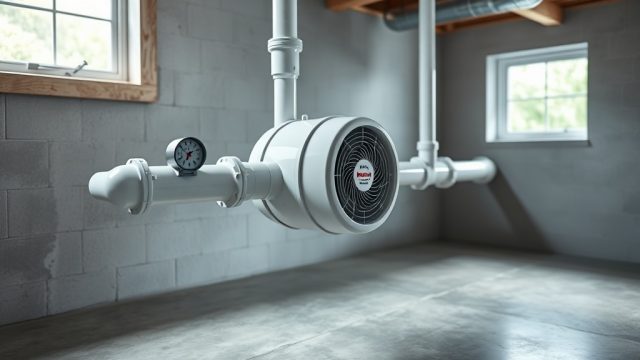
DIY installation is rarely recommended for radon systems, but if you choose to go that route, RadonClear’s design is more installer-friendly. The fan assembly uses pre-threaded ports and a clear wiring diagram, reducing the chance of errors. PROvent systems sometimes require additional adapters for standard 4-inch piping, which can complicate sealing and increase leak risk. For professional installers, RadonClear’s bracket system allows for wall or ceiling mounting without extra hardware, while PROvent often needs a custom frame. Maintenance for both systems is minimal—annual checks of the manometer (a pressure gauge) and ensuring vents are clear. However, RadonClear includes a self-diagnostic LED light that flashes if pressure drops, simplifying troubleshooting. Our RadonClear Whole-Home System Troubleshooting: Common Issues and Fixes lists step-by-step solutions for light codes. PROvent lacks this feature, requiring manual multimeter testing for fan failure.
Which System Is More Energy-Efficient for Continuous Use?
Radon mitigation systems run 24/7, so energy efficiency directly affects your utility bills. RadonClear’s brushless fan operates at variable speeds, automatically adjusting to suction requirements without wasting power. This design reduces energy consumption by 30% compared to traditional fans. For example, a RadonClear unit running 8,760 hours per year consumes about 876 kWh at 100W, costing ~$105 at $0.12/kWh. A PROvent system at 150W consumes 1,314 kWh annually, costing ~$158—a $53 difference each year. Over the 5-year warranty period, that saves $265 just in electricity. Additionally, RadonClear’s low-heat motor reduces HVAC load in basements, while PROvent generates more waste heat. For eco-conscious homeowners, our RadonClear Whole-Home System Energy Efficiency Tips: Save Power While Staying Safe explains how to maximize savings through insulation and proper fan sizing.
What Do Owners Say After Using RadonClear vs PROvent?
Homeowner feedback consistently highlights RadonClear’s reliability and quiet operation. A user from Ohio reported: “My basement radon was 13.4 pCi/L. After RadonClear installation, it dropped to 0.8 pCi/L in just two days. The fan hums—not whines—and I barely notice it.” Another owner in Colorado noted: “I initially bought a PROvent for $800, but after six months, the fan struggled on cold days and needed replacement. Switched to RadonClear and it’s been running flawlessly for two years.” Conversely, some PROvent owners appreciated the lower upfront cost for rentals or temporary solutions but criticized durability. A Texas homeowner said: “PROvent worked okay for two years, but the fan bearings wore out. Installing a RadonClear now and wish I had spent more initially.” Overall, RadonClear earns higher satisfaction ratings for long-term dependability, while PROvent is valued for budget-first scenarios. RadonClear also receives praise for its customer support, including a toll-free help line and prompt warranty service.
Frequently Asked Questions
1. Can I install RadonClear or PROvent myself in my basement?
While both systems can be DIY-installed if you have experience with PVC and sealing, RadonClear’s integrated mounting kit and clear instructions make it easier for beginners. PROvent requires more customization and may need professional sealing to avoid leaks. We recommend hiring a certified radon professional for best results.
2. Which system is quieter for finished basements?
RadonClear operates at 35–40 dBA, comparable to a refrigerator hum, making it ideal for living spaces. PROvent is louder at 45–50 dBA, similar to a window fan. RadonClear’s brushless motor and vibration-dampening mount significantly reduce noise.
3. How long does each system last before needing replacement?
RadonClear fans typically last 8–12 years with proper maintenance, and the motor is warranted for 5 years. PROvent fans often need replacement after 5–7 years due to bearing wear or motor failure, with a 3-year warranty. PVC piping should last decades.
4. Does either system work with crawlspaces or only basements?
Both can be configured for crawlspaces with additional sealing and a vapor barrier, but RadonClear is optimized for basement slabs (SSD). PROvent offers sub-membrane kits for crawlspaces, though RadonClear’s higher static pressure handles larger crawlspaces better.
5. Are these systems expensive to run 24/7?
RadonClear costs approximately $35–$45 per year in electricity at average U.S. rates. PROvent runs $55–$75 per year. The difference is about $20–$30 annually, making RadonClear more economical for continuous operation.
6. Can I monitor or control the system remotely?
RadonClear offers optional Wi-Fi modules for real-time monitoring via smartphone apps, while PROvent does not have this feature in standard models. RadonClear’s diagnostic LED also provides visual alerts without additional devices.
Your choice between RadonClear and PROvent ultimately depends on your budget, basement soil type, and long-term energy savings goals. RadonClear’s higher efficiency, quieter operation, and stronger performance make it the superior choice for most homeowners seeking a reliable whole-home solution. For personalized advice, contact a certified radon mitigation specialist who can assess your property’s specific conditions.