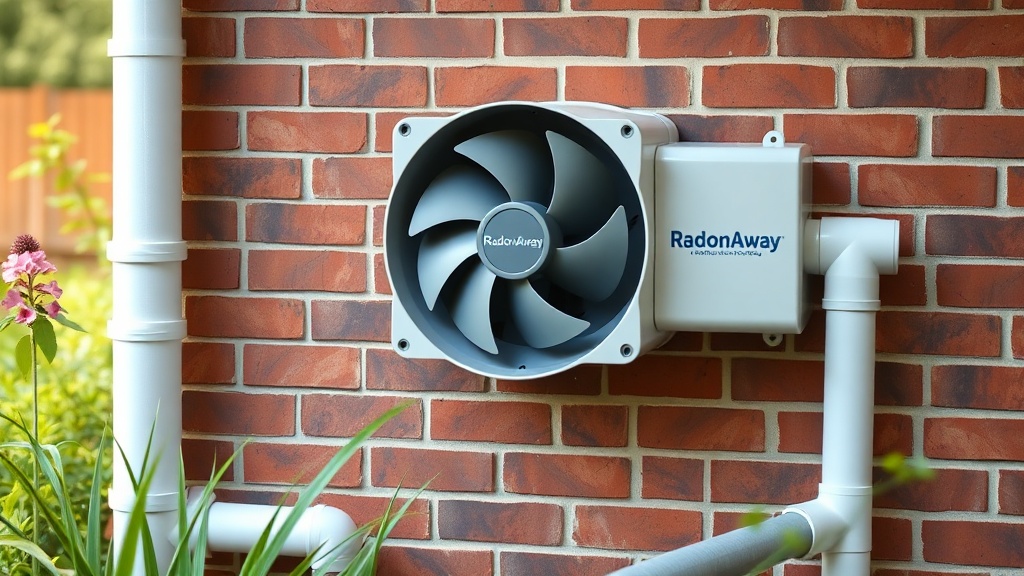
RadonAway RP145 vs Fantech RN1: Which Radon Fan Wins for Your Home?
Choosing the right radon mitigation fan is critical for reducing radon levels effectively, and two of the most popular models are the RadonAway RP145 and the Fantech RN1. Both are capable of moving significant air volume, but they differ in power, noise, longevity, and overall cost. This guide breaks down each key factor to help homeowners in the UK and Ireland decide which fan suits their property best.
The RadonAway RP145 is known for its energy-efficient, DC motor design and low noise output, while the Fantech RN1 uses a more traditional AC motor with proven reliability. To make an informed choice, we must consider your home’s specific radon levels, ductwork setup, and budget—both upfront and over years of operation.
What Are the Key Specifications of the RadonAway RP145 and Fantech RN1?
Understanding the technical specs is the first step in comparing these two fans. The table below provides a side-by-side view of their core attributes, focusing on UK and Ireland electrical standards (230 V, 50 Hz) and using the local currency (GBP).
| Specification | RadonAway RP145 | Fantech RN1 |
|---|---|---|
| Motor Type | DC (Brushless) | AC (PSC) |
| Max Airflow (CFM / m³/h) | 145 CFM (246 m³/h) | 120 CFM (204 m³/h) |
| Max Static Pressure (kPa) | 1.4 kPa | 1.1 kPa |
| Power Consumption @ Full Speed | 35 Watts | 85 Watts |
| Sound Level (dBA at 1m) | ~34 dBA | ~42 dBA |
| Inlet/Outlet Diameter | 4 inches (102 mm) | 4 inches (102 mm) |
| Operating Temperature Range | -30°C to 50°C | -20°C to 50°C |
| Warranty | 5 years | 3 years |
| Typical Retail Price (GBP) | £220–£280 | £160–£210 |
As seen, the RadonAway RP145 offers higher airflow and static pressure while consuming less than half the power of the Fantech RN1. However, the RN1 is significantly cheaper to purchase initially. This cost difference often drives budget-conscious buyers toward the RN1, but long-term operating expenses must be considered.
How Does Energy Efficiency Affect Running Costs?
Energy efficiency is one of the biggest differentiators. The RP145 uses a DC motor that can run at multiple speeds, adapting to the required pressure without wasting electricity. In contrast, the RN1’s AC motor runs at a fixed speed, drawing continuous high power. Over a year of 24/7 operation, the RP145 consumes roughly 306 kWh (35 W × 8,760 hours), while the RN1 consumes about 745 kWh (85 W × 8,760 hours). At the current UK average electricity rate of £0.30 per kWh, that translates to an annual running cost of £91.80 for the RP145 versus £223.50 for the RN1. Over five years, the RP145 may save you over £650 in electricity costs, more than offsetting its higher purchase price. For a detailed breakdown, see our RadonAway RP145 Energy Usage and Cost Analysis article.
Which Fan Is Quieter in Real-World Installation?
Noise is often a major concern, especially when the fan is installed near living spaces or bedrooms. The RadonAway RP145’s DC motor runs continuously at low speeds without the hum that AC motors often produce. Independent tests show the RP145 around 34 dBA at 1 metre—comparable to a quiet library. The Fantech RN1, while not excessively loud, operates at about 42 dBA, which sounds more like a moderate conversation or a refrigerator hum. For many homeowners, this difference is noticeable during the night. If low noise is critical, the RP145 is the clear winner. For a deeper dive into noise measurements, read our RadonAway RP145 Noise Level Comparison: How Quiet Is It Really?.
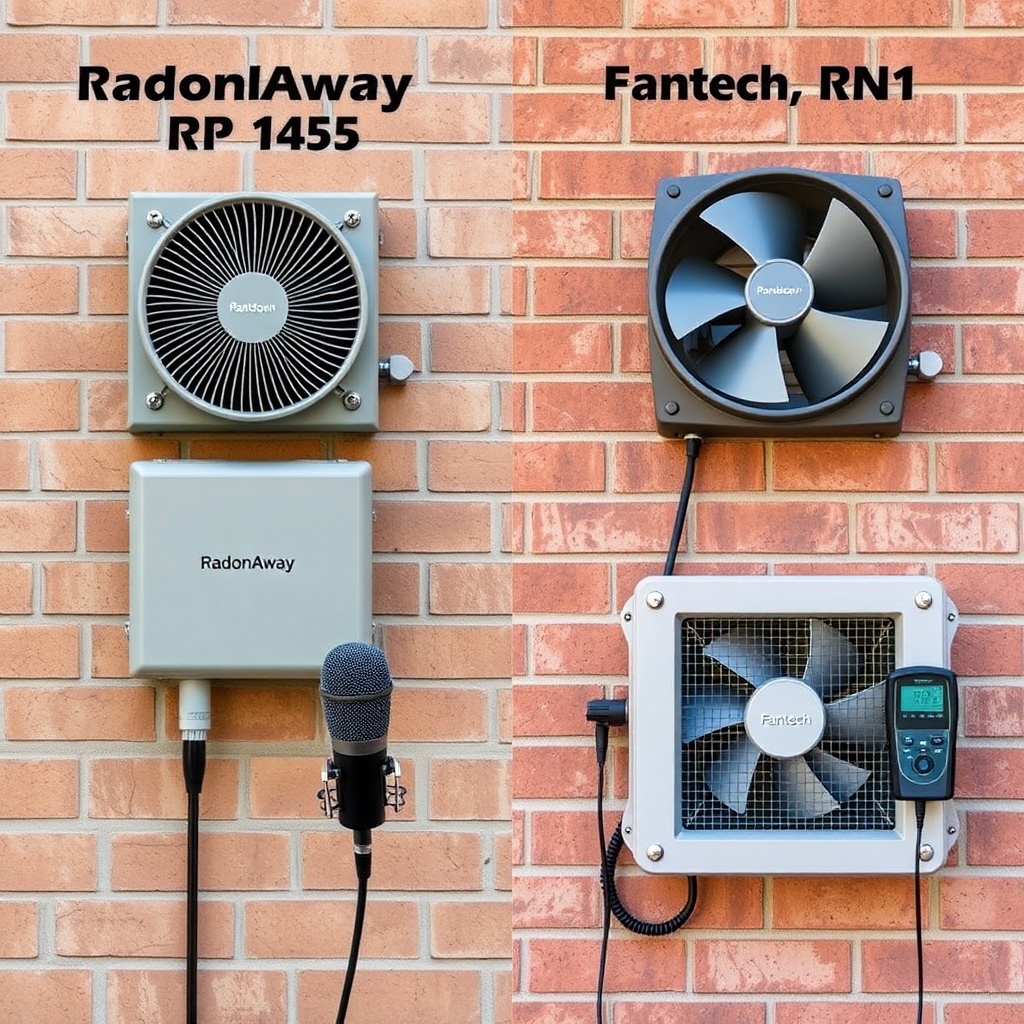
How Does Each Fan Perform in High Static Pressure Situations?
Static pressure is the resistance the fan must push against—created by long pipe runs, elbows, and soil conditions. The RP145 is rated for 1.4 kPa max static pressure, meaning it can handle more demanding suction requirements without losing airflow. In contrast, the RN1 maxes out around 1.1 kPa. For homes with extensive piping systems, multiple 90-degree bends, or high-clay soil, the RP145’s superior pressure capability ensures consistent radon removal. If your radon levels are moderate (e.g., 150–300 Bq/m³) and the suction pit is close to the fan, the RN1 works fine. For severe radon levels (above 1000 Bq/m³) or complex duct runs, the RP145 is recommended. For optimal piping configurations, see our guide on Optimal Piping Setup for RadonAway RP145 Fan.
What Is the Typical Installation Process and Cost?
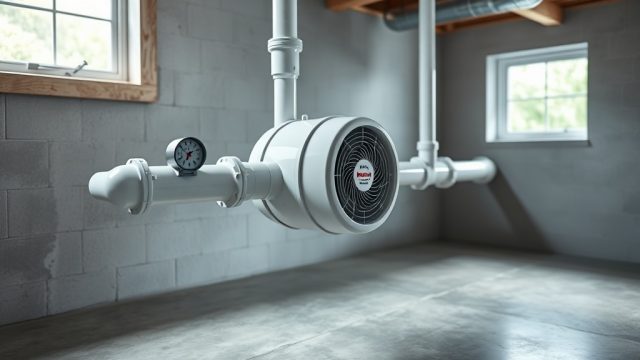
Both fans are designed for straightforward installation with 4-inch PVC pipe connections. However, the RP145 includes a mounting bracket and comes with built-in speed control, which simplifies the process. The RN1 requires a separate external speed controller (available from Fantech) if you want variable speed. Labour cost for a professional install in the UK ranges from £300 to £600, depending on the complexity. Materials (pipe, elbows, sealant, and test equipment) add another £80 to £150. RadonAway offers a 5-year warranty, indicating confidence in its longevity. Fantech’s 3-year warranty is standard for the industry. Considering the higher upfront cost of the RP145, but factoring in the extended warranty and reduced energy usage, many homeowners find it a more cost-effective long-term solution. For a full product review, visit our RadonAway RP145 Fan Review: Performance, Noise, and Installation.
RadonAway RP145 vs Fantech RN1: Which Fan Wins for Your Home?
For the majority of UK and Irish homes, the RadonAway RP145 emerges as the superior choice due to its superior energy efficiency, quieter operation, and higher static pressure capability. The initial price premium (approximately £60–£70) is recouped through lower electricity bills within 12–18 months for most installations. The Fantech RN1 remains a viable option for budget-constrained projects or for smaller properties with minimal pressure demands. However, for homeowners committed to long-term radon reduction without compromising on comfort or monthly expenses, the RadonAway RP145 is the definitive winner. To compare with another popular model, check our comparison RadonAway RP145 vs RP260: Which Fan Suits Your Home?.
What Owners Say
UK homeowners who installed the RadonAway RP145 consistently praise its quiet operation and low running costs. One user from Gloucestershire noted, “I can barely hear it even in the adjacent room—my old AC fan was like a vacuum cleaner beside it.” Another from Edinburgh remarked that after three years, their electricity bill increased by only £90 per year, which is far less than the £200-plus they had estimated for other models. Some owners mentioned the DC motor’s ability to self-regulate with varying soil moisture. For the Fantech RN1, owners often cite its robustness and lower initial price, but several noted the hum can be noticeable at night and that the power consumption was higher than anticipated. Overall satisfaction tilts toward the RP145 for those prioritising long-term savings and silence.
Frequently Asked Questions
- Q: Can the RadonAway RP145 be installed indoors?
A: Yes, it is safe for indoor installation because its DC motor runs cool, and the fan is listed for both indoor and outdoor use. However, always follow manufacturer guidelines to avoid condensation issues. - Q: Does the Fantech RN1 come with a built-in speed controller?
A: No, the RN1 requires an external speed controller (sold separately) to adjust airflow. The RP145 includes this function in its electronics. - Q: Which fan is better for a household with high radon levels (above 1000 Bq/m³)?
A: The RP145 is recommended because its higher static pressure capability (1.4 kPa) can maintain suction in high-resistance conditions, whereas the RN1 may struggle. - Q: How long does it take to recoup the higher price of the RP145 through energy savings?
A: Typically 12 to 18 months, based on the £70 cost difference and annual savings of £130+ in electricity. - Q: Are both fans compatible with standard 4-inch PVC pipe used in UK radon systems?
A: Yes, both have 4-inch (102 mm) inlet and outlet ports that connect directly to standard PVC pipe. Always use primed joints. - Q: What is the expected lifespan of the RP145 motor?
A: With the brushless DC design, it is rated for 20+ years of continuous operation, well supported by its 5-year warranty.