RadonAway RP145 vs RP260: Which Fan Suits Your Home?
Choosing between the RadonAway RP145 and the RP260 comes down to matching the fan’s airflow capacity with your home’s sub-slab pressure field extension and pipe run length. The RP145 is a compact, energy-efficient unit designed for typical residential installations with moderate static pressure, while the RP260 delivers higher suction power for longer pipe runs, larger crawlspaces, or homes with tighter soil conditions. This guide breaks down the key differences in performance, noise, energy use, and installation requirements so you can make the right call for your radon mitigation system.
How Do the Fan Specs Compare for the RadonAway RP145 vs RP260?
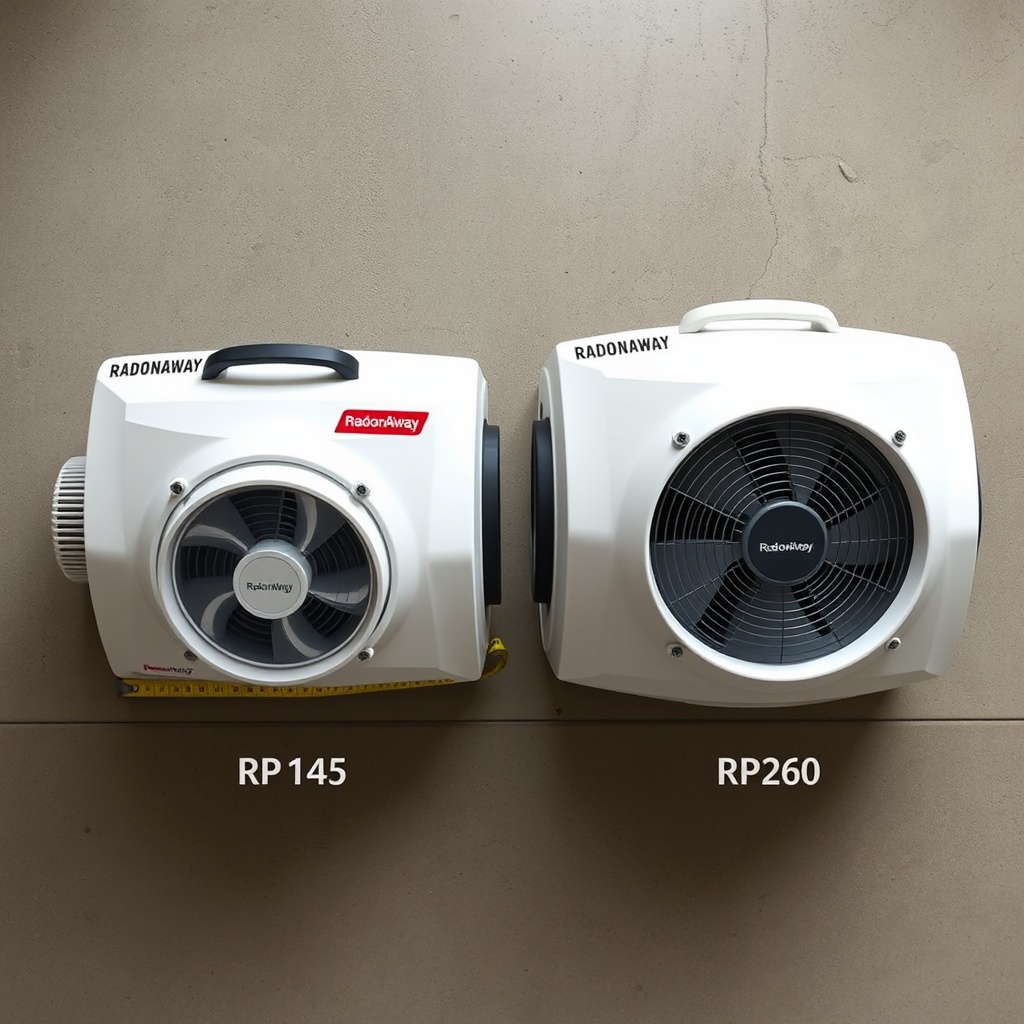
The RadonAway RP145 and RP260 are both 4-inch inlet/outlet centrifugal fans, but their internal motor and impeller designs differ significantly. The RP145 uses a 145-watt motor capable of moving up to 145 CFM at free air, with a maximum static pressure of 1.0 inches of water column. In contrast, the RP260 runs a 260-watt motor that pushes 260 CFM at free air and reaches a maximum static pressure of 1.6 inches of water column. For typical 3‑ to 4‑inch PVC runs under 40 feet with moderate sub-slab gravel, the RP145 is often sufficient. For longer runs (over 60 feet), tighter clay soils, or homes with multiple suction points, the RP260 provides the headroom needed to maintain negative pressure at the slab.
Both fans are UL-listed for radon applications and come with a 5‑year warranty. The RP260 is physically larger by about 2 inches in each dimension, so check your rough-in space before ordering. For a deeper look at the RP145’s overall performance and installation quirks, read our full RadonAway RP145 Fan Review: Performance, Noise, and Installation.
| Specification | RadonAway RP145 | RadonAway RP260 |
|---|---|---|
| Motor Power | 145 watts | 260 watts |
| Free Air CFM | 145 CFM | 260 CFM |
| Max Static Pressure | 1.0 in. w.c. | 1.6 in. w.c. |
| Noise Level (at 5 ft) | ~45 dB(A) | ~52 dB(A) |
| Weight | 11 lbs | 15 lbs |
| Dimensions (W x H x D) | 11.5 x 10.5 x 9.0 in | 13.5 x 12.5 x 10.0 in |
| Pipe Size | 4 in. PVC | 4 in. PVC |
| Warranty | 5 years | 5 years |
| Price (USD) | $210 – $240 | $280 – $320 |
Which Fan Is Quieter: The RP145 or the RP260?
Noise matters when the fan is installed in a living area, garage, or near bedrooms. The RadonAway RP145 is noticeably quieter because it runs at a lower rotational speed and uses a smaller motor. At a distance of 5 feet from the fan housing, typical readings are around 45 dB(A)—about the level of a quiet library or soft conversation. The RP260, with its larger motor and higher airflow, measures closer to 52 dB(A). That’s roughly the equivalent of a running refrigerator or a small window air conditioner. While neither fan is loud enough to cause annoyance in a well-separated utility room, the RP145 is the better choice for installations inside conditioned spaces or where absolute quiet is a priority.
If you plan to mount the fan in an attic or garage, the noise difference becomes less critical. But for sub-slab systems in finished basements, the RP145’s lower noise profile can make the difference between a system you forget is running and one you hear every time you walk past. Keep in mind that pipe vibration can amplify noise regardless of fan model—using rubber isolation couplings and securing the pipe to joists helps. Our RadonAway RP145 Energy Usage and Cost Analysis includes decibel measurements from field installations.
How Does Energy Use Compare Between the RP145 and RP260?
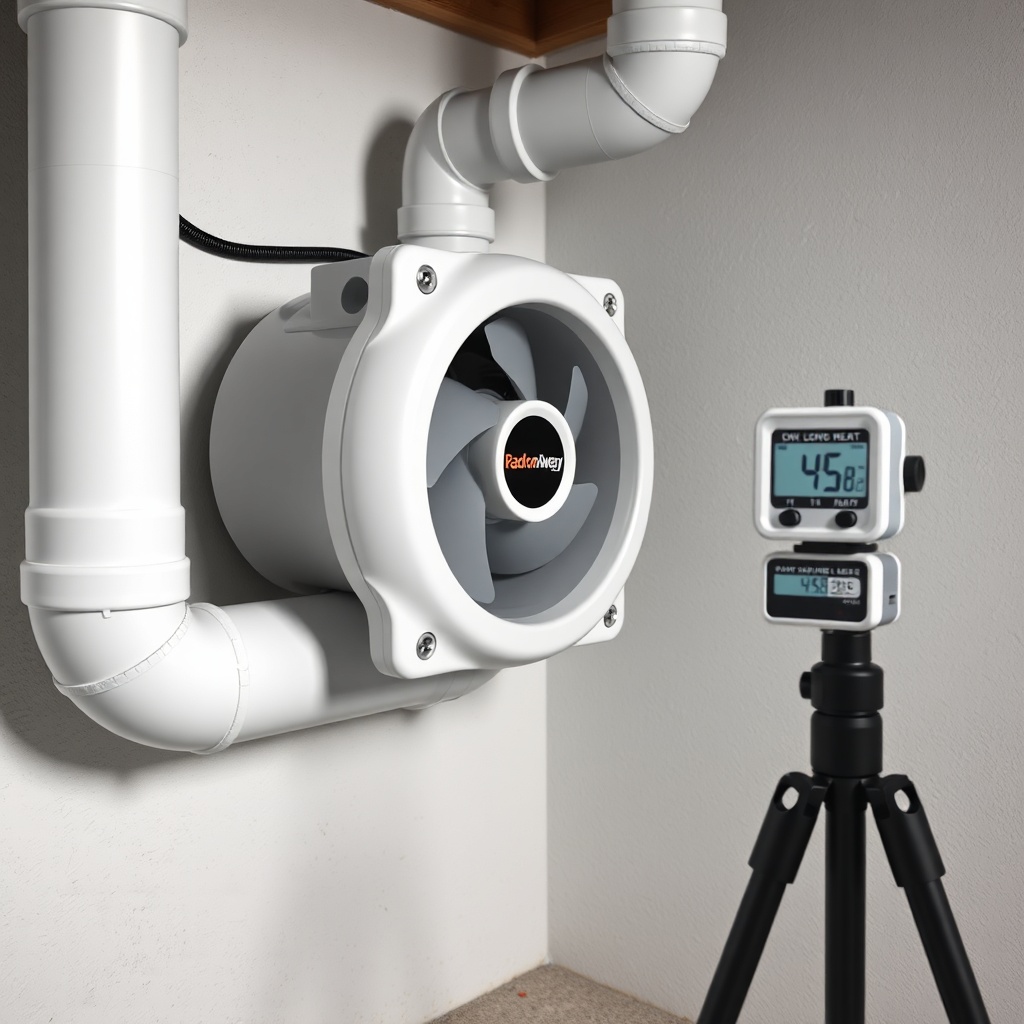
Running 24/7, the energy cost difference adds up. The RadonAway RP145 draws about 1.2 amps at 120 volts, meaning roughly 145 watts under load. At the U.S. average electricity rate of $0.14 per kWh, that’s about $0.49 per day, or $178 per year. The RP260 draws 2.2 amps—260 watts—costing $0.87 per day, or $318 per year. Over a 5‑year warranty period, that’s a potential savings of $700 with the RP145.
But don’t choose solely on running costs: if the RP260 is needed to achieve the required negative pressure, the savings from the RP145 won’t matter because your system won’t work correctly. You’ll need a manometer reading at the U-tube to confirm. For typical slab-on-grade homes with good gravel, the RP145’s energy efficiency is a clear advantage. Check our RadonAway RP145 Energy Usage and Cost Analysis for detailed calculations based on your local rates and run hours.
When Should You Choose the RP260 Over the RP145?
The RP260 is the right fan when your sub-slab diagnostic test shows you need higher static pressure. Common indicators include: a pipe run longer than 50 feet with more than four elbows, soil that is compacted clay or heavy silt, a suction point that is more than 30 feet from the fan location, or a home with a large footprint over 2,000 square feet. The RP260 also handles multiple suction points better—if you need to pull from two or three separate areas via a manifold, the extra CFM and static pressure keep the whole system balanced.
A practical rule: if your sub-slab depressurization test shows you can achieve 0.04 inches of water column at the most distant point with 50 CFM of airflow, the RP145 will likely work. If you need 100 CFM or more coverage, step up to the RP260. Remember that oversizing a fan wastes energy and can cause excessive noise; the RP260 should only be used when diagnostics prove the RP145 cannot meet the required vacuum. For help with proper pipe routing, see our Optimal Piping Setup for RadonAway RP145 Fan.
What Are the Installation Differences Between the Two Fans?
Physically, both fans mount using the same 4‑inch PVC connections, so the basic piping layout is identical. The RP145 is lighter (11 lbs vs 15 lbs) and smaller, making it easier to handle alone on a ladder or in a tight attic. The RP260 requires a more robust mounting bracket because of its weight and the added torque from higher air velocity. Both fans include a 10‑foot power cord, but check local codes—some jurisdictions require a dedicated switch or GFCI outlet within reach.
One practical difference: the RP260’s larger housing can create clearance issues if you’re mounting it close to a wall or joist. Allow at least 6 inches around the fan body for air circulation and service access. The RP145 fits in tighter spots, such as above a drop ceiling or inside a small utility closet. Whichever you choose, always use a condensation bypass—the RP145’s lower heat output means condensation is less common, but still advisable.
What Do Homeowners Say About These Fans?
Owners of the RadonAway RP145 frequently mention how quiet it is—many note they forget it’s running until they check the manometer. A common observation: “I installed the RP145 in my finished basement next to my furnace, and I can’t hear it at night.” Some users with longer pipe runs (over 60 feet) report needing to upgrade to the RP260 after initially trying the RP145, saying, “The RP145 worked fine for about a year, then my radon levels went up in winter. Switched to the RP260 and it’s steady now.”
RP260 owners often highlight its raw pull power: “My house sits on clay, and this fan dropped my radon from 12 pCi/L to 2.3 pCi/L instantly.” A few note the higher noise: “It’s louder than the old fan I replaced, but I put it in the garage, so no big deal.” The consensus: stick with the smaller fan if your soil and pipe distance allow, but don’t hesitate to go bigger if your diagnostics demand it.
Frequently Asked Questions
Can I use the RadonAway RP145 for a crawlspace system?
Yes, but with caution. The RP145 is designed for sub-slab applications. For crawlspaces with a vapor barrier and active soil depressurization, you need to ensure the fan’s airflow can overcome the pressure drop through the gravel and membrane. Typically, a RP145 works well for sealed crawlspaces up to 1,500 square feet with good airflow path. For larger or complex crawlspaces, the RP260 is more reliable.
Does the RP145 work with 3-inch PVC piping?
No. The RadonAway RP145 has a 4-inch inlet and outlet. Using a reducer to 3‑inch piping increases static pressure and reduces airflow, potentially voiding the warranty. Always use 4‑inch PVC for the full run. If you must transition, keep the 3‑inch section under 10 feet and check your manometer readings.
How often should I replace the RadonAway RP145?
The RP145 is designed to run continuously for 5–7 years. Many units last 10 years, but performance degrades as bearings wear. Replace it when your manometer reading drops by more than 20% from the initial setup or if the fan makes grinding noises. The 5‑year warranty covers defects, not wear from continuous use.
Can the RP260 be wired to a variable speed controller?
No. Both the RP145 and RP260 are permanent split capacitor (PSC) motors and are not designed for speed control. Using a dimmer or variable controller can cause motor overheating and premature failure. If you need adjustable airflow, look at the RadonAway RP100X or a dedicated ECM fan model.
What is the maximum pipe length for the RP145?
For optimal performance, keep the pipe run under 50 feet with no more than four 90-degree elbows. Each elbow adds the equivalent of 10 to 15 feet of straight pipe. A 70-foot run with several turns may still work, but check your static pressure—if it exceeds 0.8 inches w.c., consider the RP260.
Does the RP145 require a condensation drain?
Yes, it is strongly recommended. Even though the RP145 produces less condensation than larger fans, humid soil gas can cause water to collect in the pipe, especially in basements. Install a tee with a drain leg below the fan inlet to direct moisture away from the motor.