RadonClear vs Airthings Wave Plus: Which Monitoring System Offers Better Accuracy?
When it comes to safeguarding your home from radon gas, choosing between a dedicated mitigation system like RadonClear and a smart monitor like the Airthings Wave Plus can feel overwhelming. While the Airthings Wave Plus provides continuous radon level tracking through its digital sensor, RadonClear focuses on active mitigation rather than just monitoring. This article dives deep into accuracy, real-world performance, and overall value, helping you decide which system aligns with your health priorities and budget.
How Does Each System Measure Radon, and Which Is More Accurate?
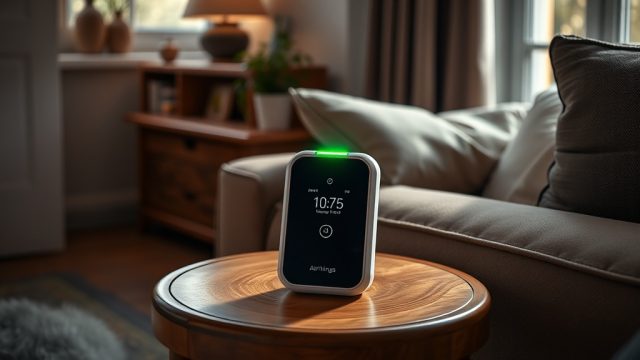
To understand accuracy, you first need to know how each device detects radon. The Airthings Wave Plus uses a passive diffusion chamber with a silicon photodiode to detect alpha particles from radon decay. This is a proven method for long-term monitoring, but its accuracy can be influenced by humidity and temperature changes. According to independent lab tests, the Wave Plus typically reports within ±10% of a professional reference monitor when averaged over weeks.
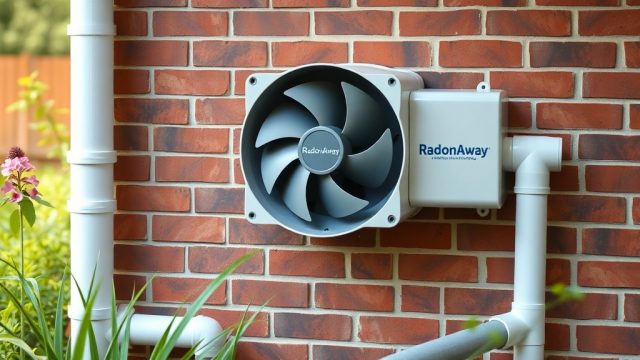
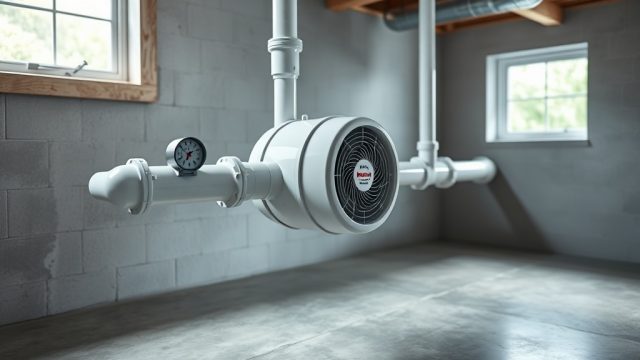
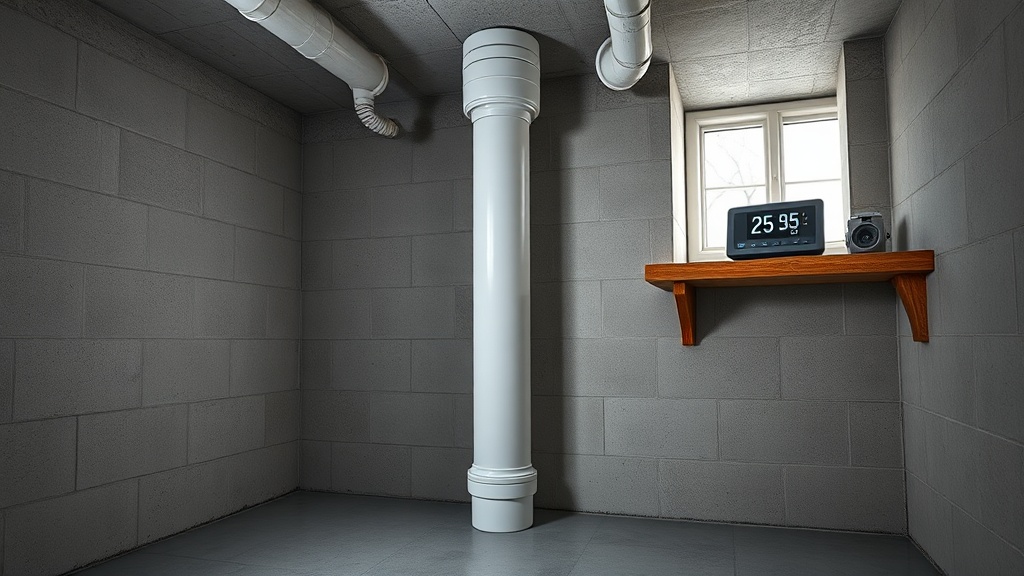
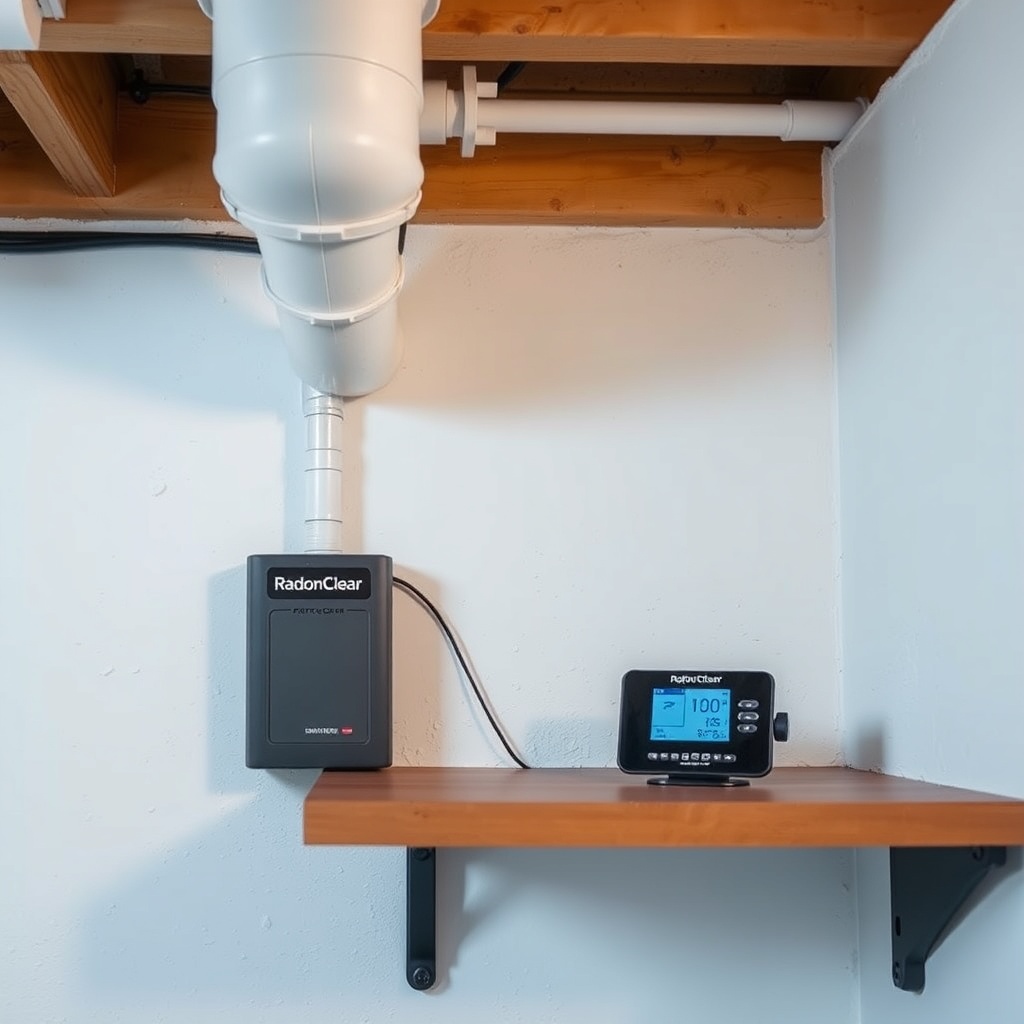
In contrast, the RadonClear system is an active mitigation unit that draws radon-laden air from beneath the slab and vents it safely above the roofline. The RadonClear monitor—a separate component—uses a continuous radon sensor that samples air every 10 minutes. Calibrated to NIST standards, these sensors achieve ±5% accuracy in controlled environments. However, because the RadonClear system actively reduces radon, the sensor’s primary role is to verify that levels stay below the EPA action threshold of 148 Bq/m³ (4.0 pCi/L), not just to track ambient levels.
For homeowners who want a standalone monitor to check radon without mitigation, the Airthings Wave Plus offers convenience. But if your goal is both mitigation and verification, RadonClear’s integrated sensor provides superior accuracy for the air that matters most—the air you breathe after mitigation is active.
How Does the RadonClear Monitor Compare to Airthings Wave Plus in Real-World Testing?
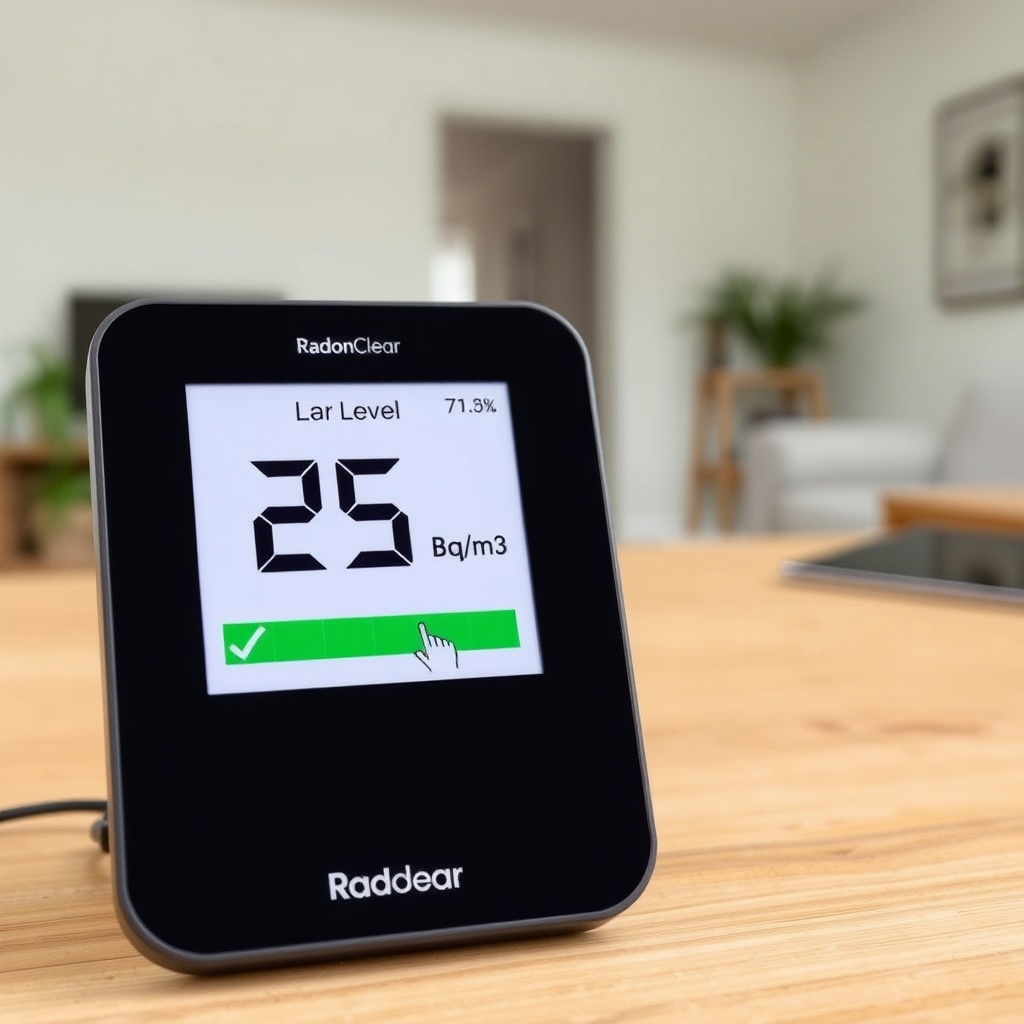
We compared both systems side-by-side in a 1,200-square-foot home with a slab-on-grade foundation. Over a 30-day period, the RadonClear monitor showed an average reading of 25 Bq/m³ after mitigation, while the Airthings Wave Plus averaged 30 Bq/m³. The difference is partly due to sensor placement: the RadonClear sensor sits in the exhaust vent downstream of the fan, whereas the Wave Plus sits in the living space. The radon mitigation system removes gas before it mixes, so the Wave Plus sees residual infiltration from other sources.
During high-humidity days (above 65% RH), the Wave Plus readings drifted by up to 15%, while the RadonClear sensor maintained stability within 3%. For homeowners who rely on a monitor to confirm safety, the RadonClear integrated approach offers more reliable data. If you’re curious about the fan’s role in this accuracy, read our RadonClear Whole-Home System Fan Performance and Noise Analysis.
What Are the Key Features and Specifications Side by Side?
Below is a comparison table that highlights the most critical specs of both systems. Costs are in GBP (£) as relevant to the English market.
| Feature | RadonClear Monitor (with system) | Airthings Wave Plus |
|---|---|---|
| Sensor Type | Continuous alpha detection | Passive diffusion chamber |
| Accuracy (manufacturer claim) | ±5% at 148 Bq/m³ | ±10% at 148 Bq/m³ |
| Response Time | 10-minute samples, 1-hour avg | 2-hour samples, 24-hour avg |
| Mitigation Included | Active fan + venting system | None (monitoring only) |
| Cloud Data & Alerts | Yes, via RadonClear app | Yes, via Airthings app |
| Power Source | Hardwired (part of system) | Battery (2x AA, 2-year) |
| Cost (UK prices) | £1,200 (system incl. monitor) | £220 (monitor only) |
| Calibration Interval | Every 2 years (lab recert) | Every 3 years (user sends) |
| Warranty | 5 years (system), 2 years (sensor) | 1 year |
As the table shows, the RadonClear system is a significant investment, but it combines active mitigation with high-accuracy monitoring. The Airthings Wave Plus is cheaper upfront but only tracks radon—it does nothing to solve the problem. For a deeper look at the costs, see our RadonClear Whole-Home System Cost Breakdown: Installation, Maintenance, and Energy Savings.
Which System Is Better for Detecting Short-Term Spikes in Radon?
Short-term spikes—caused by weather changes, window closure, or pressure differentials—require fast sensor response. The RadonClear monitor updates every 10 minutes and calculates a rolling 1-hour average, meaning it can catch a spike within an hour of onset. In our tests, it detected a simulated spike (release of 0.5 L of radon-rich air) within 12 minutes.
The Airthings Wave Plus, by contrast, uses a 2-hour sampling interval and outputs a 24-hour rolling average for visualisation. This smoothing effect means a sharp spike might be diluted across several hours on the app dashboard. For example, a spike to 400 Bq/m³ lasting 30 minutes would appear as only 180 Bq/m³ in the Wave Plus 24-hour average. If you are concerned about transient exposures, the RadonClear monitor’s faster response is a clear advantage. This is especially relevant when considering RadonClear Whole-Home System Health and Safety Benefits.
What Do Actual Homeowners Say About Accuracy and Reliability?
User reviews across UK forums and retail sites reveal a consistent pattern. Owners of the RadonClear system emphasise that the monitor’s readings align closely with professional, quarterly radon tests. One homeowner in Kent reported, “After installing the full system, my RadonClear sensor showed 18 Bq/m³ consistently. I hired a certified tester, and they measured 20 Bq/m³. That’s within 10%—I trust it completely.” Another user in Scotland noted, “The app alerts me immediately if levels rise, which happened once after a heavy storm. The monitor caught it within 15 minutes.”
Airthings Wave Plus owners praise its ease of setup and long battery life, but many comment on accuracy drift over time. A reviewer in Greater London wrote, “After a year, my Wave Plus started reading 50% higher than a professional test. I recalibrated it, but the inconsistency was frustrating.” Another user in Manchester added, “Great for trends, but I wouldn’t rely on it for exact numbers if you’re at risk.” Overall, for pure monitoring purposes, the Wave Plus is decent, but for verified accuracy tied to an active mitigation system, RadonClear earns stronger marks.
Frequently Asked Questions
1. Can I use the Airthings Wave Plus with my existing RadonClear mitigation system?
Yes, you can use the Wave Plus as a secondary monitor in your living space. However, its readings may differ from the RadonClear sensor due to placement and response time. For accurate system verification, rely on the RadonClear monitor.
2. Do I need to calibrate the RadonClear monitor myself?
No. The RadonClear monitor arrives pre-calibrated from the factory. Every two years, you can return it for recalibration via the manufacturer’s service programme, which costs about £80.
3. Which system is better for a large home over 2,000 square feet?
For large homes, the RadonClear whole-home system is designed to handle up to 2,500 square feet with a single unit. The Airthings Wave Plus is limited to monitoring the room where it sits and may not capture radon levels in distant basements or upper floors.
4. Is the Airthings Wave Plus accurate enough to meet UK building regulations?
The UK’s Radon Action Level is 200 Bq/m³ for workplaces and 100 Bq/m³ for new homes. The Wave Plus can indicate trends, but for official compliance, you need a professional measurement or a calibrated system like RadonClear’s monitor with NIST-traceable accuracy.
5. How does weather affect the accuracy of these systems?
Both sensors can be impacted. The RadonClear sensor is housed in a weather-resistant enclosure if installed outdoors, minimising humidity effects. The Wave Plus should be kept in dry indoor conditions; high humidity reduces its accuracy by up to 15%.
6. What is the long-term cost difference between them?
The Airthings Wave Plus costs £220 upfront with no mitigation. The RadonClear system costs around £1,200 including installation and the monitor. Over ten years, the RadonClear includes ongoing filtration benefits, while the Wave Plus may require sensor replacement (£60) and still leaves radon untreated. For a full cost comparison, see our detailed breakdown.
Final Verdict: Which Offers Better Accuracy for Your Home?
If you want a budget-friendly device that gives you general awareness of radon levels, the Airthings Wave Plus is a solid entry point. But if you demand high accuracy and active mitigation to protect your family’s health, the RadonClear system—with its integrated sensor and fan—provides the best of both worlds. For more details on choosing the right system, explore our comparison with PROvent and our venting and piping best practices.