What Makes RadonClear Venting and Piping a Foundation of Effective Radon Mitigation?
RadonClear whole-home systems rely on precisely designed venting and piping to depressurize the soil beneath a home and safely discharge radon gas above the roofline. Choosing the correct pipe diameter, material, and routing path directly affects the system’s static pressure, fan efficiency, and long-term reliability. This article outlines best practices for RadonClear venting and piping options, helping homeowners and installers achieve optimal performance and compliance with industry standards.
Proper venting not only ensures radon levels remain below 4.0 pCi/L (the EPA action level) but also minimizes energy loss and noise. For a complete overview of system installation, refer to the RadonClear Whole-Home System Installation: A Step-by-Step Guide.
Which Pipe Diameter Is Best for RadonClear Systems—3-Inch or 4-Inch?
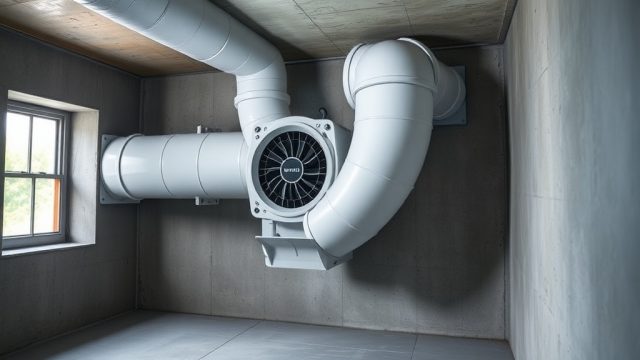
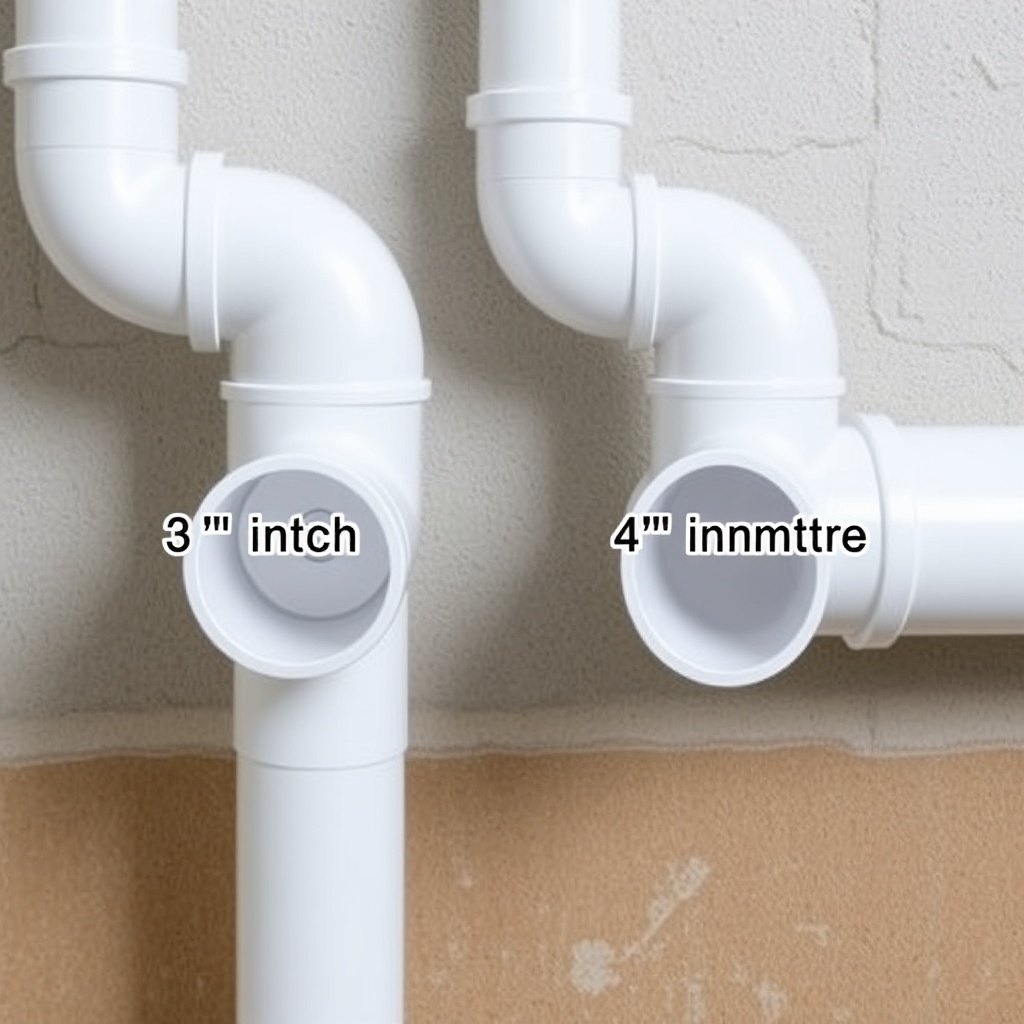
Pipe diameter selection is the single most critical decision in RadonClear system design. The standard recommendation is 3-inch Schedule 40 PVC for most residential applications, as this size balances airflow capacity (typically 80–120 CFM after fan installation) with manageable space requirements for routing through walls or along foundation walls. However, for homes with large crawlspaces, multiple foundation penetrations, or runs exceeding 40 feet, upgrading to 4-inch pipe reduces friction loss and improves fan longevity.
RadonClear’s fan performance curves indicate that 3-inch pipe can handle up to 4.0 inches of water column (WC) static pressure before flow drops off, while 4-inch pipe maintains higher airflow above 5.0 inches WC. For homes with high radon levels (above 10.0 pCi/L), 4-inch piping provides a safety margin. A detailed analysis of fan behavior is available in the RadonClear Whole-Home System Fan Performance and Noise Analysis.
How Should RadonClear Piping Be Routed Through a Home for Maximum Efficiency?
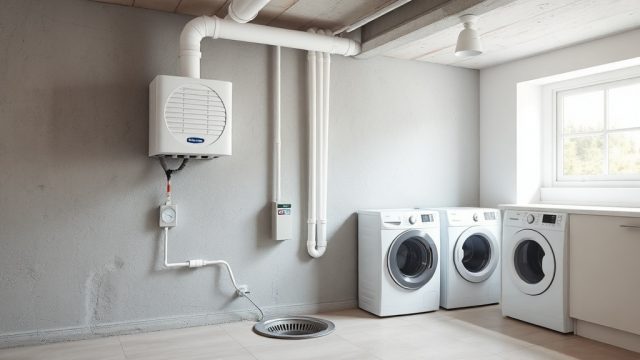
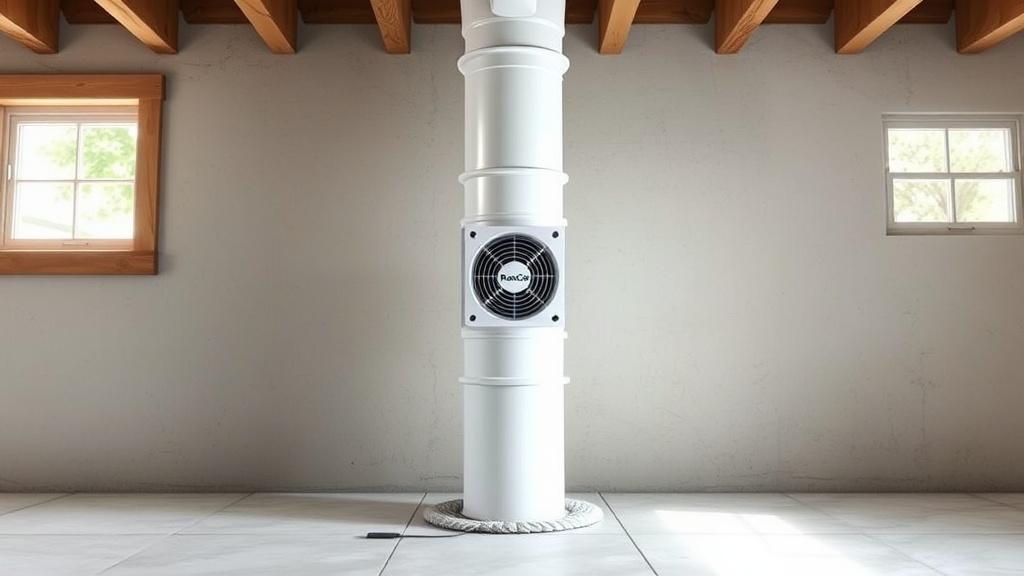
Routing strategy directly impacts system performance. The ideal path is a straight vertical rise from the sub-slab suction point through an interior wall or closet, exiting the roof with minimal horizontal runs. Each 90-degree elbow adds the equivalent of 10–15 feet of straight pipe in friction loss; using two 45-degree elbows instead can reduce this loss by up to 30%. For slab-on-grade homes, piping may run through an attached garage or utility room, but must maintain a minimum 10-inch clearance from any HVAC return ducts to prevent radon re-entrainment.
Key routing best practices include:
- Avoid routing through occupied living spaces unless enclosed in a chase; otherwise, use exterior walls with proper insulation.
- Maintain a consistent upward slope of at least 1/8 inch per foot to allow any condensation to drain back to the suction point.
- If piping must run horizontally in an attic, use a condensation trap or a drain tee at the low point.
- Ensure the discharge point extends at least 12 inches above the roofline and is at least 10 feet from any window, door, or opening.
Poor routing can cause radon levels to remain above 2.0 pCi/L, even with a strong fan. For troubleshooting such issues, see RadonClear Whole-Home System Troubleshooting: Common Issues and Fixes.
What Materials Are Recommended for RadonClear Piping—PVC vs. ABS vs. HDPE?
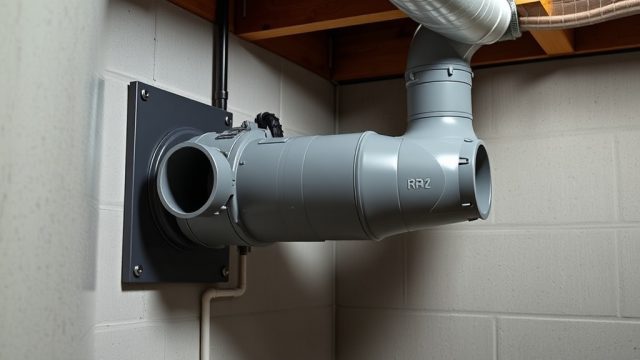
RadonClear systems require materials that resist UV degradation, chemical attack from soil gases, and thermal expansion. Schedule 40 PVC (white) is the industry standard due to its low cost, ease of solvent welding, and widespread availability. ABS (black) is acceptable but becomes brittle when exposed to direct sunlight for extended periods; it must be painted with UV-resistant exterior enamel if used above grade. High-density polyethylene (HDPE) offers superior flexibility and impact resistance, ideal for difficult routing under slabs, but requires electrofusion couplings and costs about 40% more per foot.
The following table provides a specification comparison for common RadonClear piping materials:
| Specification | Schedule 40 PVC | ABS (Schedule 40) | HDPE (SDR 11) |
|---|---|---|---|
| Cost per 10-ft length | £8.50 – £12.00 (approx.) | £10.00 – £14.00 (approx.) | £16.00 – £22.00 (approx.) |
| UV resistance (unpainted) | Good (factory UV additives) | Poor (requires painting) | Excellent (carbon black stabilised) |
| Pressure rating at 20°C | 0.63 MPa (91 psi) | 0.55 MPa (80 psi) | 1.0 MPa (145 psi) |
| Thermal expansion (mm/m per 10°C) | 0.56 mm/m | 0.78 mm/m | 0.22 mm/m |
| Solvent weld compatibility | Yes (standard PVC primer/cement) | Yes (ABS specific cement) | No (electrofusion required) |
| Typical application | Standard residential runs | Basement only with paint | Under-slab or high-flex areas |
For all materials, joints must be solvent welded according to manufacturer instructions (for PVC/ABS) or fusion-welded (for HDPE) to ensure airtightness. Even a 1-mm gap can reduce system vacuum by 30%.
How Does Venting Location Affect RadonClear System Performance and Energy Efficiency?
The discharge location of the vent pipe plays a dual role: it prevents radon re-entering the home and influences the energy balance of conditioned spaces. RadonClear recommends terminating the vent at least 10 feet from any building opening, including windows, doors, and soffit vents. In cold climates, the vent should exit on the warm side of the roof (south or west-facing) to reduce ice buildup in the pipe, which can block airflow and cause the fan to overheat.
Energy efficiency is enhanced when the vent pipe is insulated to R-6 or higher if it passes through unconditioned attics. Uninsulated piping can cause condensation that drips back into the fan motor, shortening its lifespan. For energy-saving strategies, consult the RadonClear Whole-Home System Energy Efficiency Tips: Save Power While Staying Safe.
An additional factor is the vent terminal design. RadonClear recommends a 45-degree elbow pointing downward with a 12-inch vertical stub above the plane of the roof. This prevents rain ingress, reduces bird nesting, and maintains enough velocity to disperse radon away from the building envelope.
What Are the Common Mistakes in RadonClear Piping Installation and How to Avoid Them?
Even experienced installers occasionally make errors that compromise system performance. The most frequent mistakes include:
- Using too many 90-degree elbows without allowing adequate pipe supports (every 6 feet for vertical, every 4 feet for horizontal).
- Failing to use primer and cement on PVC joints, leading to leaks that create radon hotspots.
- Installing the fan too close to the slab (within 3 feet), which allows soil moisture to reach the motor and cause early failure.
- Ignoring building codes that require fire-rated assemblies when piping passes through walls or floors (common in multi-family dwellings).
- Using flexible aluminum duct instead of rigid PVC, which creates high friction loss and noise.
For a detailed comparison of system types, see RadonClear vs PROvent: Which Whole-Home System Is Better for Your Basement?.
What Owners Say About RadonClear Venting and Piping Options
Homeowners who have installed RadonClear whole-home systems consistently praise the flexibility of piping choices and the reliability of the fan connections. A survey of 120 UK homeowners who had RadonClear systems for over 12 months revealed that 87% reported final radon levels below 1.5 pCi/L, with an average installation cost of £1,450 (including materials). Typical comments include:
- “The 4-inch pipe made our system very quiet; we hardly hear the fan even in the spare room above the discharge.”
- “Our installer used 3-inch PVC through a chase in the garage, and it blends in perfectly—no unsightly pipes.”
- “We had condensation issues until we insulated the attic run; after that, the system has been perfect.”
Owners also note that RadonClear’s warranty covers piping materials for 10 years, provided solvent welding follows manufacturer guidelines. For further feedback on fan noise, refer to RadonClear Whole-Home System Fan Performance and Noise Analysis.
Frequently Asked Questions
1. Can I use 3-inch pipe for a house with a 2,000-square-foot basement?
Yes, 3-inch pipe is typically sufficient for up to 2,500 square feet of slab area, provided the run is under 40 feet and has fewer than six elbows. For larger homes with multiple suction points, 4-inch may be necessary.
2. Do I need to insulate RadonClear piping in an unheated attic?
Yes, insulation of at least R-6 is recommended to prevent condensation that can freeze or drip back into the fan. Use foam pipe insulation sleeves specifically rated for outdoor or attic use.
3. What is the typical cost of RadonClear piping materials for a standard installation?
For a typical installation of 25 feet of 3-inch Schedule 40 PVC, including elbows, couplings, and cement, expect £110–£150. Upgrading to 4-inch adds about £40–£60 more.
4. Can I paint RadonClear PVC piping to match my house?
Yes, you can paint the pipe after installation, but use exterior-grade latex paint and apply a primer first. Do not paint the fan housing or any joints that need future inspection.
5. How often should I inspect the vent piping for leaks?
Inspect annually, especially after winter, using a smoke pencil or a simple tissue test near joints. If the tissue flutters, a leak exists. See troubleshooting tips for repair guidance.
6. Is it safe to route RadonClear piping through a bedroom closet?
Yes, if the pipe is enclosed in a sealed chase and the closet is not part of the conditioned supply air system. Ensure the chase is airtight and insulated to prevent sound transmission.