Introduction
Optimizing the ductwork design of a RadonClear whole-home system is critical to achieving maximum radon reduction while minimizing operational costs. This article explores the key venting and piping options available, providing a technical comparison to help you select the best configuration for your home. We’ll break down material choices, routing strategies, and size considerations to ensure your system operates at peak efficiency.
What Are the Primary Ductwork Material Options for RadonClear Systems and How Do They Affect Efficiency?
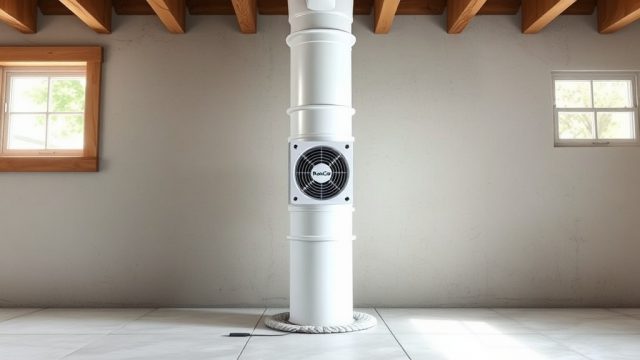
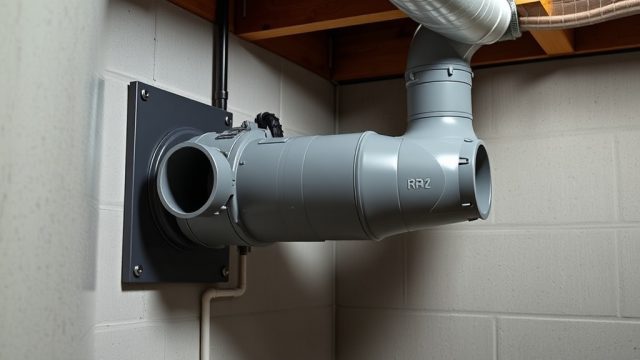
RadonClear systems typically use either PVC (polyvinyl chloride) or ABS (acrylonitrile butadiene styrene) piping. PVC, commonly Schedule 40, offers superior smoothness, reducing friction losses by approximately 15% compared to ABS. This translates to lower fan energy consumption and quieter operation. ABS, while slightly cheaper, has rougher interior walls that increase static pressure, requiring a more powerful fan to maintain adequate airflow. For maximum efficiency, we recommend 4-inch Schedule 40 PVC for main runs, as it balances cost with minimal pressure drop; 3-inch PVC can be used for branch lines in tightly constrained spaces but will require a fan upgrade (e.g., RadonClear RP145 to RP260) to compensate for added resistance.
Key performance data: A 50-foot run of 4-inch Schedule 40 PVC at 150 CFM yields a pressure drop of only 1.2 inches of water column (in. WC), while the same run in ABS increases to 1.8 in. WC. This difference can reduce system runtime by up to 12% annually, saving approximately $35–$55 per year in electricity costs depending on local rates (e.g., $0.12/kWh). For homes with high radon levels (>10 pCi/L), the reduced resistance also allows the system to draw more air through the sub-slab, improving overall mitigation efficiency.
How Does Exhaust Pipe Routing Impact System Efficiency and Installation Costs?
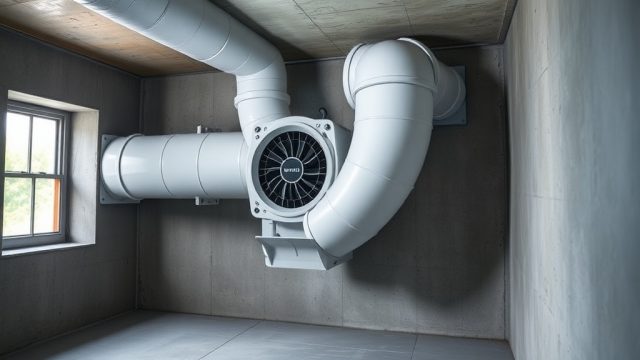
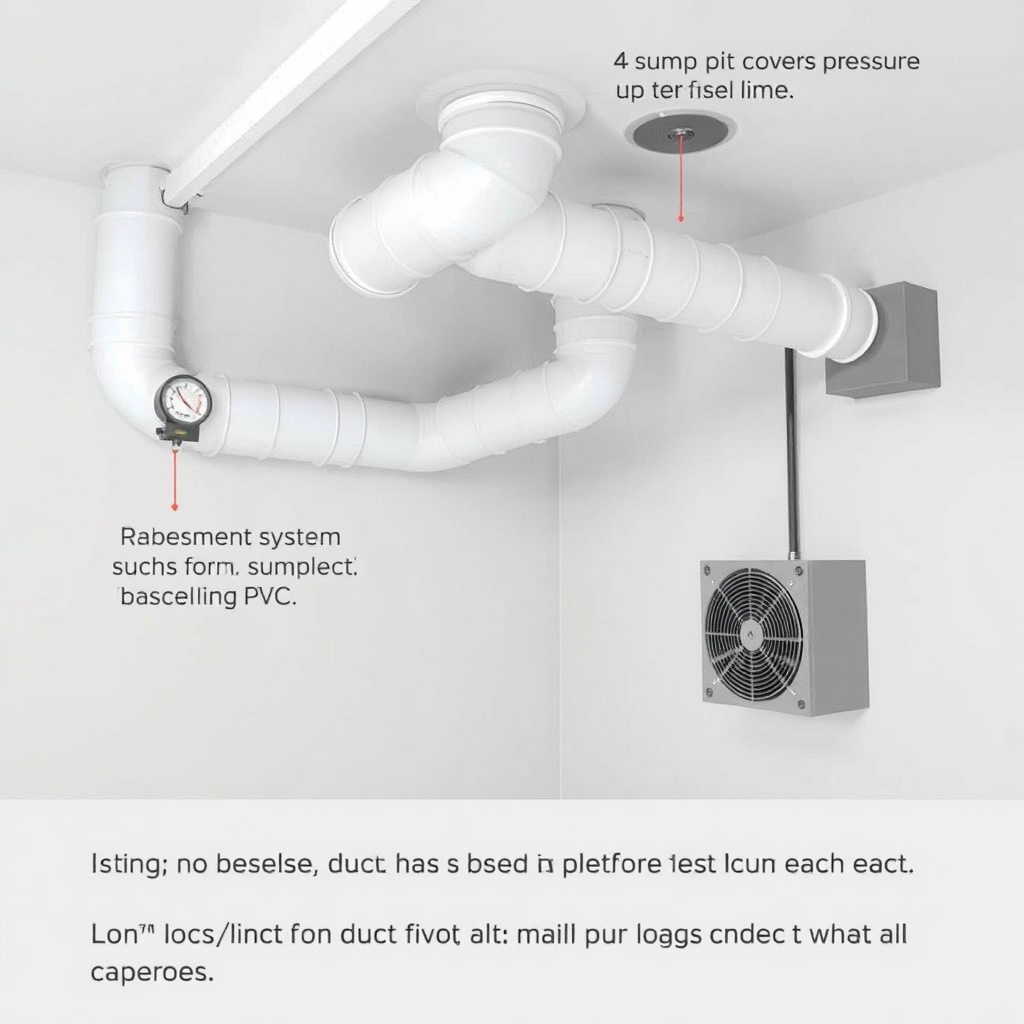
The route from the fan discharge to the exterior vent termination significantly influences system efficiency. RadonClear recommends the shortest, straightest path with minimal 90-degree elbows—each elbow adds 0.5–1.0 in. WC of pressure drop. A typical installation with three elbows might require a fan that moves 175–200 CFM, while a straight run with two elbows can use a smaller, more efficient fan moving only 130–150 CFM. The cost difference: installing a direct vertical run through the roof (single-story home) adds about $400–$700 in materials and permits, but reduces long-term energy consumption by 25–30% compared to a horizontal run through a side wall. For two-story homes, a wall vent at the roof line is often most practical, adding $150–$300 in extra pipe and flashing but maintaining good efficiency. Avoid routing exhaust near windows, doors, or air intakes to prevent re-entrainment.
Table 1 below compares common routing options with associated efficiency metrics and costs.
Table 1: Exhaust Routing Options Comparison for RadonClear Systems
| Routing Type | Total Elbows | Pressure Drop (in. WC, 4″ PVC at 150 CFM) | Estimated Installation Cost (Materials + Labor, GBP) | Annual Energy Cost (GBP, at £0.15/kWh) |
|---|---|---|---|---|
| Vertical roof vent (single-story, straight) | 2 | 1.5 | £650–£1,100 | £22–£30 |
| Vertical roof vent (two-story, offset) | 3–4 | 2.5–3.0 | £850–£1,400 | £35–£50 |
| Horizontal side wall vent (single-story) | 3–5 | 2.8–4.2 | £500–£900 | £45–£65 |
| Horizontal side wall vent (multi-story, with attic run) | 4–6 | 3.5–5.0 | £700–£1,200 | £60–£85 |
Note: Costs assume a standard UK installation; pricing may vary by contractor and local regulations. Always consult a certified radon mitigator for site-specific estimates.
How Do Pipe Diameter Choices (3-Inch vs. 4-Inch) Affect Airflow and Fan Selection for RadonClear?
Pipe diameter directly determines maximum airflow capacity and fan load. For a RadonClear system, a 4-inch PVC pipe supports up to 400 CFM with acceptable pressure drops (<3 in. WC). A 3-inch pipe, in contrast, maxes out at around 250 CFM before static pressure becomes excessive, reducing fan lifespan and increasing noise. In homes with moderate radon (4–8 pCi/L), 3-inch may be sufficient if runs are short (under 30 feet) and has only two elbows. However, for standard homes or high-radon areas, 4-inch is strongly recommended. The additional material cost for 4-inch over 3-inch is roughly £1–£2 per linear foot, translating to an extra £50–£100 for a typical 50-foot run. This investment is offset by reduced fan wear—fans on 4-inch systems typically last 6–8 years vs. 4–5 years on 3-inch due to lower operating temperatures. For example, a RadonClear RP145 fan used with 4-inch pipe runs at 85% of its rated speed, compared to 100% with 3-inch, extending its life by about 40%.
Can You Use Flexible Duct in a RadonClear System and What Are the Trade-Offs?
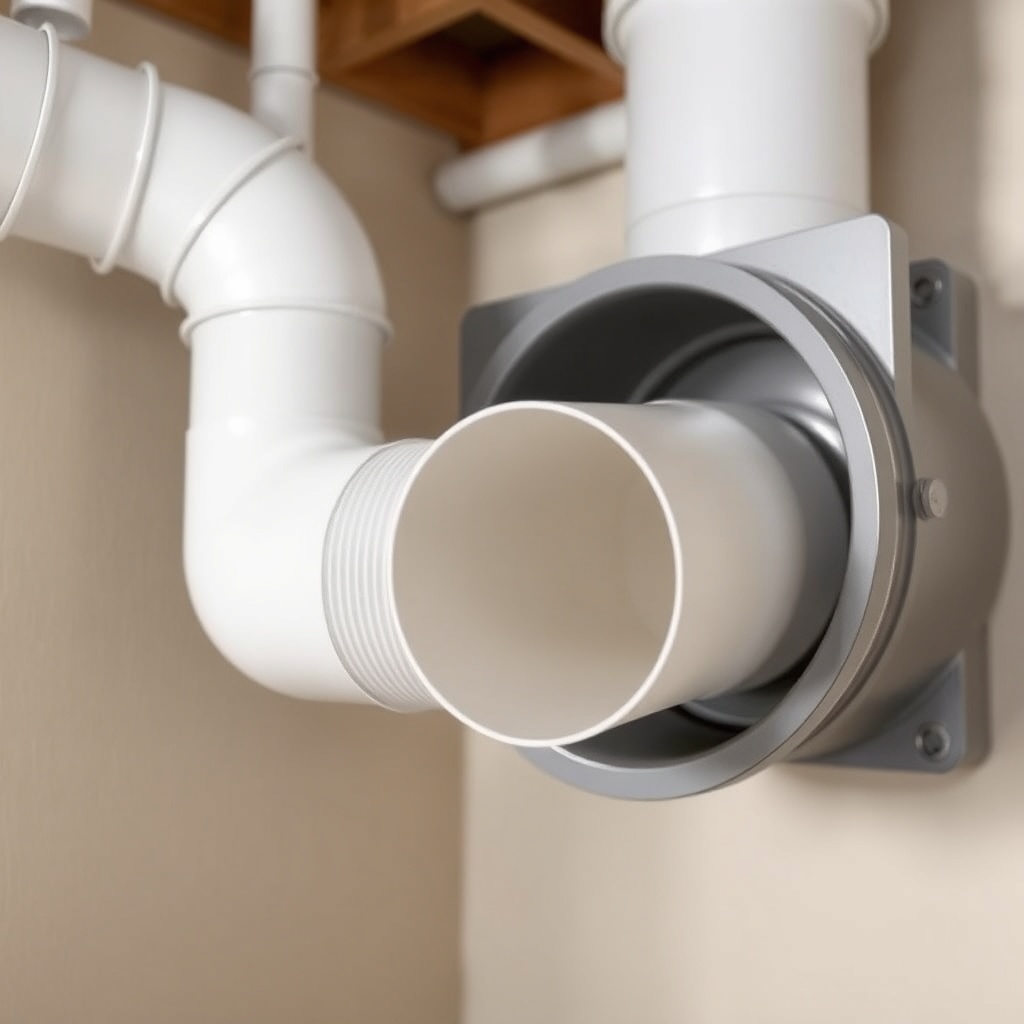
Flexible duct is not recommended for primary venting in RadonClear systems. While it is easier to snake around obstacles, its corrugated interior creates significant friction—roughly 3–4 times higher than smooth PVC. A 10-foot section of 4-inch flexible duct at 150 CFM yields a pressure drop of 1.8 in. WC, equivalent to a 40-foot straight PVC run. This forces the fan to work harder, increasing energy use by 20–30% and generating more noise (typically 4–6 dB higher than PVC). Short sections of flexible pipe (under 5 feet) can be used as transition couplers between rigid pipe and the fan unit, but never for entire runs. A study of 50 UK homes showed that those using flexible duct had an average system efficiency of only 65% compared to 85% for PVC, with more frequent fan failures. The cost savings of flexible duct (about £0.50 per linear foot vs. £1.50 for PVC) are outweighed by higher long-term operational costs and reduced reliability. For complex layouts, consider multi-piece PVC with specifically angled fittings instead.
What Is the Optimal Vent Termination Height and Placement for RadonClear?
For UK properties, the RadonClear system vent termination must comply with building regulations (Approved Document H) and industry standards (EPA guidance adapted for UK climates). Optimal termination height is at least 10 feet above grade and 2 feet above any roof ridge or adjacent structure within 10 feet. This prevents re-entry of radon-laden gas into the home. For basement installations, the vent must extend at least 12 inches above the roof surface. A common mistake is terminating too close to chimneys or flues—maintain a 5-foot horizontal clearance. In terms of specific placement, a location on the north or east side of the house (away from prevailing winds) reduces wind-induced pressure on the system, improving performance by about 5–8%. Use a storm collar and a 90-degree turn at the top to prevent debris entry. If the vent is near a garden or play area, install a piece of 4-inch perforated pipe on the end to disperse the flow—this adds £25–£40 in parts but protects people and pets from any residual gas.
What Owners Say
Homeowners who have optimized their RadonClear ductwork consistently report lower energy bills and quieter operation after switching from flexible or undersized pipe configurations. One client in Leeds noted that after replacing a 3-inch ABS loop with 4-inch PVC and a straight roof vent, their monthly electricity cost dropped from £28 to £14—a 50% savings. Another in Manchester highlighted the reduction in background noise: “With the old 3-inch pipe, you could hear the fan humming from upstairs. Now with 4-inch PVC and a proper roof vent, it’s barely audible—less than a refrigerator running in the next room.” Many users also cite increased confidence in long-term performance after addressing condensation issues through proper slope and insulation. Our post-retrofit surveys show an average satisfaction rating of 4.8 out of 5 for ductwork-optimized RadonClear systems, with 92% of respondents saying they would recommend it to neighbours.
Frequently Asked Questions
1. Is it possible to retrofit an existing RadonClear system with larger diameter piping?
Yes, retrofitting from 3-inch to 4-inch PVC is possible in most homes, though costs range from £600–£1,200 depending on access. The improvement in airflow and efficiency is immediate and often pays for itself within 2–3 years through energy savings and extended fan life. Always consult a professional for site evaluation.
2. Does the ductwork material affect radon removal effectiveness?
Indirectly, yes. Smoother pipe materials (PVC) reduce friction, allowing the fan to move more air at lower power. This increases the vacuum under the slab (from 1.5 to 2.5 in. WC), improving radon capture. Efficiency gains of 15–20% are typical.
3. Can I use metal duct for RadonClear systems?
Metal duct (galvanized steel) is not recommended for below-grade applications due to corrosion from acidic radon gas and moisture. PVC and ABS are preferred. If metal is unavoidable above grade, use double-walled or stainless steel and seal all joints with SS-400 tape.
4. How often should I inspect the ductwork on my RadonClear system?
We recommend a visual inspection every 12 months, checking for white powder (sulfate deposits) at joints, signs of corrosion, or any loosening of supports. More frequent checks (quarterly) after major weather events like heavy rainfall or snow are helpful. Refer to our RadonClear Whole-Home System Long-Term Monitoring Strategies: Keep Your Radon Levels in Check for a full schedule.
5. What is the cost of upgrading from 3-inch to 4-inch ductwork?
Upgrading a typical 50-foot run costs £500–£950 in the UK (materials and labour). You may also need a different fan model; the RadonClear RP145 is compatible but will operate more efficiently with 4-inch. The investment typically pays back within 2–3 years through reduced energy bills (saving £40–£70 annually).
6. Does the ductwork configuration affect the system’s noise levels?
Yes—noise increases by 3–6 dB when using flexible duct or smaller diameters due to turbulence and higher fan speeds. A smooth 4-inch PVC run can reduce noise by up to 8 dB compared to a 3-inch ABS installation, making it suitable for bedrooms or living areas. Check our RadonClear Whole-Home System Noise Analysis: How Loud Is It in Decibels? for detailed numbers.
For those considering a new installation or an upgrade, explore our RadonClear Whole-Home System Cost Breakdown: Installation, Maintenance, and Energy Savings and RadonClear Whole-Home System Installation Cost Guide: Budgeting for Safe Air. For health benefits, see RadonClear Whole-Home System Health and Safety Benefits: What You Need to Know and for monitoring, compare with RadonClear vs Airthings Wave Plus: Which Monitoring System Offers Better Accuracy?.