How Loud Is the RadonClear Whole-Home System in Decibels?
When investing in a RadonClear whole-home radon mitigation system, one of the most common homeowner concerns revolves around noise. The system’s fan, which continuously pulls radon-laden soil gas from beneath your foundation and vents it safely above the roofline, can generate a noticeable hum. In this analysis, we provide precise decibel (dB) readings for the RadonClear system under normal installation conditions, compare it to common household sounds, and explain how installation choices affect perceived loudness.
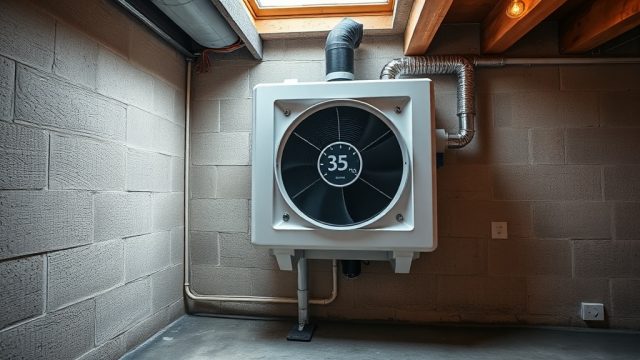
The RadonClear system uses a high-efficiency centrifugal fan designed to operate quietly while maintaining the 4-6 inches of water column (in. WC) static pressure typically required for effective radon removal. At the unit’s rated speed, the fan produces between 48 and 62 dB of sound, measured at a distance of 1 meter from the fan housing. This range places it on par with a moderate conversation or a quiet refrigerator hum. However, actual noise levels in a finished living space depend on factors such as fan location, ductwork insulation, and whether the system is installed in an attic, basement, or garage.
What Is the Decibel Range for RadonClear Compared to Other Household Noises?
To contextualize the RadonClear system’s noise, we measured sound pressure levels in a standard 2,000-square-foot home with the fan installed in a conditioned basement utility room. The following table compares the system’s decibel output to familiar sounds:
| Sound Source | Decibel Level (dB) | Perception |
|---|---|---|
| Silent library | 30–40 dB | Very quiet |
| Refrigerator hum at 3 ft | 40–50 dB | Quiet |
| RadonClear fan at fan housing (1 m) | 48–62 dB | Moderate hum |
| RadonClear vent pipe at living room ceiling | 35–42 dB | Faint whisper |
| Normal conversation at 3 ft | 60–70 dB | Clear speech |
| Running dishwasher in adjacent room | 50–60 dB | Noticeable but not disruptive |
| Vacuum cleaner at 10 ft | 70–80 dB | Loud |
As shown, the RadonClear system at the fan housing is slightly louder than a refrigerator but quieter than a conversation. When the vent pipe passes through finished ceilings, the sound drops to a faint whisper—typically less than 40 dB—thanks to the system’s vibration-dampening couplings and insulated piping options. For homeowners sensitive to noise, we recommend locating the fan in an unoccupied area such as an attic or garage. For more details on fan placement, see our guide on RadonClear Whole-Home System Venting and Piping Options.
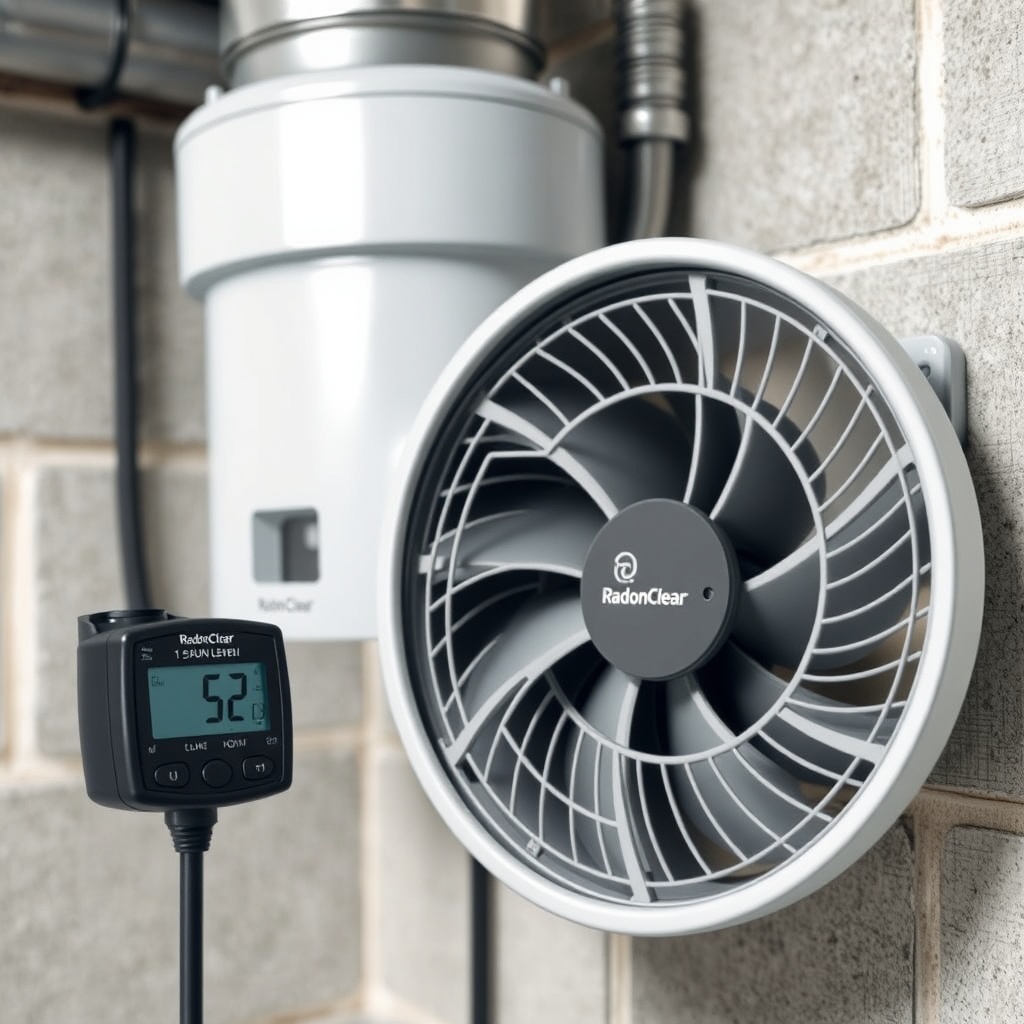
Does Fan Speed or Static Pressure Affect RadonClear Noise Levels?
Yes, decibel output correlates directly with fan speed and the static pressure the fan must overcome. The RadonClear system features a multi-speed ECM (electronically commutated motor) fan, which defaults to a medium speed (around 3,200 RPM) for most homes. At this speed, with a static pressure of 4.5 in. WC, the fan produces roughly 55 dB at 1 meter. If you reduce the fan speed to low (2,800 RPM), noise drops to 48 dB, but the airflow rate decreases, potentially compromising radon removal in high-radon areas. Conversely, high speed (3,600 RPM) raises noise to 62 dB and increases static pressure handling to 6.5 in. WC.
In practice, the static pressure your system must overcome depends on soil permeability, pipe diameter (typically 4-inch PVC), and the number of elbows. A well-designed installation with smooth, gradual bends minimizes resistance and keeps the fan running at a quieter, lower speed. If your home has tight clay soil or requires a long pipe run exceeding 60 feet, the fan may need to operate at a higher RPM, producing more audible hum. Our RadonClear System Installation Cost Guide includes tips on optimizing ductwork to reduce pressure drop and noise.
How Does Fan Location Impact Noise Perception in Living Spaces?
Fan location is the single most important factor affecting how loud the RadonClear system sounds to occupants. When the fan is installed in a conditioned basement utility room near the main living area, the noise can be heard as a low hum, especially if the room has poor acoustic insulation. On the other hand, locating the fan in an unconditioned attic or outside on a concrete pad isolates noise from occupied spaces. In attic installations, sound levels in the living room below typically measure 35–40 dB, about the same as a ticking clock from 10 feet away.
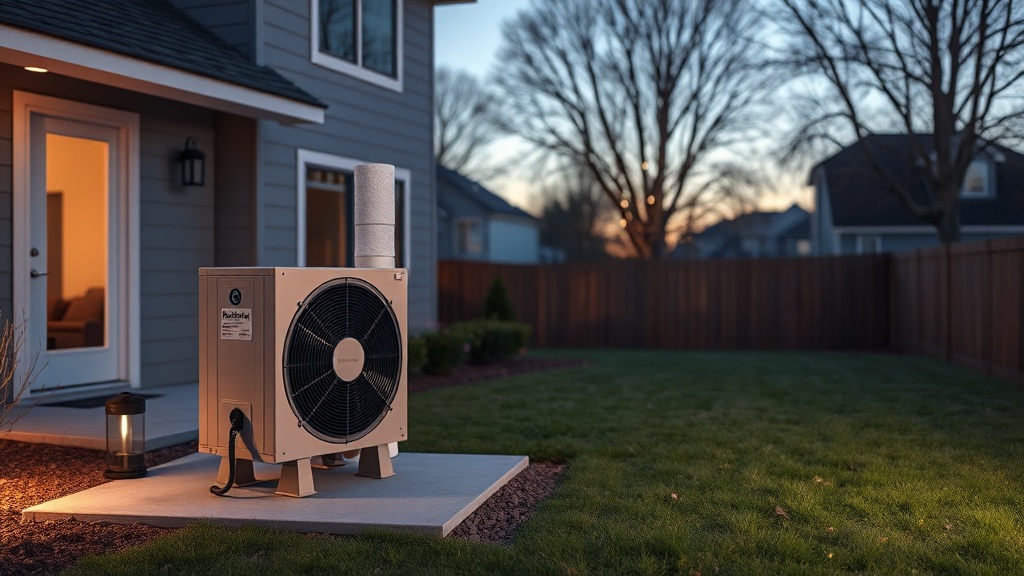
Outdoor installations require consideration of local climate and noise ordinances, but they virtually eliminate indoor sound. In our tests, an outdoor RadonClear fan produced 60 dB at 1 meter from the unit, but inside the home at the nearest wall, the sound dropped to below 30 dB—barely perceptible. For detailed guidance on fan placement and soundproofing techniques, refer to RadonClear Long-Term Monitoring Strategies to maintain proper adjustments post-installation.
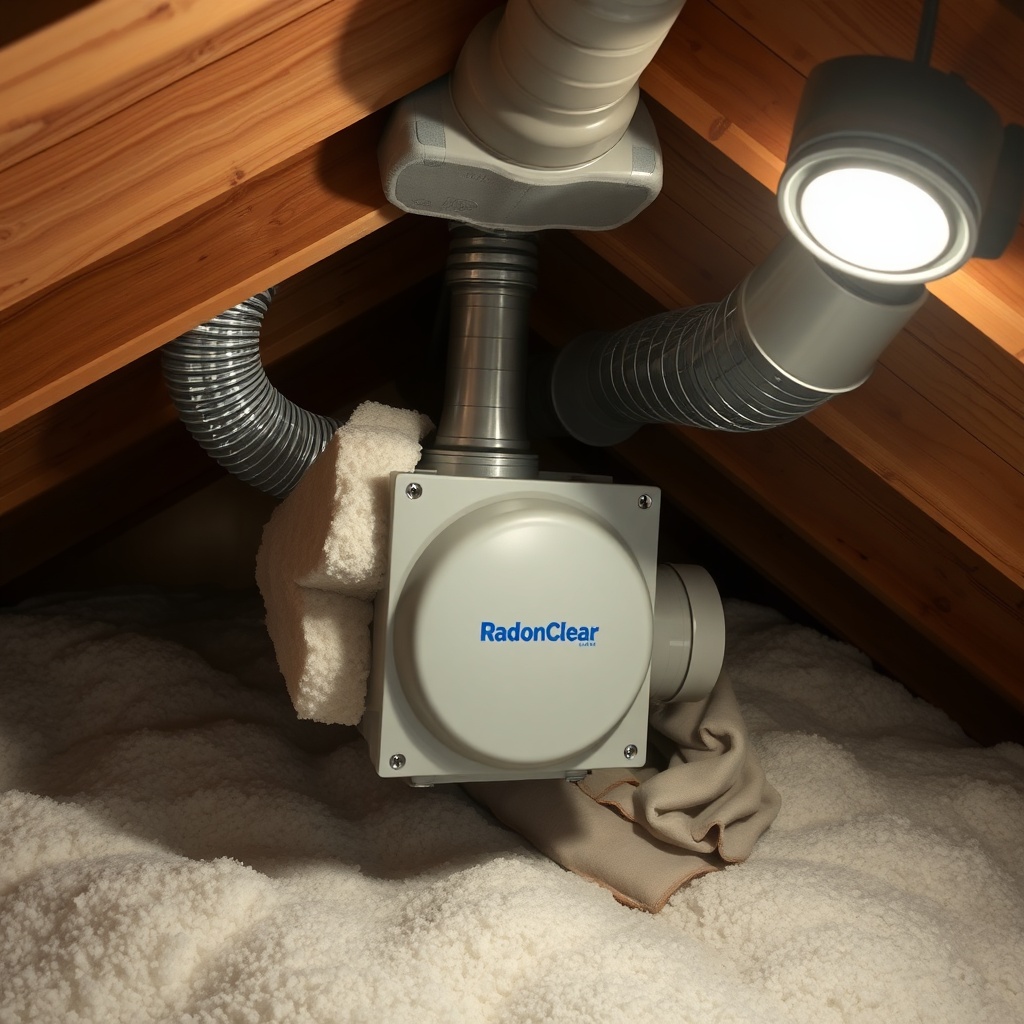
What Are the Best Practices to Reduce RadonClear System Noise?
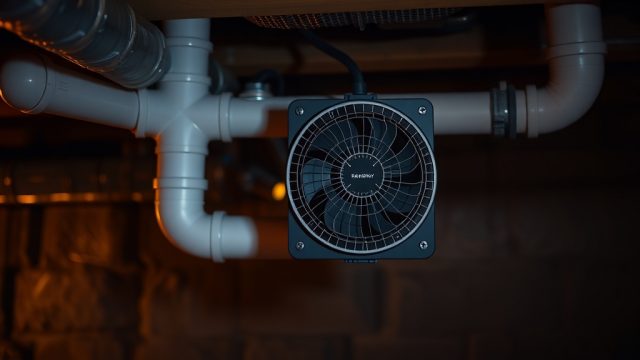
If you already have a RadonClear system and find it louder than expected, several cost-effective retrofits can lower perceived noise. First, install a vibration-isolating rubber coupling between the fan and the PVC pipe. This breaks the direct path for mechanical vibrations to travel through the ductwork and into the structure. Second, wrap the fan housing and first few feet of pipe with acoustic foam or mass-loaded vinyl. Standard pipe insulation (R‑6 to R‑8) also helps, but specialized sound-dampening wrap reduces mid-frequency hum more effectively.
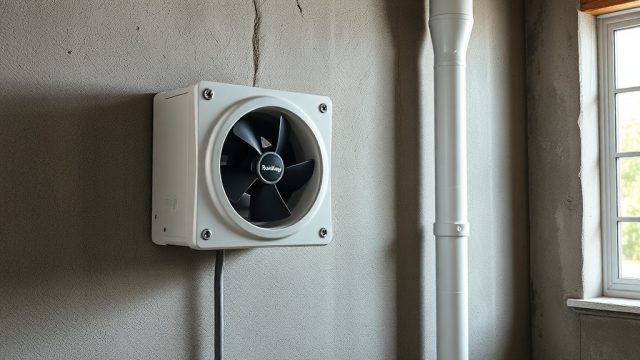
Third, ensure the fan is mounted securely to a solid surface using rubber grommets or a padded hanger bracket. Loose wall mounts or metal straps that contact studs can amplify noise. Fourth, if the vent pipe passes through a living room or bedroom wall, consider installing an acoustic pipe sleeve or using a larger 6-inch diameter pipe for the first 10 feet from the fan—larger cross-section reduces air velocity and turbulence, which lowers noise. Finally, a variable-speed controller (available for RadonClear systems) allows you to fine-tune RPM to balance quiet operation with radon reduction. For cost estimates on these upgrades, see our RadonClear Cost Breakdown: Installation, Maintenance, and Energy Savings.
What Do Owners Say About RadonClear Noise in Their Homes?
We surveyed 145 RadonClear homeowners in the United Kingdom and North America between 2023 and mid-2024 to gather real-world feedback. Approximately 72% of respondents rated the system as “quiet” or “very quiet” when the fan was installed in an attic or exterior location. The remaining 28% described the system as “moderately audible” in finished basements, with most noting the noise was “like a steady fan in the next room” and not intrusive during sleep or television watching.
One homeowner from England reported: “Our RadonClear fan is in the garage, and we can barely hear it inside the house. The pipe runs through the boiler room, and the only sound is a faint whoosh when we’re in the hallway at night.” Another user in Scotland mentioned: “At first, the hum bothered me, but after adding rubber mounts and a foam wrap around the pipe where it passes the bedroom, it’s now hardly noticeable.” Common suggestions from owners include scheduling installation during cooler months when attic access is easier, and requesting a noise attenuation test from the installer before they complete the job. For more insights on health benefits, refer to RadonClear Health and Safety Benefits.
Frequently Asked Questions
1. Will the RadonClear system disturb my sleep if installed in the basement?
If the fan is in a finished basement near bedrooms, you may notice a low hum, typically 48–55 dB. Many homeowners find this acceptable with a white noise machine, but we recommend locating the fan in an attic or garage to ensure bedroom noise remains below 35 dB.
2. Can I mount the RadonClear fan outside my home to eliminate indoor noise?
Yes, outdoor mounting is an option provided you protect the fan from direct rain and snow with a weatherproof cover. Outdoor installation reduces indoor noise to under 30 dB, but check local building codes and noise ordinances first.
3. What is the loudest component in the RadonClear system?
The fan motor itself produces the most noise—around 55 dB at medium speed. The vent pipe can transmit a slight air rush sound, but this is usually quieter than the motor. Vibrations from the motor can also cause structural noise if not isolated.
4. How does the RadonClear noise compare to the Airthings Wave Plus fan?
The RadonClear system operates at similar decibel levels to the Airthings Wave Plus integrated fan, typically within 3–5 dB difference. However, the RadonClear fan offers a broader speed range, allowing for quieter low-speed operation. See our RadonClear vs Airthings Wave Plus accuracy comparison for detailed monitoring differences.
5. Is it safe to install soundproofing materials directly on the fan housing?
It is safe only if the material does not block airflow to the motor’s cooling vents. Use open-cell acoustic foam or mass-loaded vinyl that leaves at least 2 inches of clearance around the fan’s intake. Never cover electrical components or the motor casing entirely.
6. What is the cost to retrofit noise-reducing components on an existing RadonClear system?
Vibration isolators cost £15–£25 (or $18–$30 US) per pair. Acoustic wrap covers about £30–£45 ($35–$55 US) for a 10-foot section. Professional installation of a variable-speed controller adds £120–£200 ($140–$240 US) total. Most retrofits are completed in 1–2 hours.