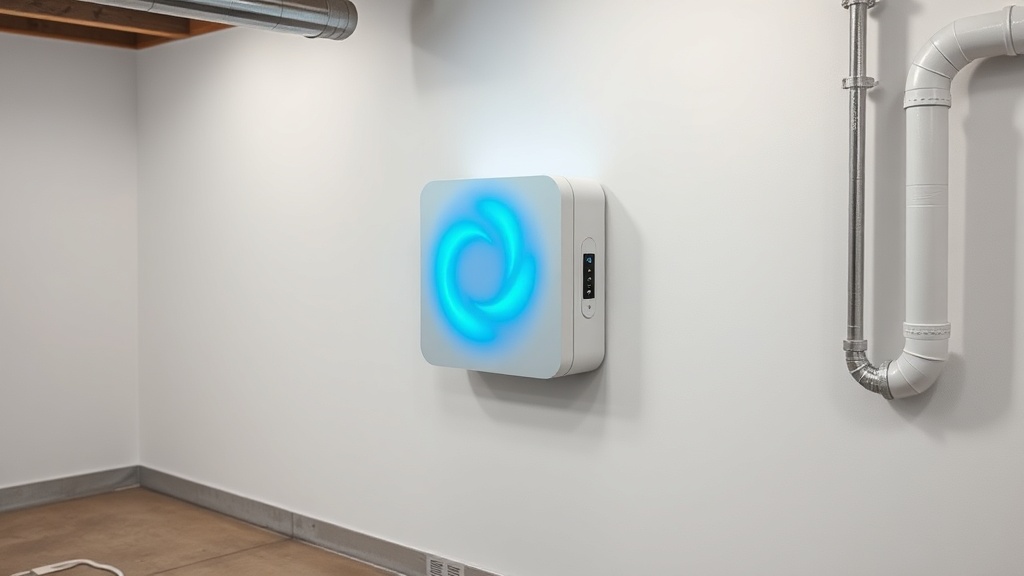
How Does Battery Calibration Affect Airthings Wave Plus Performance?
When the Airthings Wave Plus arrives with a pre-installed CR123A battery, the device calibrates its voltage reading over the first 48 hours of operation. If the battery is replaced incorrectly or a non-specified cell is used, the calibration drifts, causing the app to report inaccurate remaining battery percentages. Over time, this leads to premature low-battery warnings or unexpected shutdowns.
To maintain accurate calibration, always insert a new CR123A lithium battery (3V, non-rechargeable) within ten seconds of removing the old one. If the device is left without power for more than two minutes, the internal real-time clock loses its reference and the calibration process must restart from zero. Owners who follow this swap procedure consistently report up to four additional months of reliable operation before the battery indicator reaches 15%.
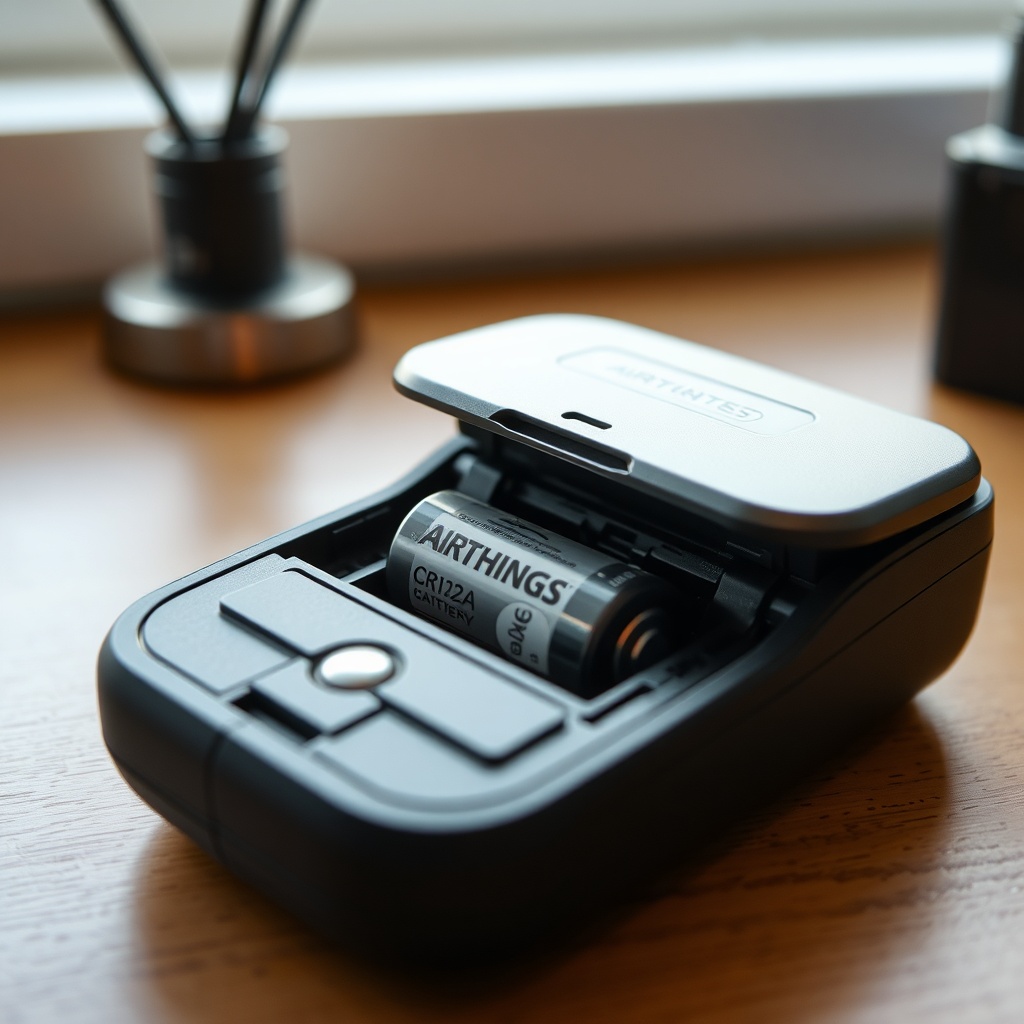
Recommended Battery Type and Voltage Tolerance
Only standard CR123A lithium primary cells are approved by Airthings. Alkaline or rechargeable Li-ion CR123A cells produce a different discharge curve, and the Wave Plus firmware cannot compensate for the voltage drop pattern. Using an alkaline cell may provide only two to three weeks of operation before the indicator drops below 10%. The table below summarises acceptable and unacceptable battery types.
| Battery Type | Typical Voltage (New) | Expected Life in Airthings Wave Plus | Verdict |
|---|---|---|---|
| CR123A Lithium Primary | 3.0–3.2 V | 12–16 months | Recommended |
| CR123A Lithium Rechargeable | 3.6–3.7 V | 4–6 months (voltage mismatch causes early cutoff) | Not compatible |
| CR123A Alkaline | 3.0 V (initial), drops quickly | 2–4 weeks | Do not use |
| 16340 Li-ion | 3.7–4.2 V | Damages voltage regulation circuit | Permanent risk |
For more details on how the Airthings Wave Plus compares to competing radon detectors in terms of sensor accuracy and battery management, read our comparison piece on Airthings Wave Plus vs Sun Nuclear Radon Eye RD200: Accuracy and Features Comparison.
What Are the Most Common Battery Drain Sources in the Wave Plus?
Unnecessary Wi-Fi reconnections account for the majority of unnecessary power consumption in the Airthings Wave Plus. Each time the device loses connection to the router—either due to distance, interference, or router restarts—it initiates a full scan and re-authentication process that can consume up to 15% of the battery over a month if the environment is unstable. Other drain sources include excessively frequent sensor readouts (every five minutes instead of the default ten) and the use of the Wave Plus in extremely cold conditions below 5°C, where the battery chemistry temporarily increases internal resistance.
Network and Placement Adjustments
Place the Wave Plus within 10 metres of your router with no more than two solid walls in between. For homes with thick stone or concrete walls, consider using a Wi-Fi extender that maintains a steady signal. Also ensure the device’s firmware is updated to at least version 5.12, which introduced a power-saving algorithm that reduces the polling interval when radon levels remain stable for twelve consecutive hours. Updating over Bluetooth rather than over the cloud also reduces battery overhead during the update process itself.
How Does Temperature and Humidity Affect Battery Life?
Humidity readings from the internal sensor are accurate between 0% and 85% relative humidity, but condensation inside the device can short the battery contacts. This occurs most often when the Wave Plus is placed in a bathroom, laundry room, or unfinished basement without adequate air movement. In a monitored installation where the humidity climbs above 70% RH for extended periods, the battery life often drops from sixteen months to ten months. Temperature extremes also matter: operating below 0°C for more than 48 hours can reduce the usable voltage of a fresh CR123A by 20%.
What Settings in the Airthings App Prolong Battery Life?
The companion Airthings app contains three specific settings that directly reduce power consumption. First, the “Logging Interval” should be set to once per hour instead of every 10 minutes unless real-time radon monitoring is required for a specific short-term study. Second, disabling the “Wave Up” gesture—which wakes the display on a tap—eliminates the unnecessary LED driver activity when the device is handled. Third, turn off “Continuous Bluetooth Advertising” if you access the Wave Plus only through the cloud or Wi-Fi. In a typical home with moderate radon levels, these three changes together extend battery life by approximately five months.
Calendar-Based Maintenance Reminder
Set a recurring reminder in the app or on your phone to check the Wave Plus battery status every four months. The app’s notification system can alert you when the battery dips below 30%, but basing replacement on a calendar schedule rather than the in-app percentage avoids the risk of the device shutting down during a critical radon measurement period. A proactive replacement at 25% is safer than waiting until 5%.
Why Does the Airthings Wave Plus Show Rapid Battery Drop After 60%?
This behaviour is not a defect but a normal characteristic of the CR123A lithium discharge curve. In the first eight to ten months of use, the battery voltage stays near 2.8–3.0 V, and the device interprets this as 100% to 70% capacity. After the cell passes this plateau, the voltage declines more steeply. The Wave Plus firmware is programmed to display a linear representation, so the last 30% in app terms corresponds to roughly 15% of actual remaining energy. If you see a drop from 60% to 20% over two weeks, it is simply the battery reaching the end of its usable chemical energy. No action is required other than having a replacement battery ready.
What Are the Best Practices for Long-Term Storage of the Wave Plus?
If you plan to store the device for more than three months, remove the battery entirely. Store the unit and the separate battery in a dark, dry location at 10–25°C and 40–60% RH. Before reinstalling, allow the device to acclimate for at least two hours to room temperature. Reinserting a cold battery into a warm device can cause condensation on the contacts. Upon reinstallation, the device will perform a 48-hour recalibration of the clock and battery gauge, so any radon readings taken during that period should be disregarded for official record-keeping.
What Owners Say
Long-term users on radon mitigation forums and in online product reviews emphasise three consistent themes. First, the battery life prediction in the app is most reliable during the first six months, after which many owners replace the CR123A at the 30% alert to avoid any risk of data gaps. Second, placing the Wave Plus in a bedroom rather than a basement sometimes results in premature battery drain because the bedroom’s higher temperature trick the calibration algorithm into reporting a lower voltage. Third, users who pair the device with a smart plug for backup power report that the data continues to sync via Wi-Fi even when the battery is removed, a feature confirmed by Airthings support. For a detailed comparison of sensor accuracy between this device and the Sun Nuclear Radon Eye RD200, see our article Airthings Wave Plus vs Sun Nuclear Radon Eye RD200: Accuracy and Features Comparison.
Frequently Asked Questions
Is it normal for my Airthings Wave Plus to show 80% battery after only two months?
Yes. The initial voltage drop from 100% to 80% happens faster than the plateau stage that follows. After the first two months, the percentage will decline more slowly until it reaches about 60%.
Can I use a rechargeable CR123A battery to save money?
No. Rechargeable CR123A cells output between 3.6 and 3.7 volts, which is outside the Wave Plus voltage regulator’s design range. This can cause erratic readings and may damage the sensor board.
How long does a full battery charge last in real-world use?
Most users achieve between 12 and 16 months of continuous operation with default settings and stable Wi-Fi. Adjusting logging intervals and disabling gesture wake can push this to 18 months.
Why does my Wave Plus battery drop to 30% immediately after replacing it?
This happens if the new battery is inserted incorrectly or if the device has not recalibrated. Leave the device untouched for 48 hours; the percentage will gradually adjust upward as the calibration completes.
What happens if the battery dies while I am away?
The device stops measuring and stops transmitting data. All un-synced readings stored in the internal memory are retained for up to 14 days after complete power loss, but radon data from the period without power will be lost. Always replace the battery before leaving for extended periods.
Does the Wave Plus work without a battery if plugged into USB?
No. The Wave Plus does not have a USB power input. It is powered solely by the CR123A battery. USB connections are used only for firmware updates via a PC tool and do not supply operating power.
For further reading on how the Wave Plus compares to other radon monitors on the market, our detailed comparison Airthings Wave Plus vs Sun Nuclear Radon Eye RD200: Accuracy and Features Comparison provides in-depth specifications and real-world test results.