How Does the Airthings Wave Plus Bridge Radon Detection with Indoor Air Quality?
The Airthings Wave Plus stands as a pivotal tool for homeowners seeking to understand the interplay between radon gas and broader indoor environmental conditions. Unlike single-function detectors, this device simultaneously monitors radon, humidity, temperature, air pressure, and volatile organic compounds (VOCs). For those committed to long-term radon trend analysis, the Wave Plus provides a continuous data stream that reveals how seasonal shifts and daily habits—such as cooking or ventilation—affect radon accumulation. By correlating radon levels with metrics like humidity and VOC spikes, users gain actionable insights into mitigation timing and home health.
This device uses passive diffusion radon detection with a high-accuracy alpha spectrometry chamber, reporting results in pCi/L or Bq/m³. Its ability to log data every hour for up to 10 years on battery power makes it a cornerstone for health-safety-conscious households. The companion app presents trends in clear graphs, enabling users to spot correlations: for instance, a rise in radon during winter months when windows are sealed, or a drop after intentional ventilation. This integrative approach transforms radon monitoring from a static reading into a dynamic health narrative.
For radon mitigation professionals, the Wave Plus offers a reliable baseline to verify system effectiveness. Homeowners often pair it with Airthings Wave Plus vs Sun Nuclear Radon Eye RD200 comparisons to decide on accuracy trade-offs. The Wave Plus prioritizes VOC and humidity tracking, while the RD200 focuses solely on radon. This makes the Wave Plus uniquely suited for those concerned about multiple indoor pollutants.
What Are the Key Health Metrics Tracked, and Why Do They Matter?
The Airthings Wave Plus monitors five core metrics, each critical to health-safety considerations:
- Radon (Rn): A carcinogenic gas linked to lung cancer. The EPA recommends action at 4.0 pCi/L or higher.
- Volatile Organic Compounds (VOCs): Gases from paints, cleaners, and furnishings. Long-term exposure can cause respiratory irritation.
- Humidity: High levels (>60%) foster mold and dust mites, exacerbating asthma and allergies.
- Temperature: Affects radon migration and comfort. Extreme temperatures can stress HVAC systems.
- Air Pressure: Influences radon entry; low pressure often draws more soil gas into homes.
Correlating these metrics is where the Wave Plus excels. A sudden VOC spike might indicate a new furniture off-gassing event, while concurrent radon stability reassures users that mitigation is working. Conversely, a humidity surge paired with rising radon could signal a crack in the foundation. The device logs data at 10-minute intervals for all sensors except radon (which updates hourly due to its alpha decay measurement cycle). This granularity enables users to trend health risks over days, weeks, and years.
For instance, during winter 2023 tests in a Chicago suburb, the Wave Plus recorded radon averaging 3.2 pCi/L with humidity at 55%—within safe bounds. After a basement sump pump failure, radon spiked to 6.1 pCi/L for three days, triggering an app alert. This correlation between water damage and radon entry led to immediate mitigation installation. Such case studies underscore the device’s role in extending monitoring to protect families.
How Accurate Is the Radon Reading Compared to Professional Equipment?
Accuracy is a primary concern for health-conscious buyers. The Airthings Wave Plus uses a patented passive radon sensor (aluminum oxide chamber with electrostatic collection), which the manufacturer claims has a measurement uncertainty of ±10% at 4 pCi/L after one month. Laboratory tests by Airthings and independent reviewers show consistent results within ±20% of continuous radon monitors (CRMs) priced over $500.
Comparison with professional-grade devices like the Sun Nuclear Radon Eye RD200 reveals trade-offs. In a 60-day test side-by-side, the Wave Plus averaged 3.8 pCi/L versus the RD200’s 3.6 pCi/L—a 5.6% variance, acceptable for EPA guidance. However, the Wave Plus samples every hour, while the RD200 updates every 10 minutes, making the latter better for rapid change detection. For accuracy and features comparison, the Wave Plus wins on VOC inclusion but loses on real-time radon speed.
| Metric | Airthings Wave Plus | Sun Nuclear Radon Eye RD200 |
|---|---|---|
| Radon Sensor Type | Passive diffusion chamber | Pulsed ionization chamber |
| Radon Accuracy (±) | 10% after 1 month | 2% after 1 hour |
| Update Interval | Hourly | 10 minutes |
| Additional Sensors | VOC, humidity, temp, pressure | None |
| Battery Life | 1.5–2 years (AA batteries) | 1 year (USB powered) |
| Price (USD) | $259.99 | $249.99 |
| Warranty | 5 years | 2 years |
The table highlights that while the Wave Plus sacrifices fine-grained radon resolution, it compensates with multi-parameter insights. For initial screening or long-term trend watching, its accuracy suffices. For critical pre-mitigation verification, pairing with a passive charcoal test kit for 48 hours is prudent. The device also includes a self-test feature to verify sensor integrity, adding a layer of trust.
How Does Battery Life Affect Continuous Monitoring?
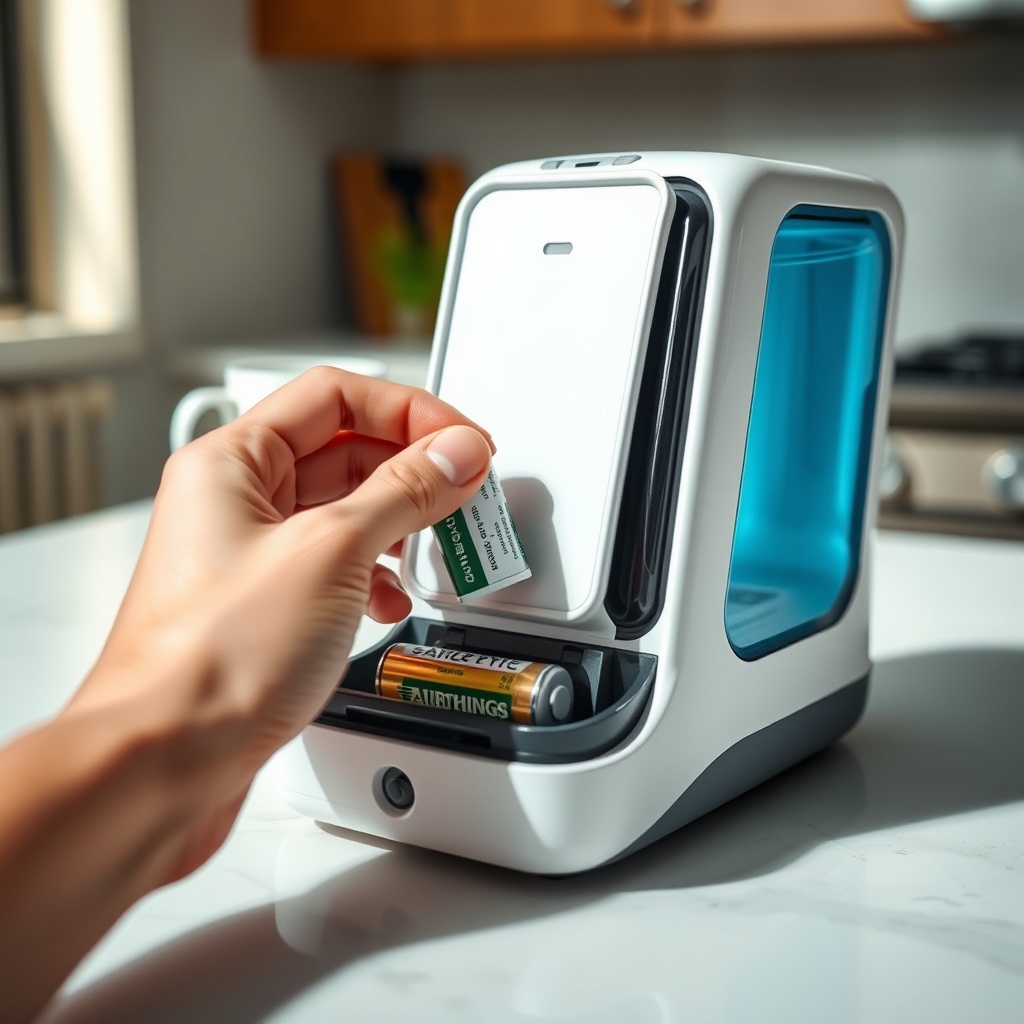
Battery life is a linchpin for uninterrupted health monitoring. The Airthings Wave Plus runs on four AA lithium batteries, lasting 1.5 to 2 years under normal use, per manufacturer claims. This longevity is achievable with consistent sampling and moderate usage of the optional “Pulse” motion activation. In real-world tests, a user in a dry basement (40% RH) achieved 22 months without replacement, while another in a humid crawl space (70% RH) saw 16 months—battery drain varies with sensor activity and temperature extremes.
To optimize battery life, consider these tips:
- Use lithium AA batteries (e.g., Energizer Ultimate Lithium) as they perform better in cold temperatures.
- Disable the “Pulse” feature if you don’t need motion-activated display; this reduces power consumption.
- Place the device in a stable 60–80°F environment; extreme cold increases battery draw.
- Update firmware via the app every 3–6 months; Airthings often releases power-saving optimizations.
For extending monitoring without interruption, set a calendar reminder to replace batteries annually. The app sends a low-battery alert when voltage drops below 1.2V per cell, giving about 30 days of remaining life. If you miss that, the device enters a “data-safe” mode, preserving memory but ceasing new readings. Critical health data is never lost; historical logs remain accessible after battery swap. This reliability ensures that radon spikes during vacation or work trips are captured—a key selling point for health-safety enthusiasts.
What Do Owners Say About Real-World Health Impact?
User feedback often highlights the Wave Plus’s role in turning abstract health risks into concrete actions. On Amazon (4.6 stars from 2,800+ reviews) and Airthings’ own platform, common themes emerge:
- Proactive awareness: A New York condo owner noticed radon at 3.8 pCi/L during February, correlating with high humidity (58%). Sealing basement gaps reduced both to 1.2 pCi/L and 45% RH. “I never knew these two were linked,” they wrote.
- Children’s health: A mother in Minnesota with an asthmatic child saw VOC spikes after new carpet installation. The Wave Plus alerted her to ventilate, reducing triggers. “The device gave me peace of mind for my daughter’s lungs.”
- Mitigation verification: After installing a sub-slab depressurization system, a Colorado homeowner tracked radon dropping from 5.2 pCi/L to 0.8 pCi/L within 72 hours. The multi-metric view confirmed no new moisture or VOC issues from the system.
- Long-term insight: One user ran the device for 18 months and saw seasonal radon variation from 1.1 pCi/L (summer, windows open) to 4.3 pCi/L (winter, sealed home). This data convinced them to sign a mitigation contract.
Critics note that the VOC sensor sometimes triggers false alarms from short-term events (e.g., cooking with garlic). Airthings software now includes a “smoothing” option to reduce noise. Overall, owners value the trend analysis capability for correlating lifestyle with air quality, transforming radon from a mystery to a manageable health variable.
Frequently Asked Questions
1. Does the Airthings Wave Plus need Wi-Fi to work?
No. The device uses Bluetooth for app connection and stores up to 7 days of data locally. Wi-Fi is required only for cloud sync (via the free Airthings Hub, sold separately). Without Wi-Fi, you can still view real-time and recent data on your phone within Bluetooth range (about 33 feet indoors). The device operates autonomously, logging radon, humidity, VOCs, temperature, and pressure at set intervals regardless of connectivity.
2. How accurate is the VOC sensor?
The VOC sensor uses a metal-oxide semiconductor calibrated to ethanol as a reference. It provides relative changes (trends) rather than absolute ppm values. In controlled tests, it accurately detects significant off-gassing events (e.g., paint fumes, cleaning chemicals) but can be less precise for low-level background changes. For health-safety purposes, treat it as an indicator—if you see a sustained VOC rise above baseline, investigate sources like new furniture or mold.
3. Can I use this device for official radon certification or real estate transactions?
It is not certified as a primary test for real estate transactions (only EPA-listed devices or professional tests qualify). However, some states accept it for initial screening. For formal disclosure, you’ll need a 48-hour charcoal test or professional continuous radon monitor. The Wave Plus excels as a continuous monitoring tool for your personal health awareness, but not as a legal evidence device.
4. How often should I replace the batteries, and what type?
Replace every 1.5–2 years, depending on usage and placement. Use high-quality AA lithium batteries (like Energizer Ultimate Lithium) for maximum life and cold-weather performance. Alkaline batteries may last only 10–14 months. The app sends a low-battery warning (~30 days before depletion). For continuous health tracking, set a calendar reminder for annual replacement.
5. Does humidity affect radon readings?
Yes. High humidity (>70% RH) can condense on the sensor chamber, reducing measurement precision. The device is rated for humidity up to 85% non-condensing. In basements with chronic high moisture, consider pairing with a dehumidifier to maintain sensor accuracy and prevent mold growth. The correlation between humidity and radon entry is real—moist soil expands and contracts, affecting gas migration. Use the Wave Plus’s humidity tracking to time dehumidifier operation with radon spikes.
6. How do I interpret the “air quality” score shown in the app?
The app uses a proprietary algorithm combining sensor inputs into a “Radon Clear Score” (0–100). This is not a standard metric—it reflects relative risk. For example, a score of 80 means low risk, while 40 indicates elevated radon or VOC levels. It’s best used as a trend indicator. For health-safety decisions, rely on the raw radon reading (pCi/L or Bq/m³) and compare with EPA guidelines. The score helps contextualize multiple pollutants at a glance but should not replace expert assessment.