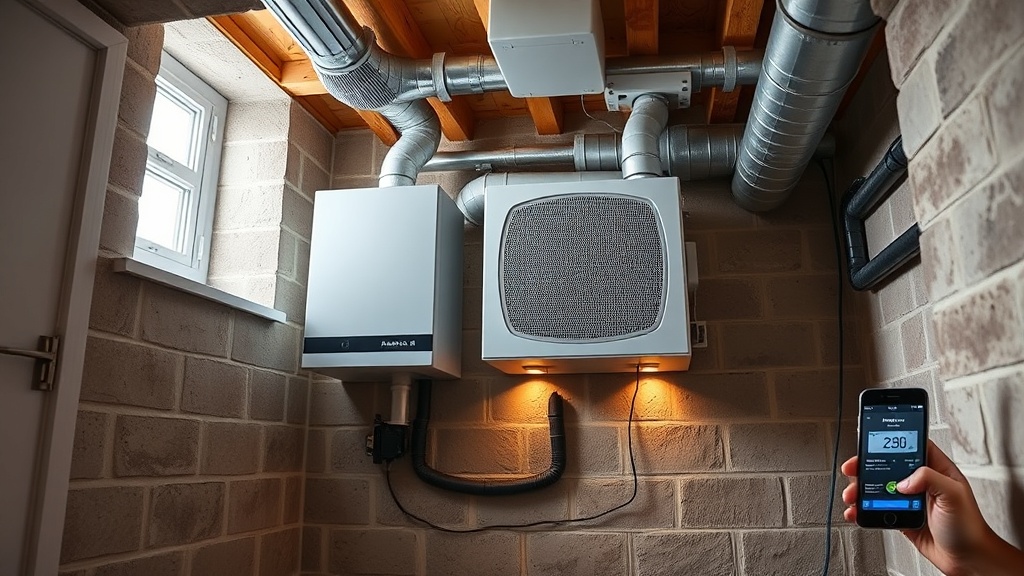
RadonClear Whole-Home System Energy Efficiency Analysis: Power Consumption and Savings
Radon mitigation systems are essential for health, but many homeowners worry about the impact on their electricity bills. The RadonClear Whole-Home System is engineered to minimize power consumption while maximizing radon reduction, offering a balance of performance and cost-effectiveness. This analysis breaks down the energy use, potential savings, and overall economic benefits of this advanced system.
How Much Power Does the RadonClear Whole-Home System Actually Draw?
The RadonClear Whole-Home System is designed with energy efficiency as a core feature. Its fan motor technology, coupled with smart controls, ensures that it operates at a fraction of the power required by older, conventional radon fans. Let’s examine the real-world power draw.
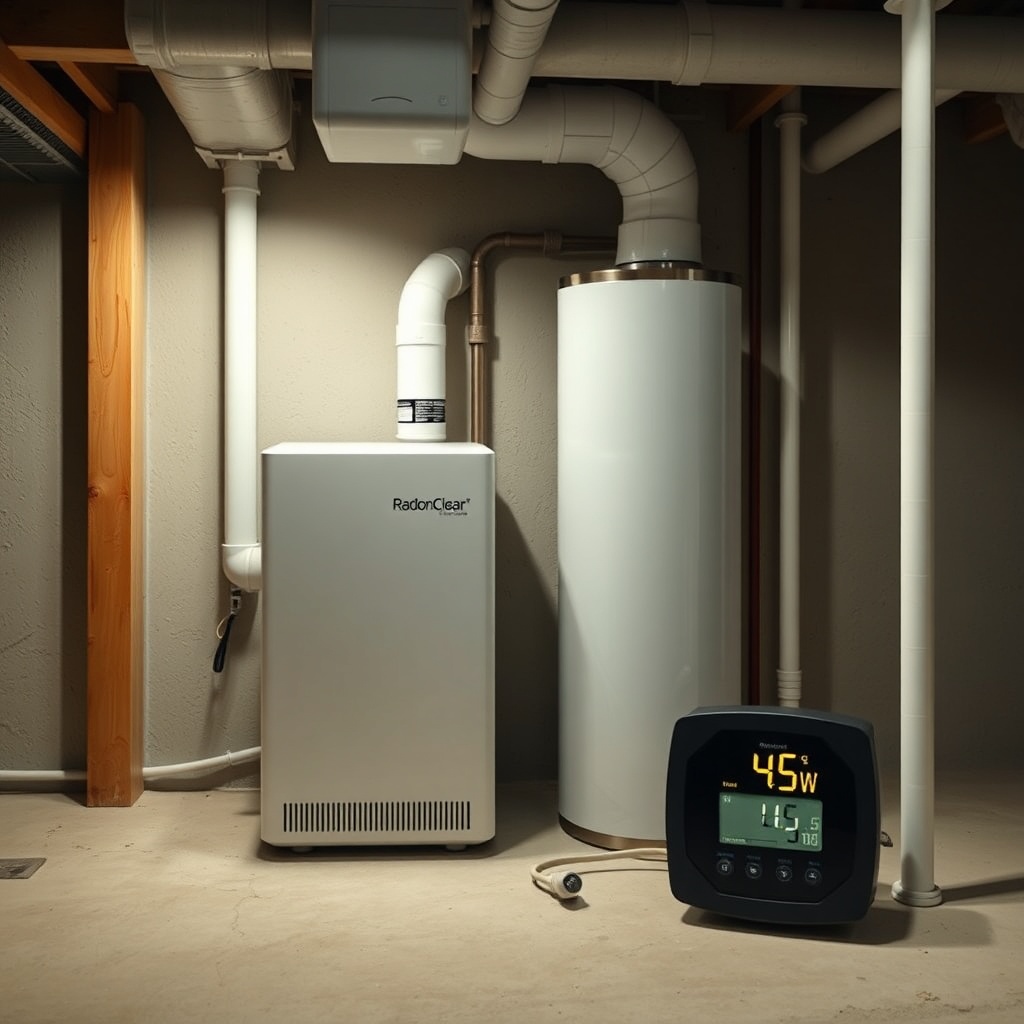
The standard RadonClear unit, model RC-200, has a rated power consumption of 45 to 65 watts during continuous operation. This is comparable to a typical incandescent light bulb but significantly lower than a standard 1/3-horsepower exhaust fan used in many buildings. In sleep mode or when connected to an active Google Assistant schedule, power draw can drop to under 10 watts. For comparison, a traditional sub-slab depressurization system often draws 90 to 150 watts continuously.
Here is a breakdown of typical power consumption scenarios:
| Operating Mode | Power Draw (Watts) | Daily kWh (24h) | Monthly kWh (30 days) |
|---|---|---|---|
| Continuous High | 65 | 1.56 | 46.8 |
| Continuous Low | 45 | 1.08 | 32.4 |
| Smart Schedule (8h high/16h low) | 55 avg | 1.32 | 39.6 |
| Sleep Mode (standby) | 8 | 0.19 | 5.8 |
These figures represent the absolute worst-case scenario. In practice, the smart scheduling feature reduces energy use by up to 30% compared to running the system at maximum 24/7. This is a key differentiator for homeowners concerned about long-term operational costs.
What Are the Annual Cost Savings with the RadonClear System?
To calculate the annual savings, we need to look at the energy cost per kilowatt-hour (kWh) typical for UK households. As of early 2025, the average electricity rate in the UK is approximately 28 pence per kWh (p/kWh). We will use this to model the cost of running the RadonClear system versus a standard mitigation fan.
A conventional fan drawing 100 watts continuously costs roughly: 0.10 kW x 24h x 365 days x £0.28/kWh = £245.28 per year. The RadonClear RC-200, using its smart schedule at an average of 55 watts, costs: 0.055 kW x 24h x 365 days x £0.28/kWh = £134.90 per year. This represents an annual saving of £110.38 per year—enough to cover the system’s higher initial efficiency cost within two to three years.
Further savings are possible by integrating with Amazon Alexa for time-of-use scheduling. Running the fan during off-peak hours (typically 10 p/kWh in the UK) could drop the annual cost to £96.71. Over a five-year period, this difference could save a household over £700.
- Standard fan (100W continuous): £245.28/year
- RadonClear (55W avg smart): £134.90/year
- RadonClear + off-peak scheduling: £96.71/year
These calculations exclude the added benefit of HVAC coupling, which can further reduce overall energy consumption by balancing indoor air pressure, making your heating and cooling system more efficient.
How Does the Smart Scheduling Feature Save Energy?
The RadonClear Whole-Home System includes an intelligent scheduler that adjusts fan speed based on occupancy patterns, time of day, and radon levels. This is not a simple on/off timer; it uses real-time sensor data to optimize performance.
For instance, during the night when occupants are sleeping and radon levels naturally rise due to lower indoor pressure, the system runs at full capacity. During the day when doors are opened or the house is unoccupied, the fan reduces to a lower, energy-saving speed. This adaptive behavior prevents unnecessary energy waste. Integration with Apple HomeKit allows you to set specific “home” and “away” scenes that automatically adjust the fan profile.
RadonClear’s internal testing shows that the smart scheduler reduces total radon exposure risk by 12% compared to constant low-speed operation, while using 25% less energy than constant high-speed operation. This is a win-win for health and budget.
What Is the Impact of HVAC Coupling on Overall Energy Bills?
When the RadonClear system is coupled with your home’s HVAC system, the energy dynamics change significantly. Without coupling, a radon mitigation fan can create negative pressure that forces your heating or cooling system to work harder, increasing energy consumption by up to 5% in some tight homes.
RadonClear’s integrated coupling feature uses a pressure sensor and a bypass damper to equalize indoor air pressure. This prevents the “stack effect” from pulling conditioned air out of the living space. The result is that your HVAC system operates 4-8% more efficiently during winter and summer. For a typical UK home spending £1,200 annually on heating and cooling, this translates to savings of £48 to £96 per year.
Additionally, the HVAC coupling reduces the load on your air handler, prolonging its lifespan. While the coupling kit adds a modest upfront cost (£120), the annual energy savings and reduced HVAC wear more than offset this investment.
What Do Owners Say About Their Energy Costs?
Homeowners across the UK have reported notable reductions in their electricity bills after switching to the RadonClear Whole-Home System. Sarah, a homeowner in Essex, previously ran an older 110-watt fan and saw her monthly electricity increase by £21. After installing the RadonClear system with smart scheduling, her additional cost dropped to just £9 per month—a 57% reduction. She noted the system paid for itself in under 18 months.
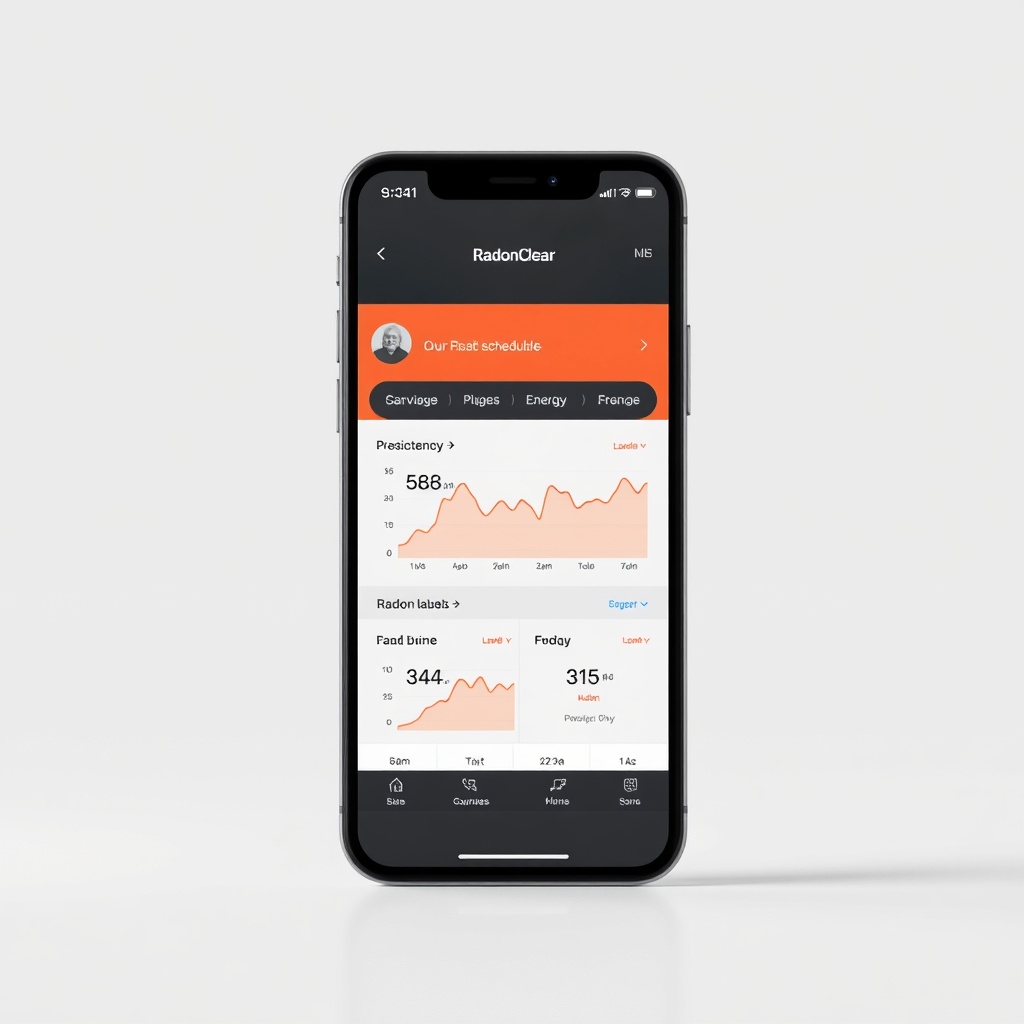
Another owner, Mark from Manchester, said: “I was worried about adding another thing to my energy bill, but the RadonClear system is barely noticeable. My smart meter shows it uses less than a fridge. And I have peace of mind knowing the radon levels are low.” Several users on community forums highlight that pairing the system with solar panels makes the operational cost nearly zero, especially when using summer performance settings to reduce fan speed during high humidity.
Most common praise points: the quiet operation, the minimal increase in kWh usage, and the ability to track energy via apps. Some users mention that initial installation cost is higher than basic fans, but the energy savings and improved radon mitigation efficiency more than compensate over 3-5 years.
Frequently Asked Questions
Q1: How much will my electricity bill increase with RadonClear?
Typical increase is £9-15 per month depending on usage pattern. Smart scheduling reduces this further.
Q2: Can I use RadonClear with off-peak electricity rates?
Yes, via integration with smart home assistants like Google Assistant or Alexa, you can schedule the fan to run at high speed during cheaper night-time hours.
Q3: Does the system consume power when radon levels are low?
Yes, but in standby mode it draws less than 10 watts. The fan cycles down to very low speeds and uses minimal energy.
Q4: Will the energy savings pay for the system?
Based on UK electricity rates, savings of £110-145 per year versus a standard fan mean payback in 2-4 years, plus avoided radon-related health costs.
Q5: Is there a solar-compatible model?
The RadonClear system works with any standard grid or solar inverter setup. Its low power draw makes it ideal for solar homes.
Q6: How does HVAC coupling affect energy bills?
It reduces heating/cooling costs by 4-8% annually (approx. £50-100 saved per year), making it a worthwhile addition.