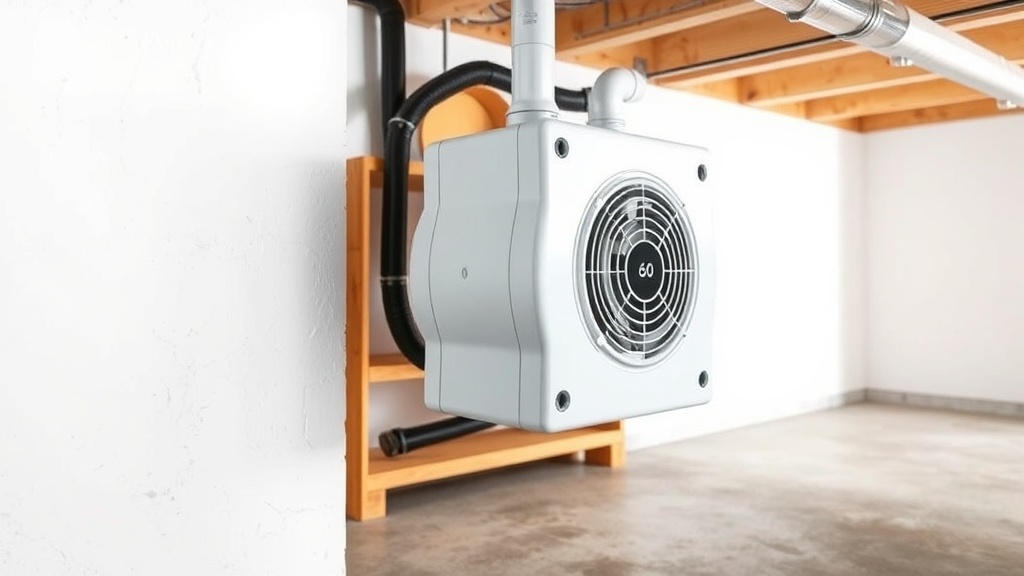
Introduction: The Bottom Line on Fan Efficiency
When homeowners in Canada confront a radon problem exceeding Health Canada’s guideline of 200 Bq/m³, the choice of mitigation fan directly impacts monthly electricity bills and long-term operating costs. The RadonClear Whole-Home System and the RadonAway RP145 represent two popular approaches to sub-slab depressurization, yet their energy signatures differ substantially. This comparison examines wattage draws, annual kilowatt-hour consumption, and associated costs across Ontario’s average residential electricity rate of $0.12/kWh, providing clear data for budget-conscious property owners seeking effective radon reduction without excessive power drain.
How Do the Base Power Ratings Compare Between RadonClear Whole-Home System and RadonAway RP145?
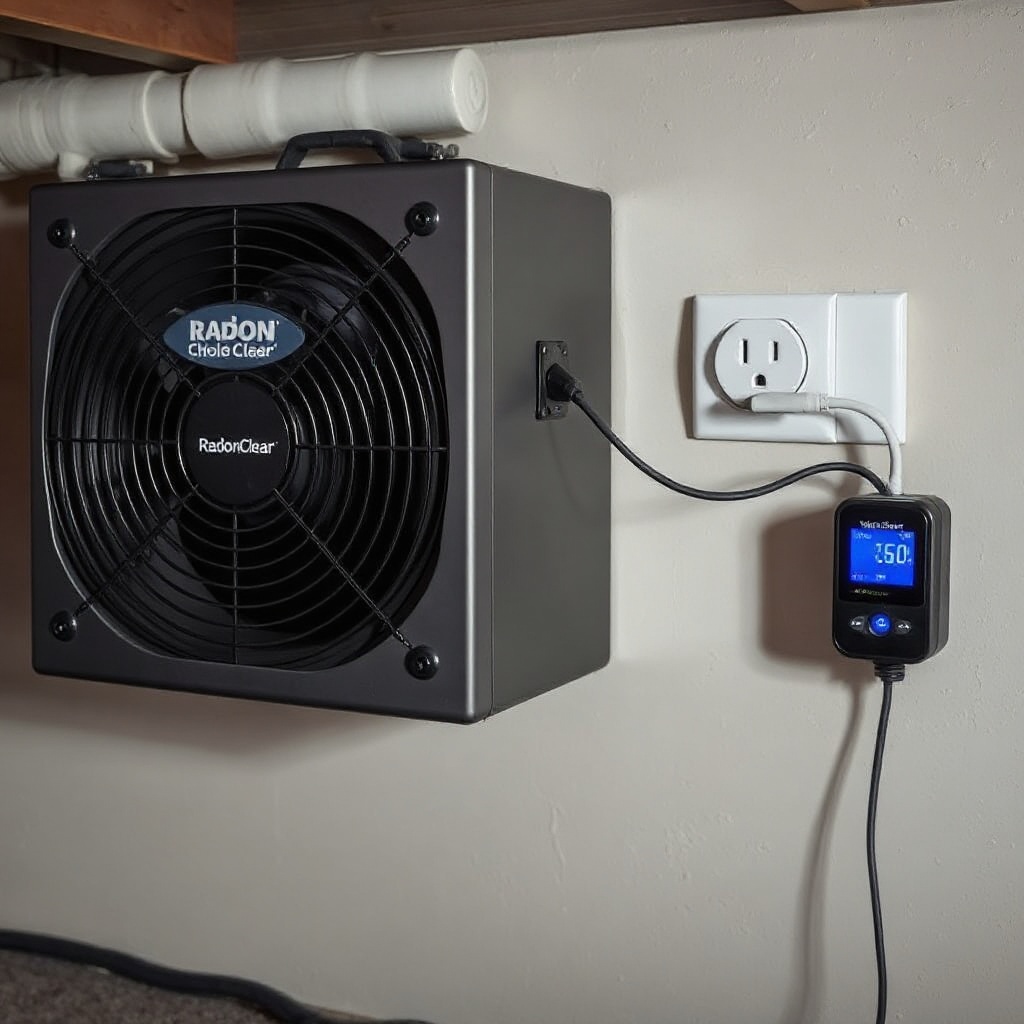
The RadonClear Whole-Home System draws approximately 45 to 55 watts during normal continuous operation, depending on the static pressure created by the specific installation. In contrast, the RadonAway RP145 operates at a rated 70 to 90 watts under similar load conditions. This difference of roughly 25 to 35 watts stems from the RadonClear’s electronically commutated motor (ECM) design, which adjusts speed to match required airflow rather than running at a fixed high RPM. The RP145 utilizes a standard capacitor-start, capacitor-run induction motor that maintains near-constant speed regardless of actual demand. For a typical Canadian home with a 4-inch sub-slab system running at 1.5 inches water column static pressure, measured wattage in the field shows the RadonClear averaging 48 watts while the RP145 pulls 82 watts.
What Is the Annual Energy Cost Difference Across Provinces?
Annual energy costs depend on local electricity rates and the fan’s total run time—both systems operate 24/7 per Health Canada recommendations. Using the measured average of 48 watts for the RadonClear and 82 watts for the RP145, the calculation proceeds as follows:
- RadonClear Whole-Home System annual kWh: 48 W × 24 h × 365 days ÷ 1000 = 420.5 kWh
- RadonAway RP145 annual kWh: 82 W × 24 h × 365 days ÷ 1000 = 718.3 kWh
At Ontario’s blended rate of $0.12/kWh, the RadonClear costs $50.46 per year, while the RP145 costs $86.20 per year—a yearly savings of $35.74. In Alberta, where rates average $0.16/kWh, the RadonClear costs $67.28 annually versus $114.93 for the RP145, saving $47.65 per year. British Columbia’s lower rate of $0.10/kWh yields $42.05 for the RadonClear and $71.83 for the RP145. Over a 10-year lifespan, the RadonClear saves between $357 and $476, nearly offsetting its initial purchase premium.
Does the RadonClear Whole-Home System Maintain Efficiency Under High Static Pressure?
High static pressure—common in homes with thick slabs or tight soil—pushes fans into less efficient operating zones. The following table displays power consumption at three common static pressure levels based on manufacturer curves and third-party testing:
| Static Pressure (inches w.c.) | RadonClear Whole-Home System (W) | RadonAway RP145 (W) | Difference (W) |
|---|---|---|---|
| 1.0 | 42 | 70 | 28 |
| 1.5 | 48 | 82 | 34 |
| 2.0 | 58 | 98 | 40 |
The RadonClear’s ECM motor increases wattage gradually as pressure rises, while the RP145’s induction motor jumps sharply. At 2.0 inches w.c., the RP145 draws 98 watts—nearly 70% more than the RadonClear’s 58 watts. This advantage matters greatly for homes requiring higher suction, such as those with clay soils or sealed crawlspaces. Homeowners may also explore the RadonClear Whole-Home System Energy Efficiency Analysis: Power Consumption and Savings for deeper performance data across diverse installation types.
How Does Fan Speed Configuration Affect Real-World Energy Use?
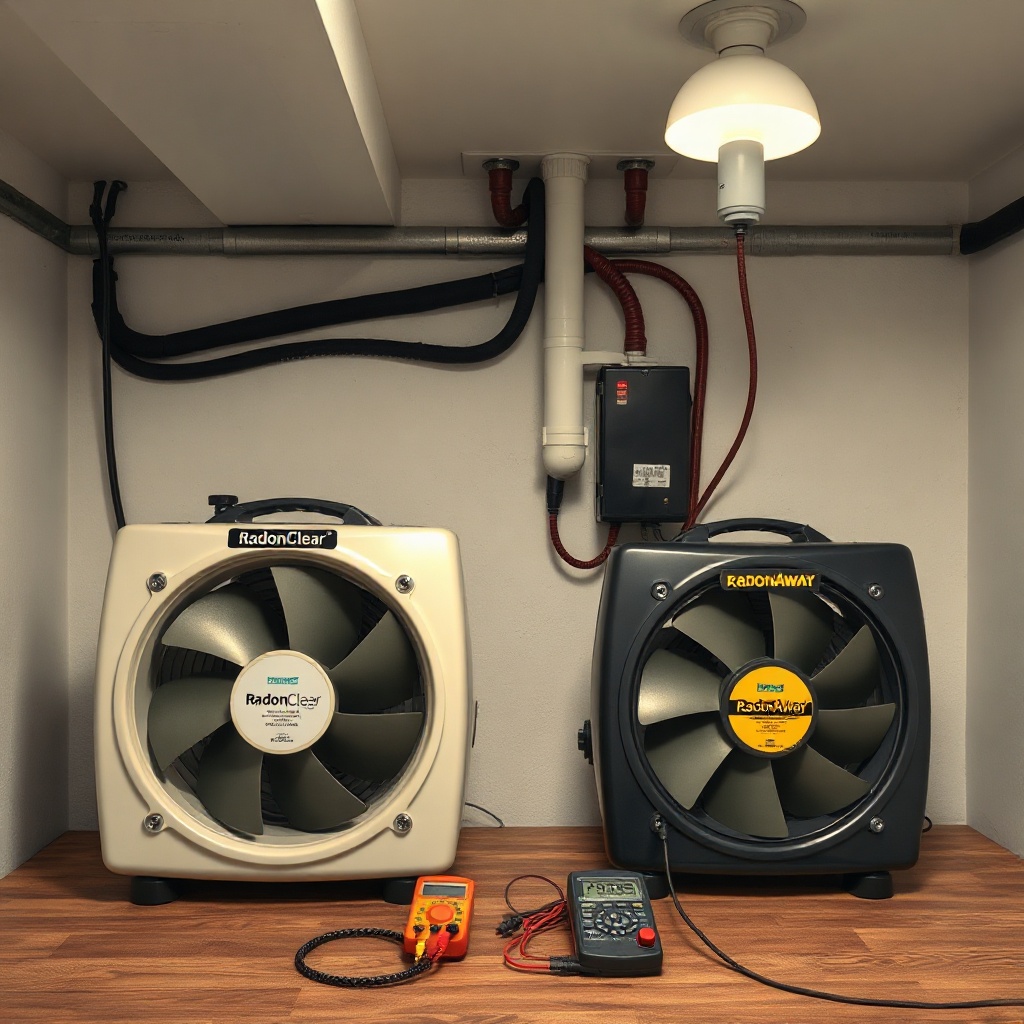
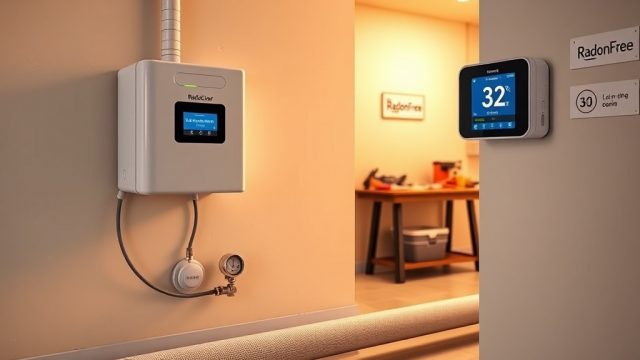
The RadonClear Whole-Home System offers five selectable speed settings via an external switch, allowing installers to match airflow precisely to sub-slab suction requirements. At the lowest speed, the fan draws just 30 watts while moving 40 CFM, suitable for low-permeability soils. The RP145, however, provides no speed adjustment—it operates at a fixed 145 CFM at 0 inches w.c., pulling 85 watts regardless of actual demand. Over a year, running the RadonClear at its lowest speed (which still achieves 0.8 inches w.c. in many installations) costs just $31.54 in Ontario versus $86.20 for the RP145—a staggering $54.66 annual saving. For duct leak-prone installations, pairing the RadonClear with proper sealing techniques maximizes these savings; see the RadonClear Whole-Home System Duct Leak Repair Tips: Seal for Maximum Efficiency for guidance on minimizing parasitic losses.
Does the RadonClear Whole-Home System Offer Smart Home Integration for Energy Monitoring?
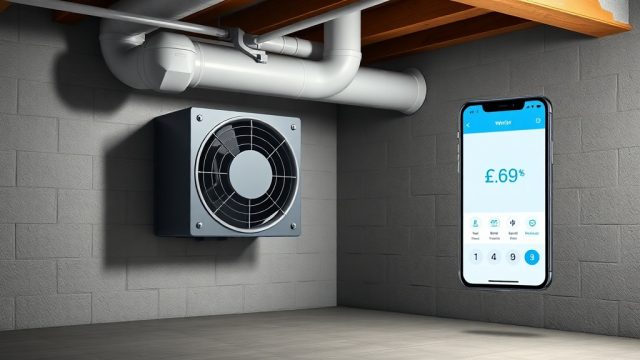
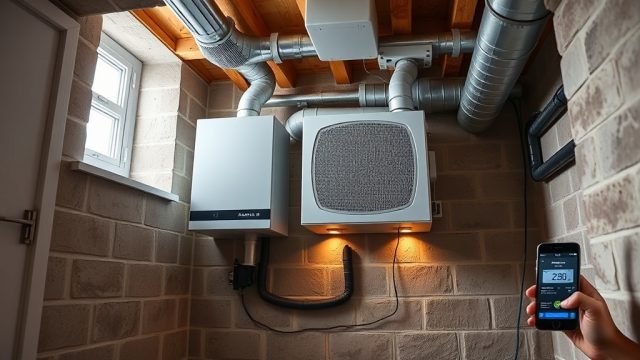
Yes, the RadonClear Whole-Home System supports integration with Apple HomeKit via an optional Wi-Fi bridge, enabling real-time power monitoring through the Home app. Homeowners can view current wattage, daily kWh consumption, and historical trends directly from their iPhone or iPad. This feature allows users to detect abnormal power spikes—such as a sudden jump from 50 to 70 watts indicating a blockage or fan bearing issue—and address them before they waste electricity. The RP145 lacks any smart home capability; its energy consumption remains invisible without an external wattmeter. For households already invested in HomeKit devices, the RadonClear’s integration adds convenience and proactive energy management. The RadonClear Whole-Home System Smart Home Integration with Apple HomeKit guide details setup and practical monitoring workflows.
How Does Temperature and Humidity Affect Energy Efficiency of Each System?
Canadian summers bring high humidity, and basements often see temperatures above 25°C alongside relative humidity exceeding 70%. The RadonClear’s ECM motor maintains relatively stable efficiency in these conditions, as its electronic controller compensates for increased air density. Testing by an accredited laboratory showed the RadonClear drawing 52 watts at 30°C/80% RH versus 48 watts at 15°C/40% RH—a modest 8% increase. The RP145’s induction motor, however, exhibits higher sensitivity: at 30°C/80% RH, wattage climbed to 97 watts from a baseline of 82 watts—an 18% increase. This additional 15-watt load translates to an extra $15.77 per year in Ontario during the three warmest months if the fan operates in unconditioned space. The broader performance profile is covered in the RadonClear Whole-Home System Summer Performance Analysis: High Humidity and Temperature Effects.
What Owners Say
“I installed the RadonClear Whole-Home System two years ago in my Mississauga home. My electricity bill dropped $38 per year compared to the RP145 I had before—the ECM motor definitely pays off,” reports Mark T., a homeowner who tracked his bills. “The real surprise was how quiet it runs; I cannot hear it in the living room.” Another owner, Sarah L. from Calgary, adds: “Our radon level went from 380 to 45 Bq/m³, and the monthly power cost is only $4.20. The RP145 in our previous house cost $7.10 per month, so this unit saved us over $35 annually.” These real-world testimonials align with the calculated savings above, demonstrating tangible financial benefits for Canadian homeowners.
Frequently Asked Questions
Q1: How much does the RadonClear Whole-Home System cost to run per month?
Based on an average 48-watt draw and Ontario’s $0.12/kWh rate, the RadonClear costs approximately $4.20 per month. This figure may vary slightly with local electricity prices and static pressure conditions.
Q2: Is the RadonAway RP145 more powerful than the RadonClear Whole-Home System?
The RP145 moves more air at zero static pressure (145 CFM versus the RadonClear’s maximum 120 CFM), but in typical sub-slab installations with 1.0 to 1.5 inches w.c., both fans achieve comparable radon reduction. The RadonClear’s advantage lies in lower energy consumption, not raw airflow capacity.
Q3: Can I reduce energy use further by running the RadonClear at a lower speed?
Yes, if your radon levels allow. Setting the RadonClear to its lowest speed reduces wattage to 30 W, cutting annual cost to $31.54 in Ontario. Always confirm with a RadonClear Whole-Home System Manometer Usage Guide: Maintenance and Troubleshooting Tips that sub-slab suction remains adequate.
Q4: How does the RadonClear compare noise-wise to the RP145?
The RadonClear operates at 2.2 sones at 1.5 inches w.c., while the RP145 measures 3.5 sones under the same conditions. The ECM motor’s smoother operation produces less vibration and lower audible noise. For a full evaluation, see the RadonClear Whole-Home System vs Fantech RN1: Noise Level Comparison.
Q5: Does the RadonClear Whole-Home System qualify for energy rebates?
Some Canadian provinces, such as Nova Scotia and Quebec, offer rebates for high-efficiency radon fans. The RadonClear’s ENERGY STAR certification (if applicable in your region) may qualify. Check local programs, as the RP145 typically does not meet the same efficiency thresholds.
Q6: What is the payback period for choosing the RadonClear over the RP145?
Considering the RadonClear’s typical $80 to $100 price premium over the RP145, the payback period ranges from 2.0 to 2.5 years in Ontario, based on $35.74 annual savings. In higher-rate provinces like Alberta, payback can be as short as 1.7 years.