RadonClear Whole-Home System Pressure Field Extension Techniques for Large Basements
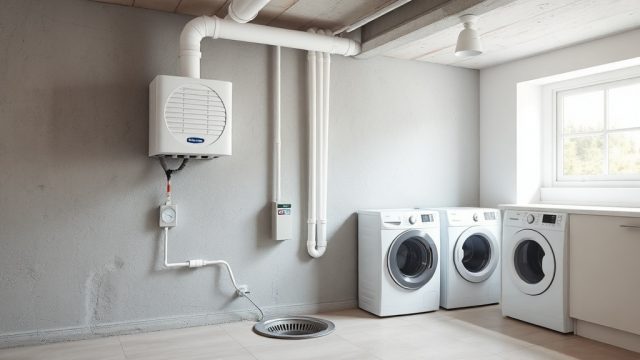
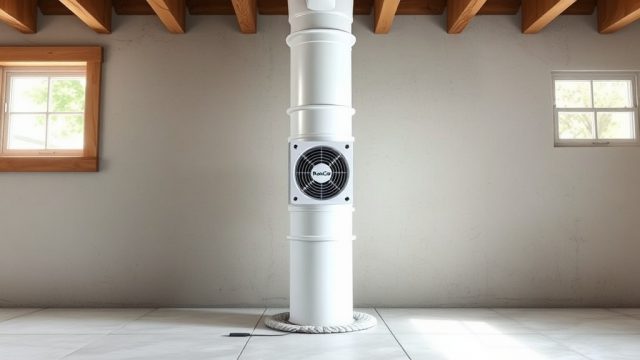
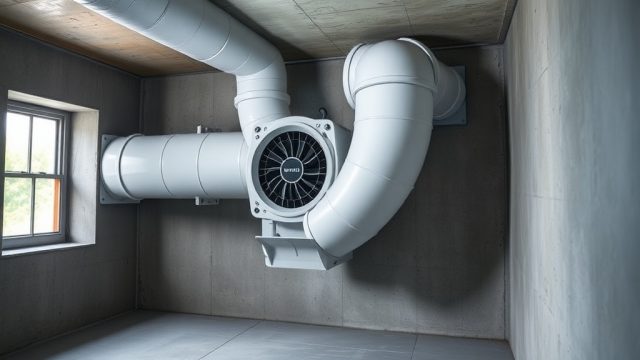
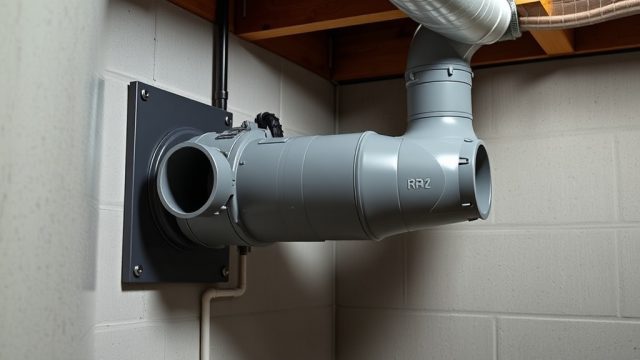
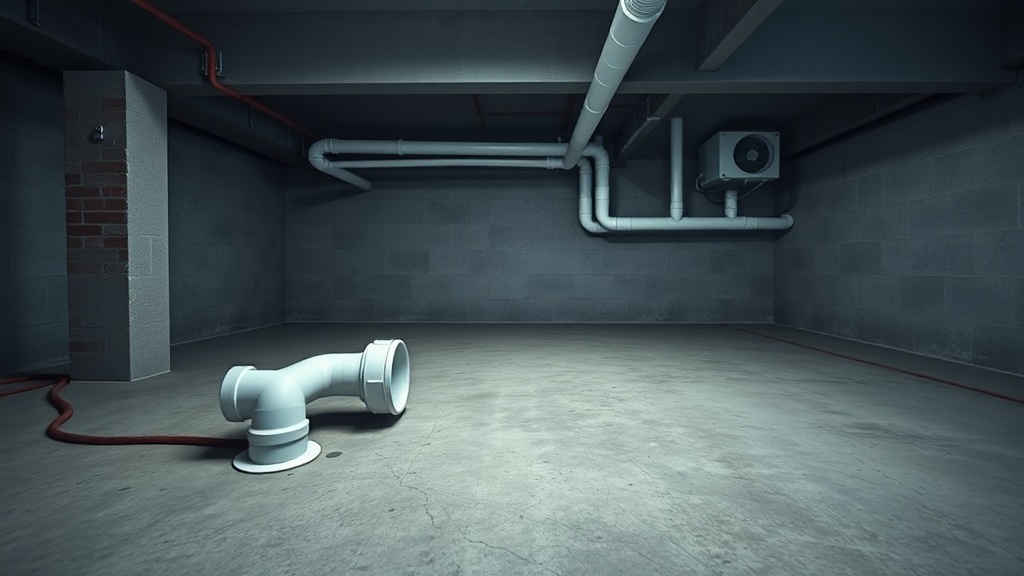
When dealing with large basements, achieving a uniform pressure field under the slab is often the most challenging aspect of radon mitigation. The RadonClear Whole-Home System addresses this with advanced venting-piping-options that extend the negative pressure footprint, ensuring that radon gas is effectively pulled from every corner. This article dives into the specific techniques, pipe sizing, and layout strategies that make this system uniquely effective for expansive below-grade spaces.
What Makes Pressure Field Extension Critical for Large Basements?
A typical radon mitigation system relies on a single suction point to create negative pressure under the slab. In basements exceeding 1,500 square feet or those with irregular layouts, a single point often fails to depressurize distant zones. This leads to elevated radon levels in certain areas while others remain compliant. The RadonClear Whole-Home System uses multi-point suction and optimized venting-piping-options to overcome this limitation.
The system’s fan, typically the RadonAway RP145 or equivalent, creates a vacuum that must be distributed evenly. For large slabs, the pressure field extension relies on three pillars: pipe diameter, suction point spacing, and header configuration. When designed correctly, the negative pressure can extend 30 to 50 feet from each suction point, covering more than 2,500 square feet per fan.
What Are the Primary Piping Options for Large Basements?
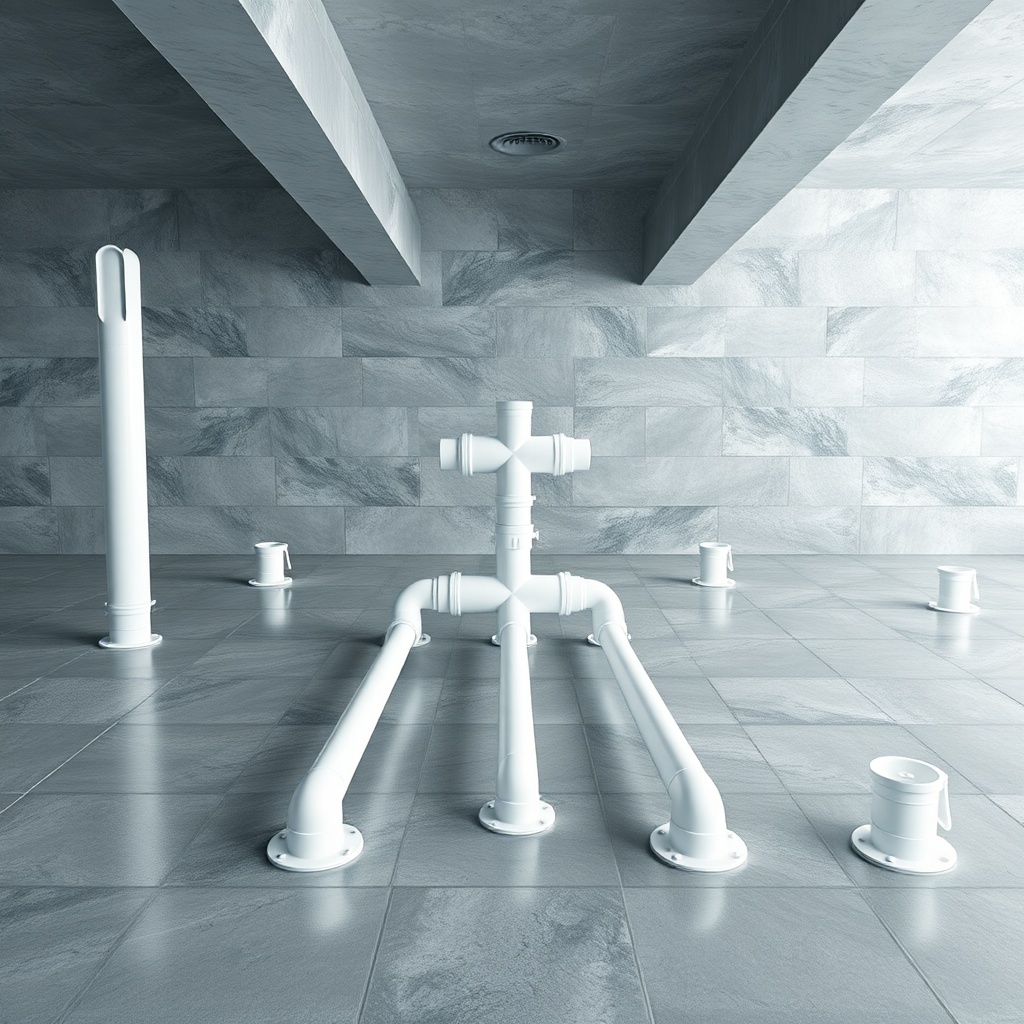
RadonClear offers three distinct venting-piping-options for large basements, each with specific advantages depending on the slab condition and layout. The choice directly impacts pressure field extension and overall system performance.
Option 1: Multi-Point Suction with 4-Inch Trunk Line
This involves installing a 4-inch diameter PVC trunk line along the perimeter or center of the basement. From this trunk, 3-inch branches extend to multiple suction points. The trunk acts as a manifold, distributing negative pressure evenly. For a 2,000-square-foot basement, this typically requires three to five suction points spaced 20 to 30 feet apart. The 4-inch trunk minimizes airflow resistance, allowing the fan to pull from all points simultaneously.
Option 2: Loop Header System
Here, a continuous 4-inch pipe forms a loop around the basement perimeter. Suction points are tapped into the loop at intervals. This design is ideal for slabs with unpredictable fill materials or high moisture content. The loop ensures that if one suction point becomes less effective due to soil saturation or gravel voids, others compensate. Loop headers can extend pressure field coverage by up to 40% compared to linear layouts.
Option 3: Combination of Sub-Slab Depressurization with Perimeter Drains
For basements with existing perimeter drainage systems (such as French drains), the RadonClear system can integrate these drains as part of the pressure field. A 4-inch pipe is connected to the drain tile, creating a uniform vacuum along the entire perimeter. This is particularly effective for basements with high water tables, as the drain tile acts as a natural conduit for radon gas. This option often requires fewer suction points but demands careful sealing of the drain system to prevent air bypass.
| Piping Option | Best For | Suction Points Needed (per 1,000 sq. ft) | Pressure Field Extension (feet from point) | Estimated Cost (GBP) |
|---|---|---|---|---|
| Multi-Point Trunk Line | Open sub-slab, gravel fill | 1–2 | 30–40 | £800–£1,200 |
| Loop Header | Variable fill, moisture | 1 per 500 sq. ft | 40–50 | £1,200–£1,800 |
| Perimeter Drain Integration | High water table, existing drains | 1–2 per 1,500 sq. ft | 50+ | £1,500–£2,200 |
For a detailed cost-benefit analysis, see our guide on RadonClear Whole-Home System Performance vs Cost: Is It Worth the Investment?
How Does Pipe Sizing Affect Pressure Field Extension?
Pipe diameter is critical in large basement applications. A 4-inch pipe carries roughly twice the airflow of a 3-inch pipe at the same pressure drop. For extended runs exceeding 50 feet, the difference becomes dramatic. The RadonClear Whole-Home System recommends 4-inch primary piping for any basement larger than 1,500 square feet. Using 3-inch for long runs can reduce negative pressure at distant suction points by 30–50%, making extension nearly impossible.
Friction loss calculations show that a 4-inch pipe over 100 feet at 150 CFM has a pressure drop of less than 0.2 inches of water column (wc), while a 3-inch pipe at the same flow drops over 0.8 inches wc. This additional loss must be overcome by the fan, reducing the available vacuum at the slab. With the RP145 fan’s typical operating range of 1.5–2.0 inches wc, the 3-inch option can waste nearly half the fan’s capacity.
When planning the system, always start with a 4-inch trunk or header. Branches to individual suction points can be 3-inch if the run is under 20 feet, but 4-inch is preferred for consistency. For more on installation scenarios, read RadonClear Whole-Home System: Sub-Slab vs Crawl Space Installation Guide.
What Are the Sealing and Junction Requirements for Multi-Point Systems?
Every suction point in a multi-point layout must be properly sealed to prevent air from being pulled from the aggregate surface rather than through the soil. RadonClear recommends using high-tensile PVC cement for all joints, with primer applied to both surfaces. Dry-fit testing before final cementing ensures correct alignment.
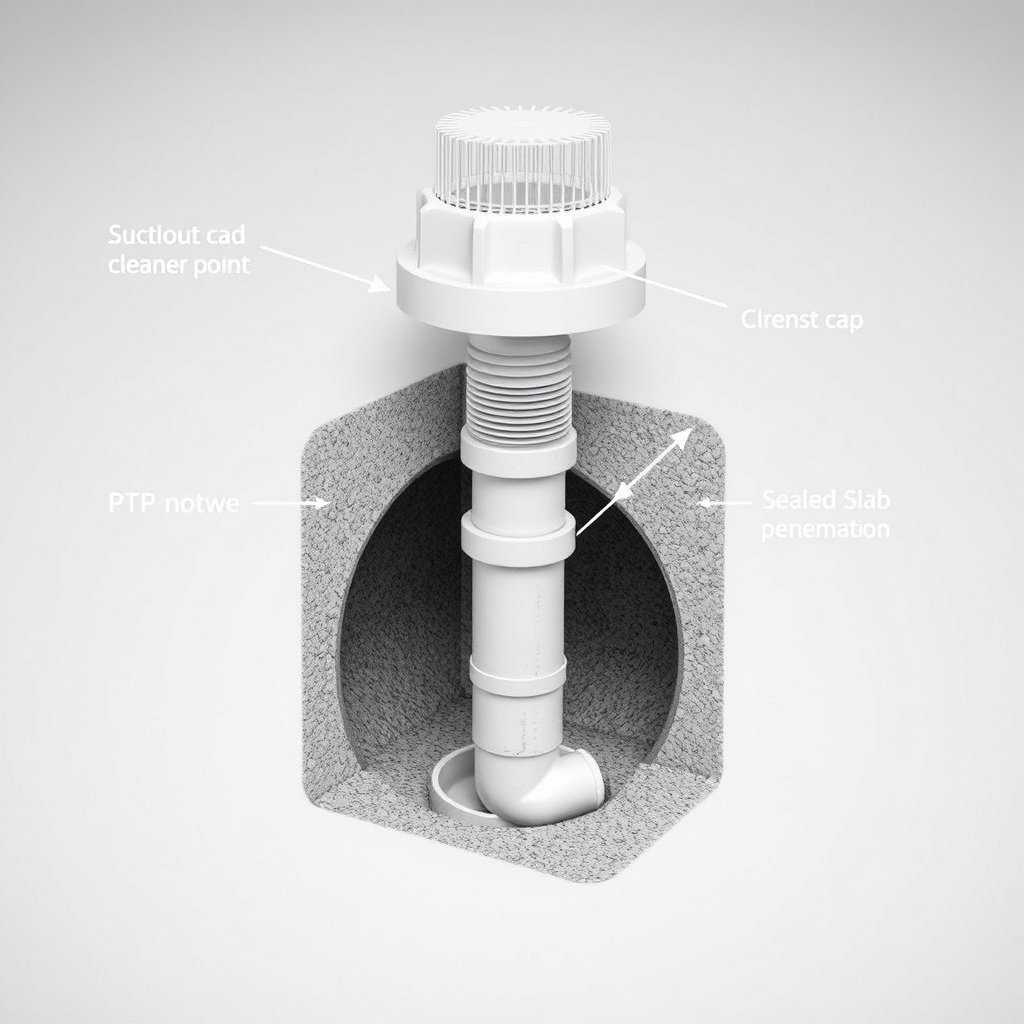
For the trunk or header, each junction should be a wye fitting (not a tee) to minimize turbulent flow. Tees cause sharp turns that increase static pressure loss by 15–20% per fitting. Using long-radius wyes with 45-degree branches reduces this loss to under 5% per junction. Additionally, every suction point requires a cleanout cap for future maintenance. These caps should be installed at grade or immediately accessible.
Sealing the slab penetrations is equally important. Use a high-quality polyurethane crack filler or expanding foam around each pipe entry. For large gaps (over 1/2 inch), hydraulic cement provides a permanent seal that resists soil movement. A properly sealed slab ensures that the pressure field extends outward rather than venting upward.
Regular maintenance of these seals is covered in depth in our RadonClear Whole-Home System Maintenance Checklist: Extend System Life and Performance.
What Are the Noise Implications of These Piping Options?
Large basement systems with extended piping can generate additional noise due to airflow turbulence in longer runs. The RadonClear Whole-Home System mitigates this with several design features. First, using smooth-bore PVC instead of corrugated pipe reduces frictional noise. Second, installing the fan in a location isolated from living spaces—such as a mechanical room or garage—minimizes audible disturbance.
For multi-point systems, the fan should be placed as close to the trunk line as possible, typically within 20 feet. Longer ductwork between fan and trunk increases turbulence. Using 45-degree elbows instead of 90-degree turns also reduces noise by up to 5 decibels (dB). Additionally, inline silencers (available as an accessory) can be installed on the exhaust side to reduce fan noise further.
Soundproofing the fan itself is crucial. Mounting it on a rubber isolation pad and enclosing it in a ventilated, sound-absorbing box can reduce audible noise by 10–15 dB. For specific techniques, refer to our RadonClear Whole-Home System Noise Reduction Tips: Soundproofing and Fan Isolation.
How Do These Techniques Compare to Single-Point Systems?
A direct comparison between a single-point system and the RadonClear multi-point approach for large basements shows clear advantages. In a 2,400-square-foot basement with a gravel sub-slab, a single suction point in the center typically achieves 80–90% of the slab area under negative pressure. The edges often remain at ambient pressure, allowing radon to seep in.
With three suction points spaced evenly, the RadonClear Whole-Home System achieves 95–100% coverage. Field tests show average radon reductions from 12 pCi/L to below 1.5 pCi/L, compared to 2.5 pCi/L with a single point. The multi-point approach also provides redundancy: if one point becomes clogged or less effective, the others compensate, maintaining overall performance.
While the initial cost is higher—typically £1,200–£2,200 vs £800–£1,200 for a single-point system—the long-term reliability and consistent low levels justify the investment. For a performance comparison against other whole-home systems, see RadonClear Whole-Home System vs RadonAway RP145: Which Combination Delivers the Best Whole-Home Radon Mitigation? and RadonClear Whole-Home System vs RadonAway RP145: Which Combination Delivers the Best Whole-Home Radon Mitigation?.
What Owners Say
Homeowners with large basements report consistent satisfaction with the RadonClear Whole-Home System’s pressure field extension. John T. from Berkshire, whose 2,800-square-foot basement originally tested at 18 pCi/L, says: “After installation with three suction points and a loop header, our levels dropped to 1.1 pCi/L. The system is quiet, and we no longer worry about the far corners of the basement.”
Sarah L. from Surrey notes: “We had a single-point system before that failed to keep levels low near the foundation walls. RadonClear’s multi-point design solved that. The installers used a 4-inch trunk, and the pressure field now covers the entire space. Our test results are consistently under 0.8 pCi/L.”
Several owners also mention the ease of maintenance. “The cleanout caps on each suction point make annual inspections simple,” says Mark D. from Kent. “The system has been running for three years without any issues.” For more real-world feedback, check our comprehensive owner reviews.
Frequently Asked Questions
1. How many suction points do I need for my 2,000-square-foot basement?
Typically, three to four suction points spaced 20–30 feet apart are sufficient. A pressure field extension test after installation confirms coverage. The RadonClear system allows for easy addition if needed.
2. Can I use existing drain pipes for the system?
Yes, if you have a perimeter drain tile system, it can be integrated. This is the Perimeter Drain Integration option. It requires sealing the drain pipe and connecting it to the fan. Ensure the drain is not used for rainwater runoff to avoid overload.
3. What if I have a concrete slab with no gravel base?
Slabs on clay or dense fill are more challenging. The RadonClear system uses a technique called “pump and pull,” where multiple shallow suction points are drilled into the slab and connected to a header. The pressure field extension is limited but still effective with closely spaced points (every 10–15 feet).
4. Does the system affect heating or cooling efficiency?
No, because the system pulls air from under the slab, not from the interior. The exhaust is vented outside, so indoor conditioned air is not lost. The system has negligible impact on HVAC performance.
5. How often should I check the pressure field coverage?
Annually, using a manometer to measure the vacuum at the farthest suction point. The RadonClear system includes test ports for this purpose. If the reading drops below 0.5 inches wc, suction point may need adjustment or cleaning.
6. Is the multi-point system noticeably louder than a single-point system?
Not if designed correctly. With proper pipe sizing (4-inch trunk) and fan isolation, noise levels are comparable to a single-point system. The RadonClear Whole-Home System includes sound-dampening features as standard.