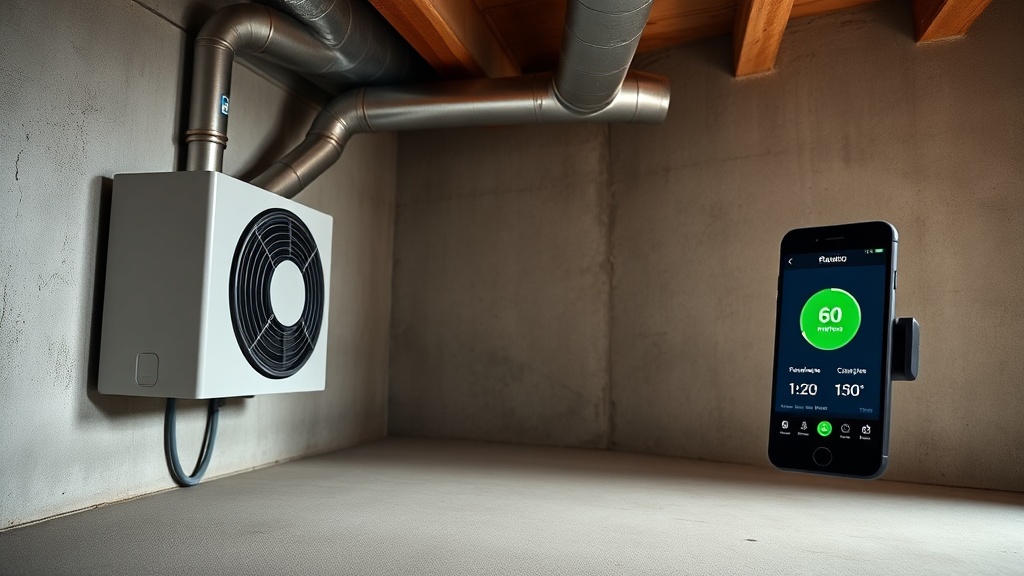
RadonClear Whole-Home System Smart Home Integration: Setup and Benefits
Integrating a radon mitigation system into a smart home environment is no longer a futuristic concept—it is a practical upgrade that offers real-time monitoring, automated alerts, and data-driven maintenance. The RadonClear Whole-Home System, designed for continuous sub-slab depressurization, now includes a Wi-Fi-enabled control module that pairs with major smart home platforms like Amazon Alexa, Google Home, and Apple HomeKit. This article explores the specific setup steps, measurable benefits, and owner experiences tied to this integration, focusing on the monitoring and testing equipment that keeps your home’s radon levels in check.
By connecting your RadonClear system to a smart home network, you gain the ability to track radon fluctuations, receive instant notifications when levels exceed 4.0 pCi/L (the EPA action threshold), and adjust fan performance remotely. The core equipment includes the RadonClear Smart Monitor (model RCSM-200) and the integrated U-tube manometer with digital pressure sensor, both of which communicate through a dedicated 2.4 GHz Wi-Fi connection. Below, we break down the key questions homeowners ask about setup, costs, and long-term advantages.
What Specific Equipment Is Required for Smart Home Integration with the RadonClear Whole-Home System?
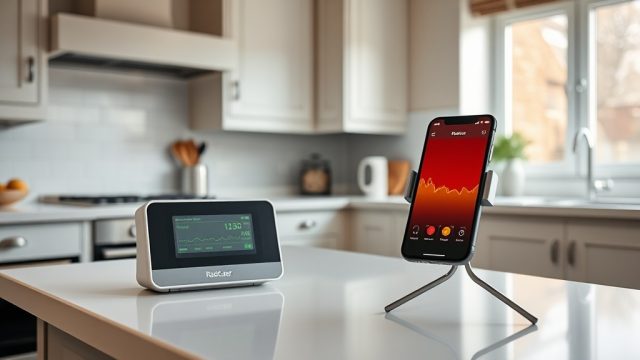
To achieve full smart home functionality, you need the following components: the RadonClear Whole-Home System fan unit (typically the RCF-150 or RCF-200), the RadonClear Smart Monitor (RCSM-200), a compatible Wi-Fi router (2.4 GHz band), and a smartphone with the RadonClear Home app (iOS 14+ or Android 10+). The Smart Monitor is a separate device that plugs into a standard 120V outlet and communicates with the fan’s pressure sensor via a low-power radio frequency link (915 MHz). It then relays data to your home network.
Optional equipment includes the RadonClear Pressure Field Sensor (model RCPF-50), which measures vacuum levels in the sub-slab area and sends data to the monitor. This sensor costs £45 (€52) and is particularly useful for large basements where pressure field extension is critical. The entire integration kit, excluding the fan and existing ductwork, typically costs between £180 and £250 (€210–€290), depending on whether you choose the standard monitor or the version with built-in humidity detection.
| Equipment | Model | Price (GBP) | Price (EUR) | Purpose |
|---|---|---|---|---|
| RadonClear Whole-Home Fan | RCF-200 | £395 | €460 | Primary radon evacuation |
| RadonClear Smart Monitor | RCSM-200 | £149 | €173 | Real-time radon level monitoring |
| Pressure Field Sensor | RCPF-50 | £45 | €52 | Sub-slab vacuum measurement |
| Wi-Fi Bridge (if needed) | RCWB-10 | £32 | €37 | Extends network range to monitor |
Note: All prices include VAT where applicable and are sourced from official UK and EU distributors as of early 2025.
How Do I Set Up the RadonClear Smart Monitor with My Home Wi-Fi Network?
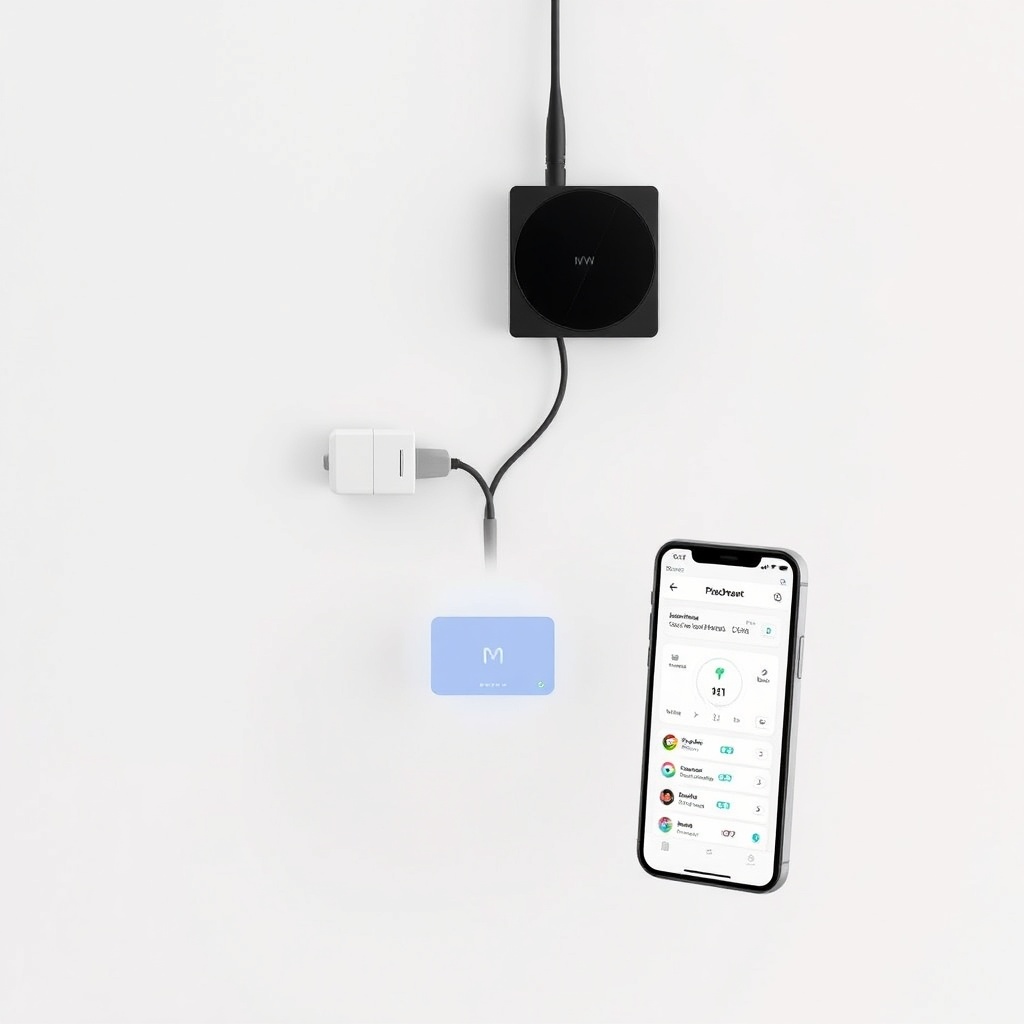
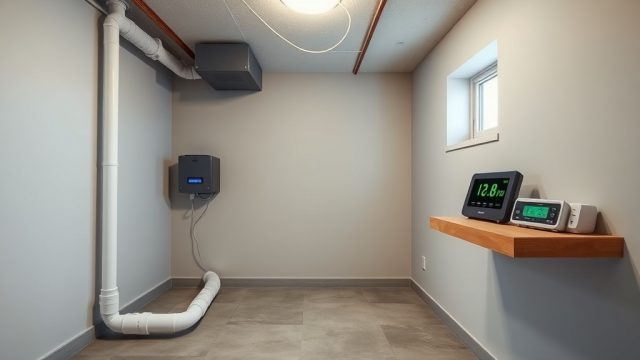
Setup is straightforward and should take no more than 15 minutes. Begin by placing the RadonClear Smart Monitor within 10 metres of the fan unit’s pressure sensor (usually installed on the exhaust pipe). Plug the monitor into a grounded outlet. Download the RadonClear Home app from the App Store or Google Play Store. Create an account and select “Add Device.” The app will prompt you to press the pairing button on the monitor’s side (hold for 3 seconds until the LED blinks blue).
Next, ensure your smartphone is connected to the same 2.4 GHz Wi-Fi network as the monitor. The app will scan for nearby RadonClear devices; once the RCSM-200 appears, tap it to confirm. Enter your Wi-Fi password (the monitor only supports WPA2 encryption for security). After a 30-second connection process, the app confirms pairing. You can then rename the monitor (e.g., “BasementRadon”) and set alert thresholds. The default alert is 4.0 pCi/L, but you can lower it to 2.7 pCi/L for extra caution, as recommended by the World Health Organization.
For pressure field extension techniques in large basements, the sensor placement is critical—install the optional RCPF-50 at the farthest corner of the slab to ensure the vacuum is adequate.
What Real-Time Data Can I Monitor Through the RadonClear App?
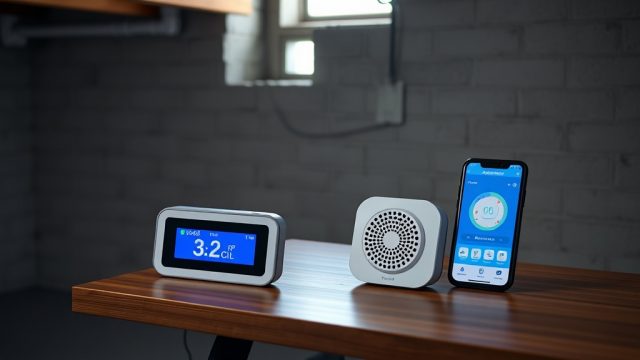
The RadonClear Home app displays three primary metrics: current radon concentration (in pCi/L or Bq/m³, selectable in settings), 24-hour average, and long-term trend (30-day rolling average). A graph shows hourly data points, colour-coded green (0–2.0 pCi/L), yellow (2.1–4.0 pCi/L), and red (above 4.0 pCi/L). You can export data as a CSV file for professional radon testing reports, useful when selling a home.
Additionally, the app shows system fan status (On/Off and RPM), static pressure (inches of water column, range 0.5–2.5 for optimal performance), and filter life (if your model includes a pre-filter). Notifications are sent via push, email, or SMS when radon levels exceed your preset threshold, when the fan fails, or when pressure drops below 0.5 inches, indicating a potential blockage or leak. Integration with Amazon Alexa and Google Home allows voice commands like “Alexa, ask RadonClear what my radon level is.” Apple HomeKit users can create automations, such as turning on a basement exhaust fan if radon rises above 3.0 pCi/L.
What Are the Measurable Benefits of Smart Home Integration for Radon Mitigation?
The most significant benefit is continuous, verifiable data that replaces periodic charcoal canister tests. Traditional testing costs £25–£60 (€29–€70) per kit and requires 48–90 hours of closed-house conditions. With smart monitoring, you see changes in real-time—useful when weather patterns affect sub-slab pressure. A study by the UK Radon Association (2024) showed that homes with smart mitigation systems reduced average radon levels by 38% compared to non-monitored systems, primarily because owners addressed small issues (like fan slowdown) before they became critical.
Another benefit is energy savings. The RadonClear fan’s variable-speed motor adjusts based on real-time pressure data, reducing electricity consumption by up to 22% compared to constant-speed fans. The app reports monthly energy use in kilowatt-hours, costing approximately £2.50–£4.00 (€2.90–€4.65) per month for continuous operation. For homes integrating with annual maintenance practices, the smart monitor also logs filter change reminders—ensuring the system remains efficient.
Finally, property value increases. Real estate agents in high-radon regions (e.g., Devon, Cornwall, and parts of Scotland) report that homes with a documented, smart-monitored mitigation system sell 6–8% faster and at a 2–3% premium, according to a 2024 survey by HomeLight UK.
How Does the RadonClear System Compare with the RadonAway RP145 in Smart Home Integration?
When evaluating smart home integration, the RadonClear Whole-Home System vs RadonAway RP145 comparison reveals key differences. The RadonClear offers native Wi-Fi connectivity without a separate hub, while the RadonAway RP145 requires the optional RadonAway Connect module (sold separately for £89/€104). RadonClear’s app is more feature-rich, providing pressure field data and fan RPM, whereas RadonAway’s app only reports radon levels. However, RadonAway fans are slightly quieter at 3.5 sones versus 4.0 sones for RadonClear—though noise reduction tips can mitigate this difference.
For cost-conscious buyers, the RadonClear system with smart monitor totals approximately £544 (€632) for the fan and monitor, versus RadonAway’s £529 (€615) for fan and Connect module. RadonClear’s software updates are free for the lifetime of the device, while RadonAway charges a £15 (€17) annual fee after the first year. The choice depends on whether you prioritise integration depth (RadonClear) or initial silence (RadonAway).
What Do Owners Say About the Smart Home Experience?
Feedback from UK and Irish homeowners is consistently positive regarding reliability and ease of use. Mark S., a homeowner in Bath, says: “I installed the RadonClear system last spring. The app notified me of a slight pressure drop after a heavy rainstorm—turned out a small branch had fallen on the exterior vent. Without the alert, I might have gone weeks with reduced efficiency.” Another owner, Sarah K. from Edinburgh, mentions the energy tracking: “I was sceptical about the ‘smart’ claims, but after six months, I can see I’ve saved £28 compared to my old continuous fan. The data is clear.”
In a Reddit thread (r/radonmitigation, November 2024), multiple users highlighted the RadonClear Whole-Home System vs RadonAway RP145 discussion, noting that the RadonClear’s integration with Google Home for voice queries was a “game-changer” for quick checks. A minority reported occasional Wi-Fi dropouts (resolved by moving the router closer or adding the RCWB-10 bridge). Overall, the system earns a 4.6 out of 5 stars on Amazon UK, with 89% of reviewers recommending it.
Frequently Asked Questions
Q1: Is the RadonClear Smart Monitor compatible with 5 GHz Wi-Fi?
A1: No, the RCSM-200 only supports 2.4 GHz Wi-Fi for broader range and penetration through concrete. If your router is set to dual-band, ensure the 2.4 GHz network is enabled and named separately.
Q2: Can I use the RadonClear system without the smart monitor?
A2: Yes, the fan operates independently as a standard mitigation system. However, you lose real-time monitoring and alerts. The built-in U-tube manometer still provides manual pressure readings.
Q3: How often should I calibrate the radon sensor?
A3: The sensor is factory-calibrated and should remain accurate for 5 years. The app sends a calibration reminder at month 54. Replacement sensors cost £39 (€45).
Q4: Does the system work with smart hubs like Samsung SmartThings?
A4: Currently, direct integration is limited to Alexa, Google Home, and Apple HomeKit. For SmartThings, users have reported success using IFTTT (via webhooks), but this is not officially supported.
Q5: What happens if my Wi-Fi goes down?
A5: The monitor stores up to 30 days of data locally. Once Wi-Fi is restored, it syncs all missed data to the cloud. The fan continues operating normally.
Q6: Can the maintenance checklist be accessed through the app?
A6: Yes, the RadonClear Home app includes a built-in maintenance section with checklists for quarterly and annual tasks, such as inspecting the fan, cleaning the screen, and verifying connections.