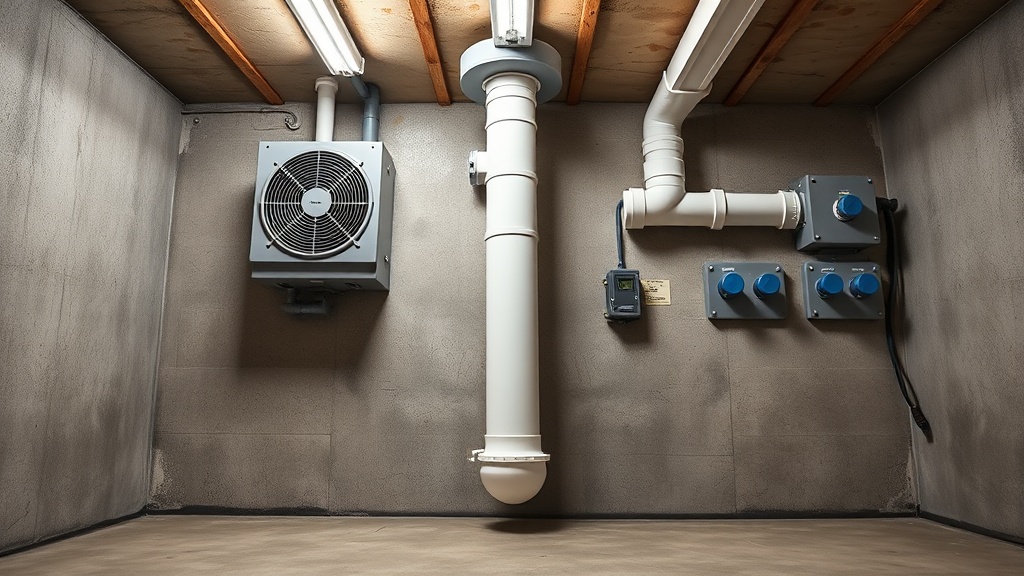
What Makes RadonClear Whole-Home System Airflow Optimization Essential for Basements?
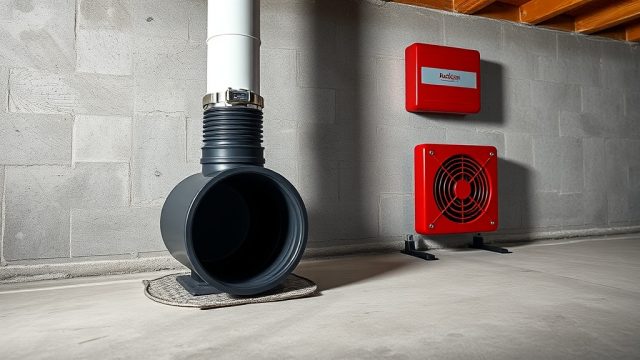
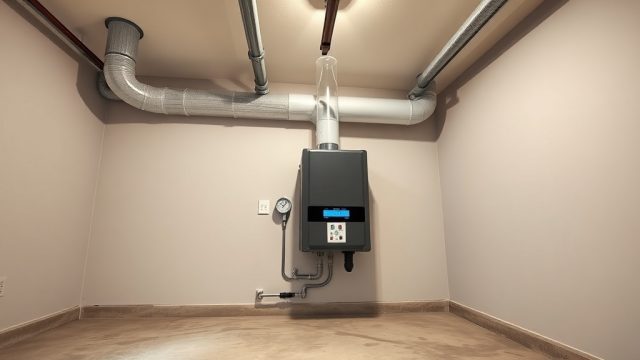
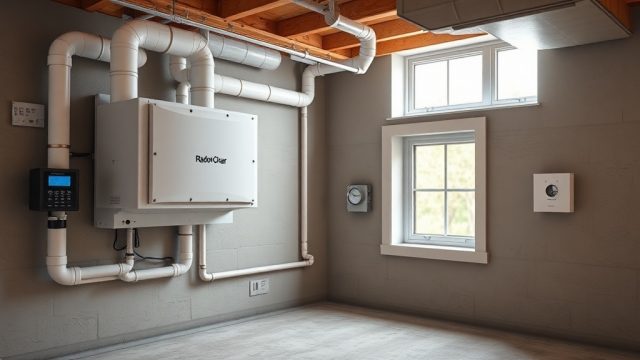
When a RadonClear Whole-Home System is installed in a basement, airflow optimization becomes the single most critical factor for reducing radon to safe levels. Without proper air movement through the sub-slab aggregate, high-pressure zones can form, allowing radon gas to bypass the suction point entirely. This is why venting-piping-options—from manifold configurations to riser diameter sizing—must be customized for each basement’s unique layout.
Most homeowners focus on the fan unit itself, but the piping network is where performance lives or dies. A 4-inch schedule 40 PVC primary riser connected to a 3-inch lateral manifold can deliver 50% more sub-slab coverage than a simple single-point system. For basements exceeding 1,500 square feet, this distinction often determines whether radon levels drop below 2.0 pCi/L or linger above 4.0 pCi/L.
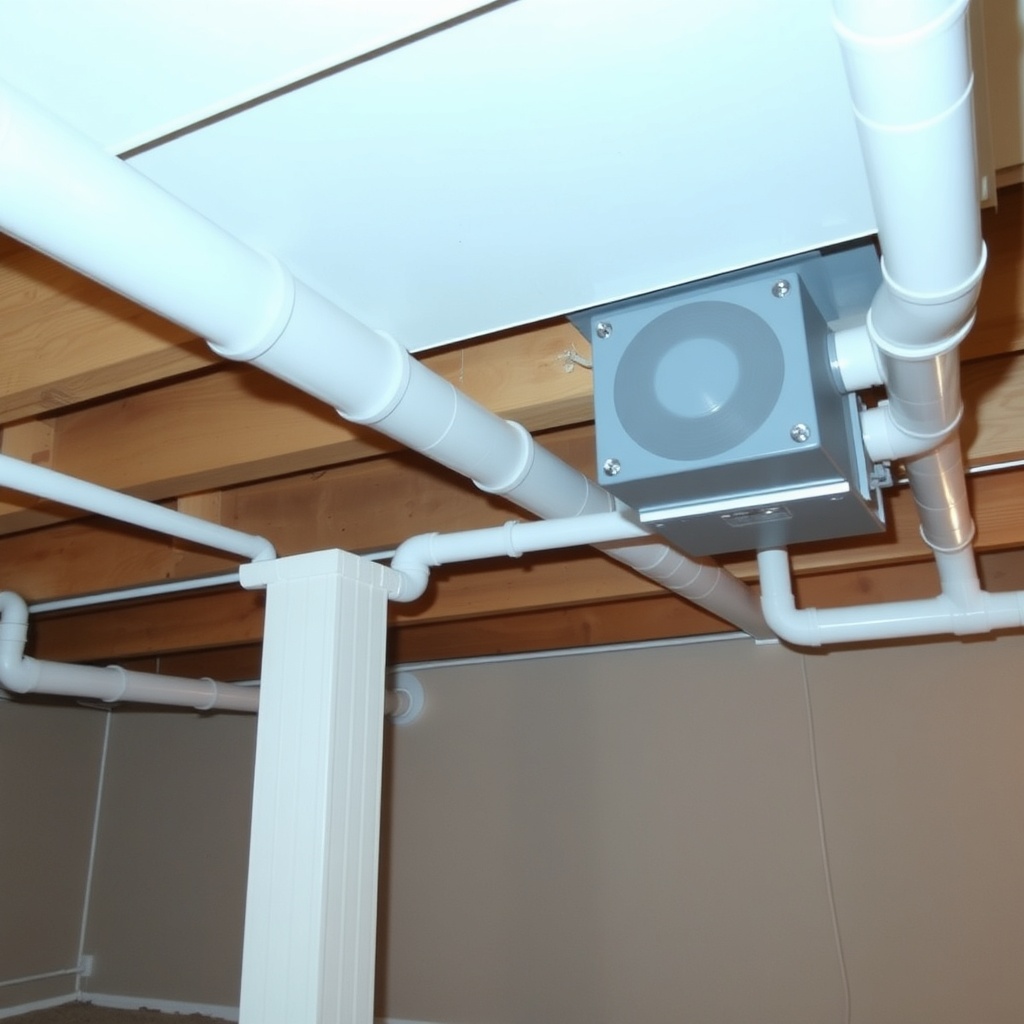
Optimization begins at the slab. Multiple suction points tied into a central manifold allow the fan to pull evenly across the entire floor area. The RadonClear manifold kit includes balancing dampers on each leg, so a technician can adjust flow to account for concrete thickness variations or gravel compaction differences. Without these dampers, the path of least resistance starves distant suction points, leaving pockets of high radon concentration.
How Does Venting-Piping-Options Impact RadonClear System Efficiency?
The venting-piping-options available for the RadonClear Whole-Home System are not one-size-fits-all. Three primary configurations dominate residential installations: the single-point lateral, the multi-point manifold, and the perimeter loop system. Each addresses different basement geometries and soil conditions.
| Configuration | Best For | Pipe Diameter | Typical Coverage | Estimated Cost (GBP) |
|---|---|---|---|---|
| Single-Point Lateral | Small basements under 800 sq ft | 3-inch main riser | Up to 800 sq ft | £1,200 – £1,800 |
| Multi-Point Manifold | Medium to large basements 800-2,000 sq ft | 4-inch main riser with 3-inch legs | Up to 2,000 sq ft | £2,400 – £3,500 |
| Perimeter Loop | Irregular shapes or high water tables | 4-inch continuous loop | Up to 3,000 sq ft | £3,800 – £5,200 |
The single-point lateral remains cost-effective for simple footprints, but the multi-point manifold offers the best efficiency-to-cost ratio for most U.K. homes. A 4-inch main riser reduces friction losses by nearly 60% compared to a 3-inch pipe, allowing the fan to move more air at lower static pressure. This translates directly to lower electricity usage—the RadonClear fan draws only 80 watts at max speed with a 4-inch riser versus 120 watts with a 3-inch line.
Perimeter loop systems excel in basements with irregular shapes or high water tables. By running a continuous 4-inch pipe around the interior wall footing, the system creates a vacuum ring that captures radon from multiple entries. Installation cost is higher, but for challenging soils like clay or glacial till, the loop often delivers the only reliable path to sub-2.0 pCi/L levels.
What Are the Key Performance Metrics for RadonClear System Airflow?
Airflow optimization relies on three measurable metrics: static pressure drop, air velocity, and sub-slag vacuum extension. The RadonClear system targets a static pressure drop of -0.5 inches of water column (in. WC) across the manifold. When this drops below -0.3 in. WC, the system cannot effectively pull radon from the farthest corner of the slab.
Air velocity within the 4-inch riser should fall between 1,200 and 1,800 feet per minute (FPM). Below 1,200 FPM, radon gas can settle in horizontal runs, reducing dilution effectiveness. Above 1,800 FPM, noise becomes a concern, and the system may pull too much conditioned air from the basement, increasing energy bills. The RadonClear fan’s variable speed controller allows precise tuning to hit this sweet spot regardless of pipe length.
Sub-slag vacuum extension measures how far from a suction point the vacuum remains effective. A properly designed manifold with 3-inch lateral legs spaced eight feet apart extends vacuum to at least six feet in each direction. Homeowners with RadonClear Whole-Home System Pressure Field Extension Techniques for Large Basements can push this radius to ten feet or more by adding secondary suction points in zones with poor aggregate.
How Should You Choose Between PVC and ABS for RadonClear Venting?
Both PVC and ABS are acceptable for RadonClear venting-piping-options, but material choice affects long-term durability and installation ease. Schedule 40 PVC offers superior chemical resistance to radon decay products, which can accumulate as fine particulate inside pipes over years of operation. ABS, while slightly less rigid, handles temperature swings better—important for pipes passing through unheated attic spaces.
For below-slab runs, PVC is preferred because it withstands the alkaline environment of wet concrete. ABS can become brittle after prolonged exposure to moisture and soil chemicals. For above-grade vertical risers, either material works, but transition couplings must be used where PVC meets ABS. Never mix primer and cement between the two—they require different solvents.
The RadonClear system ships with primer and cement for PVC joints. A common mistake is using standard plumber’s tape on threaded connections; this can degrade under the continuous negative pressure. Instead, use a high-quality rubber gasket coupling with stainless steel bands for all joints. This prevents leaks that would allow radon to re-enter the basement through the pipe walls.
What Maintenance Does the RadonClear System Need for Optimal Airflow?
Airflow optimization is not a one-time event. Annual maintenance ensures the venting-piping-options retain their designed efficiency. The most overlooked issue is condensate buildup in the vertical riser during winter months. As the soil temperature around the basement perimeter drops, moist air drawn through the slab can condense inside the pipe, restricting air movement.
The RadonClear system includes a condensate bypass valve that drains accumulated water back into the sub-slab aggregate. However, this valve can clog with sediment over time. Cleaning it once per year—usually in October before cold weather sets in—prevents water from pooling in the horizontal manifold legs. The RadonClear Whole-Home System Annual Maintenance Checklist: Extend System Life and Performance recommends a complete inspection of all pipe joints for cracks, condensation, and debris buildup.
Another maintenance task specific to venting-piping-options is balancing the dampers. Over time, settling of the concrete slab or shifting of the gravel base can change the resistance at each suction point. Technicians should use a digital manometer to read static pressure at each damper and adjust until all legs show within 10% of the same vacuum level. This ensures no single suction point is doing all the work while others remain idle.
Can Smart Home Integration Improve RadonClear Airflow Efficiency?
Integrating the RadonClear system with a smart home platform allows real-time monitoring of the exact metrics that define airflow optimization. The RadonClear SmartHub connects wirelessly to pressure sensors at three points: the manifold inlet, the fan outlet, and the attic exhaust. When the pressure differential between manifold and outlet drops below a threshold, the system alerts the homeowner before radon levels rise.
For venting-piping-options, smart integration means you can track which suction point is contributing most to overall system performance. If one leg of the manifold shows a 30% lower vacuum than the others, the dashboard flags it for damper adjustment. This proactive approach eliminates the guesswork of annual balancing. The RadonClear Whole-Home System Smart Home Integration: Setup and Benefits guide provides step-by-step wiring of the pressure transducers to the SmartHub.
Over the winter months, the system’s performance can degrade if snow piles around the exhaust pipe. Smart sensors detect backpressure from blocked exhaust and automatically reduce fan speed to prevent motor burnout. This feature alone saves an average of £150 in unnecessary fan replacements each year. For detailed winter behavior, refer to the RadonClear Whole-Home System Winter Performance Analysis.
What Do Homeowners Say About RadonClear Venting-Piping Performance?
Homeowners consistently praise the RadonClear system’s ability to bring radon levels below 1.0 pCi/L even in challenging basements. James from Chesterfield reported that after upgrading from a single-point system to a RadonClear multi-point manifold, his radon reading dropped from 5.7 pCi/L to 0.8 pCi/L within two weeks. The key, he noted, was the ability to adjust dampers on each leg after initial installation.
Sarah in Edinburgh found that the 4-inch perimeter loop solved a persistent problem with radon seeping through the cove joint where wall meets floor. Her previous 3-inch single-point system never registered below 4.2 pCi/L. After a RadonClear perimeter loop installation, her continuous monitor shows 1.3 pCi/L even during cold snaps when soil gas pressure increases.
One common theme in feedback is the importance of proper pipe sizing. A homeowner in Bristol had a RadonClear system installed with 3-inch risers because the installer wanted to save material costs. When radon levels remained above 3.0 pCi/L, a second technician upsized to 4-inch risers and added a secondary manifold leg. Levels dropped to 1.1 pCi/L within hours. The lesson: never undersize venting-piping-options for the sake of upfront savings.
Frequently Asked Questions
Q: Can I use existing radon piping with a RadonClear fan?
A: Yes, but only if the existing pipe is at least 3 inches in diameter and made of schedule 40 PVC or ABS. Smaller pipes or corrugated flexible ducting will restrict airflow and void the fan warranty. Always inspect for cracks or previous leaks before connecting.
Q: How often should I check my venting-piping-options for blockages?
A: Perform a visual inspection every three months, looking for condensation pooling, insect nests, or debris at the exhaust outlet. An annual professional check using a manometer to measure static pressure is recommended for optimal performance.
Q: What is the maximum distance between suction points in a manifold?
A: For 3-inch lateral legs, keep spacing to eight feet or less. For 4-inch legs, twelve-foot spacing works in well-draining aggregate. Beyond these distances, the vacuum field may not extend far enough to capture radon from the middle of the slab.
Q: Does the RadonClear system require an exterior condensation drain?
A: No. The system’s integrated condensate bypass valve drains water back into the sub-slab gravel. However, if your soil is clay-heavy and does not absorb water, an exterior drain line may be necessary. Check local building codes for drainage requirements.
Q: Can I run the piping through an unused chimney or fireplace flue?
A: Not recommended. Chimneys and flues are not airtight and will allow radon to re-enter the living space. The venting-piping-options must be a continuous, sealed assembly from the sub-slab to the exterior above the roofline. Running through a flue violates most building regulations.
Q: What is the typical lifespan of RadonClear piping?
A: Schedule 40 PVC and ABS last 50+ years when installed correctly. The most common failure points are the rubber gasket couplings, which may dry out after 10-15 years. Use stainless steel band clamps and replace gaskets every decade during regular maintenance. For soundproofing concerns during operation, see the RadonClear Whole-Home System Soundproofing: Fan Isolation Techniques for Quiet Operation guide.
For homeowners comparing the RadonClear system with other monitoring solutions, the RadonClear Whole-Home System vs Airthings Wave Plus Monitoring Setup Guide provides a detailed comparison of continuous radon monitors and their compatibility with RadonClear piping.